
A morning conference with JERRY LEWIS


Lewis joked that playing the devil was perfect for him since he “has had years of experience with it.” He reminisced, speculated and philosophized about show business and his life. “I wake up every day and I’m a smash hit,” he said. He spoke of what fuels him, of his incentive and drive. Of his excitement to perform, even after 64 years, he said, “There is a misconception of boredom I feel fulfilled in a rush, and I don’t have turbulent innards.” As to why he was taking five years to tour, he answered, “I don’t believe in doing things half way.” His own favorite films are The Nutty Professor and The King of Comedy. His mentors are Stan Laurel and Charlie Chaplin.
 Here is why. In it, Jerry portrays a Jewish inmate in a Nazi concentration camp who is also a professional clown. His job is to dress as a clown and lead Jewish children to the gas chambers, giving them their literal last laugh. Supposedly, Lewis took the role to showcase both his dramatic and comedic skills. This would be the ultimate challenge for an artist, outdoing even Chaplin. Then the production ran short of money to finish the film. There were legal conflicts regarding who owned the property. Orson Welles had nothing compared to this fiasco.
  It was an unmentionable around Lewis. So I unwittingly dropped it on him like a pregnant cassowary. He did not explode; he did not falter. He answered that the film will never be publicly shown, and that he has not even seen it. Lewis said the print was still in Sweden, and that he was legally fighting to own it. “It is like losing a child,” he said. That was that.
They kept shouting at him, yet Lewis remained calm as his people standing on the sidelines rushed to stop this madness. Lewis kept saying, “Just see my staff, and they will arrange an interview, fellas. There’s no need to interrupt here. Please leave.” Suddenly, the two lame brains stopped pressing Lewis, and left. Within an hour, I later heard, a doctored audio clip of Jerry Lewis was heard, and then repeated, on that radio station via their shock jock. They had edited what Jerry had said, down to, “No interview…Leave,” “No interview…Leave,” “No interview…Leave.” The words, out of context, were looped and played throughout the day to show what a rude dude Lewis is. Jerry Lewis has always beaten his own image to the ground enough without having some radio jerks falsify it. This time Jerry was on extremely good behavior, and did not deserve the negatives.

The second thing that endeared me to Jerry occurred after the press conference. He stayed around for autographs. About half the press stuck around to get his signature. I brought the two Decca record albums I had owned since I was in high school. He looked at the second, more rare, of the two, and asked, “WHERE did you find this one?” As he signed it, I had to open my idiot mouth and say, “I’m getting a Jerry Lewis autograph.” I said this in mock Lewis voice, a terrible impression, but close enough for him to realize I was doing his “kid” voice. What did he then do? He stopped signing, glanced up at me, and said, “Ahem,” unsmilingly. Then he finished his signature.

Worth 1,000 Words: JOHN CHARLES THOMAS of The Metropolitan Opera

By Steve Crum
For nearly 30 years, JOHN CHARLES THOMAS [Sept. 6, 1891-Dec. 13, 1960] was widely regarded as one of the most gifted operatic baritones of his day. Thomas sang in operas and operettas, as well as in concert recitals, and on records, radio and film. (Well, he appeared in one obscure movie, a silent movie, no less. No singing even in the subtitles.) His repertoire included works by Gilbert and Sullivan, Victor Herbert, and Sigmund Romberg. Sort of a pre-Nelson Eddy, Thomas performed on Broadway in Maytime and Naughty Marietta. His venues included the Washington National Opera, Carnegie Hall, and finally, the Metropolitan Opera in New York City (1934-43). Two years after touring Australia and New Zealand, from 1947-48, he retired.
Worth 1,000 Words: EDDIE CANTOR & DINAH SHORE

By Steve Crum
This NBC-Radio gag publicity photo features EDDIE CANTOR with his protege and singer DINAH SHORE. Evidently, as they would have us believe, the piano keyboard cover has been slammed on Eddie’s hands as Dinah feigns shock mixed with amusement. Probably photographed between 1940 and 1943, when Dinah was the female singer on Cantor’s weekly “Time to Smile” radio show, it is a unique posing to say the least. Cantor had “discovered” Shore on NBC-radio’s “The Chamber Music Society of Lower Basin Street,” and then signed her to his program. Stage techniques Cantor then taught her on his show were carried on by Shore for the rest of her long career. [from Steve Crum’s show biz memorabilia collection]
——————–
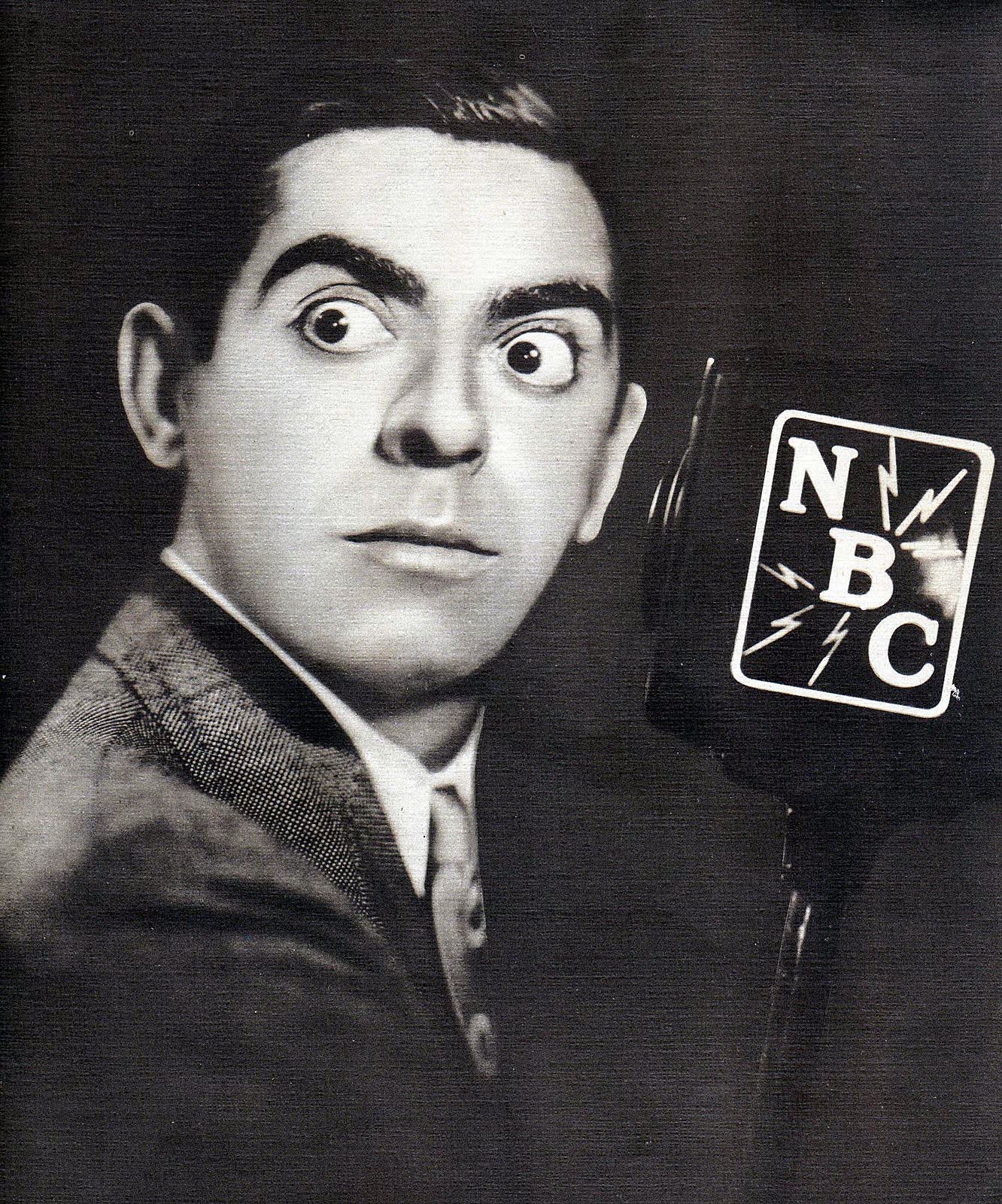 “The Apostle of Pep” and “Banjo Eyes” were two nicknames given to EDDIE CANTOR, and which he embraced, during a career that enveloped vaudeville, Broadway, radio, records, motion pictures and TV. Cantor, born Edward Israel Iskowitz [Jan. 31, 1892-Oct. 10, 1964], was a dean of show business, talented as a comedian, singer, dancer, actor, composer, and author. He is considered a close runner-up to Al Jolson as one of the greatest entertainers of all time. Cantor was a sensation in radio (#1 in ratings), Broadway (#1 attraction of the Ziegfeld Follies), and movies (#1 box office in Samuel Goldwyn musicals like Whoopee!). He was also an outspoken political progressive, which at one time cost him a radio program.
 Some of Dinah’s biggest hits were Blues in the Night, I’ll Walk Alone, The Last Time I Saw Paris, and You’d Be So Nice to Come Home To. Her weekly singing of her sponsor’s signature song, See the USA in Your Chevrolet (followed by her pronounced, thrown kiss to the audience) is probably better remembered than her commercial recordings. She also appeared in several movies, including Up in Arms (1944) with Danny Kaye.
 “See the USA in your Chevrolet…” Here, let DINAH SHORE sing it: https://www.youtube.com/watch?v=jQ5tKh0aBDc
Worth 1,000 Words: MONTE HALE, ROCKY LANE & ROY ROGERS

By Steve Crum
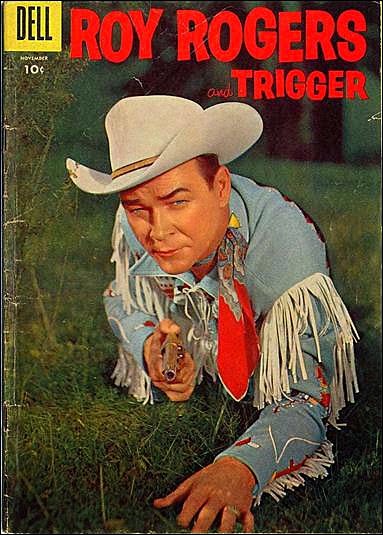 Not only do you get three super cowboys for the price of one in 1950’s Republic B-western, TRAIL OF ROBIN HOOD, but you get double that…triple that! Yep, pardners, the budget was sky high for this Christmas release of nearly 60 years ago. The plot of the ROY ROGERS vehicle involves “The King of the Cowboys” on the lookout for **gulp** Christmas tree thieves. They are hell bent on a green monopoly by absconding with JACK HOLT’S grade-A quality pines and firs. Riding into town to help drive the Christmas trees to market, as well as beat up the thieves, are Republic Pictures cowboys REX ALLEN, TOM KEENE, WILLIAM FARNUM (actually he was a cowboy star in silent films), KERMIT MAYARD, GEORGE CHESEBRO (who plays bad guys, but is good this time around), MONTE HALE, ROCKY LANE, CRASH CORRIGAN, and TOM TYLER. Roy sings “Every Day is Christmas in the West.”
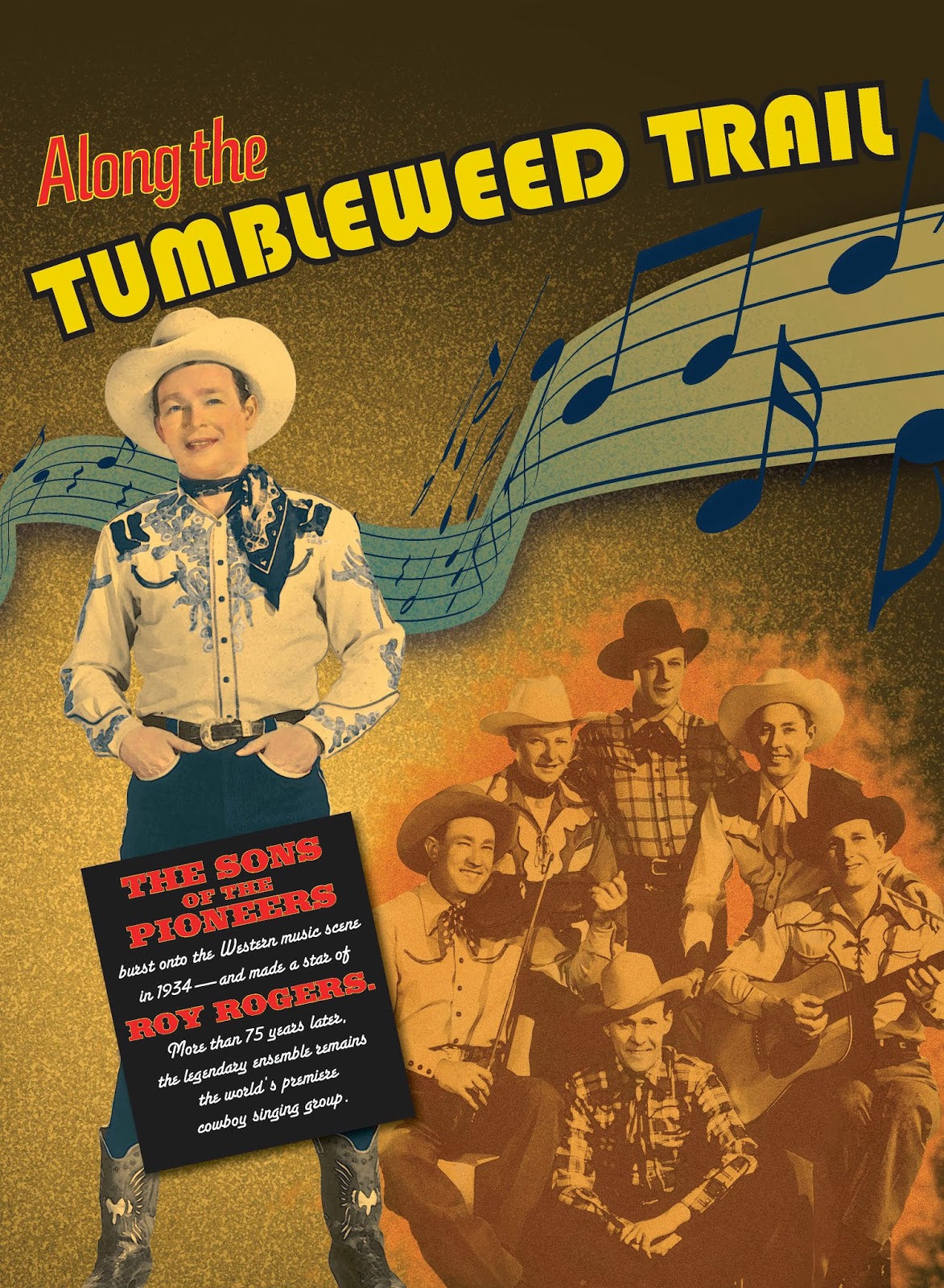 Roy was always surrounded with the best of the best sidekicks, heroines, and musicians West of the Pecos, including Dale Evans (his wife and frequent leading lady), Gabby Hayes, Smiley Burnette, Pat Brady, Andy Devine, The Sons of the Pioneers, The Riders of the Purple Sage, Bullet, Nellybelle, and Trigger.