
Having coffee with Tom Corbett, Space Cadet
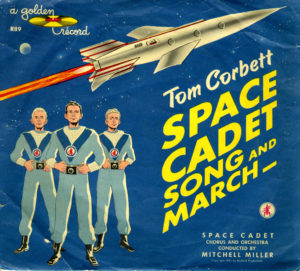
First published in my Kansas City Kansan weekly column on Oct. 24, 1997, this Crum on Film piece details an encounter with one of my childhood idols, Frankie Thomas (1921-2006), who portrayed the heroic Tom Corbett, Space Cadet, on no less than four networks in the early days of television.
 By Steve Crum
Sunday meant breakfast with an astronaut and lunch with a soldier. Clarification: I shared a morning coffee and conversation with Tom Corbett, Space Cadet, and lunched in the same theater where Corporal Agarn of F-Troop performed.
True translation: I spent about an hour talking with veteran movie-TV star Frankie Thomas (now called Frank Thomas), and then rushed off to the New Theater Restaurant in Overland Park to catch the funny Larry Storch in the wild farce, Funny Money. It was Nostalgia City all day.
Thomas, as any red blooded 50-something male knows, starred for years in the fondly recalled TV sci-fi series, Tom Corbett, Space Cadet. Running from 1950-56, the show was broadcast live, used innovative (for the time) special effects, and sold tons of boxes of Kellogg’s Pep Cereal. I made a retro-jump this last weekend when I learned that Thomas, now 75, was appearing at the Fall Kansas City Comic Book Convention at Reardon Center in Kansas City, Kansas.
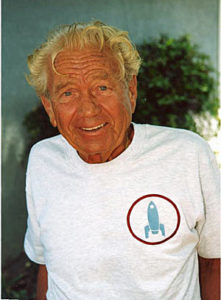 Beneath the gray, wavy hair and deep tan, there was the greatest space adventurer of the next century. I felt compelled to salute. But he stood in front of his table area, all five and a half feet of him in slacks and sports shirt. No need for propriety. Flanking his table was Tom Corbett memorabilia that included toy phasers and space ships, and an authentic Space Cadet uniform. Jumping Jupiter!
“How do you account for all the nostalgia?” I asked. “They were simpler times,” said Frank, “innocent times. People like to remember.” Frankie Thomas, the juvenile actor, seemed to emerge as he began delving into the olden days. He then invited me to join him for coffee as he headed for the break room. Of course, I went.
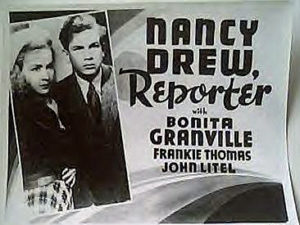
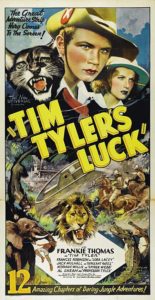 Sipping coffee, Frankie reminisced about his curly haired teen years in the serial Tim Tyler’s Luck (1937), and as Bonita Granville’s co-star (portraying Ted Nickerson) in the Warner Brothers Nancy Drew series, based on the popular books. (Of the four movies produced from 1938-39, look for two of them on Turner Classic Movies in November.) Granville later married Jack Wrather and became co-owner of The Lone Ranger and Lassie empire. Thomas joked about a recurring problem encountered during the Drew series.
“It was Bonnie’s bust,” he said. “Nancy Drew was supposed to be a juvenile detective, so Bonnie’s chest had to be strapped down to fit the image. It made it very uncomfortable for her.”
Thomas told of Granville’s attempts to steal scenes. “In one scene, we were sitting at a table, side-by-side. Bonnie knew that the camera would stay with the person who moves, so she found ways of adjusting her chair, moving it back or to the side. Then we broke for lunch. On our return, someone had nailed boards around her chair legs so she couldn’t move it anymore.”
 Thomas, who was featured as the juvenile mayor in the Spencer Tracy-Mickey Rooney great, Boys Town (1938), also co-starred in Angels Wash Their Faces (1939), The Major and the Minor (with Ginger Rogers—1942), and my personal favorite, One Foot in Heaven (1941). The latter, starring Frederic March as a Methodist minister in turn-of-the-century rural America, has a memorable scene of March’s Rev. William Spence hesitantly taking his teen son, Hartzell, to a silent movie…and loving it.
In all, Frankie Thomas had featured roles in eight Broadway shows, and 30 TV shows and motion pictures.
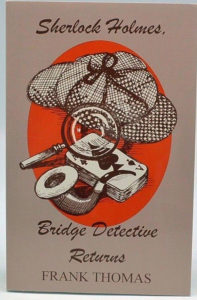 After the Corbett series was canceled, Frankie Thomas wrote and produced several TV shows of the 1950s, including My True Story and Four Star Theater. His writing has included 10 Sherlock Holmes novels, two of them related to bridge, the card game. The Sherlock Holmes Bridge Book, in fact, is a semifictional instruction book. For years Frank Thomas has lectured about and taught contract bridge to thousands around the country. He had just come from a Phoenix bridge seminar, and headed back home to Los Angeles to instruct 150 students this last Monday morning. Then he flew here for the comic book convention.
Frankie then grew sullen, and talked of his marriage. “I held out as a bachelor until 12 years ago,” he said, “and finally got married.” Sadly, a month ago his wife Virginia died. So Thomas is soon moving into a condo. “I need to be there right now,” he added. “I have so much to do back home.”
Thanks for landing here Frankie, and “Spaceman’s Luck” for your future.
Reflections on Pat Paulsen
Originally published May 9, 1997, my remembrances of comedian Pat Paulsen covered the two times our paths crossed. My first paragraph references the fact the name of my weekly Kansas City Kansan newspaper column was “Crum on Film.” Paulsen was basically a non-movie comedian-satirist. But he did appear in small roles in a half dozen flicks, the best being Doris Day’s “Where Were You When the Lights Went Out?”
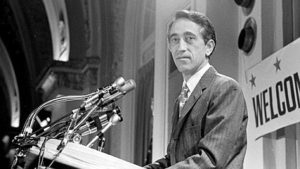 By Steve Crum
For the life of me I cannot recall Pat Paulsen ever making a movie. But then again, there is a gnawing recollection of him starring in a Phyllis Diller grade-Z comedy in the late 1970s. I am probably confusing him with Bob Denver. No matter. The truth is that the Paulsen’s media were TV, live appearances (for the most part “campaigning” for President of the United States), and writing. His writing encompassed several books (collections of his political essays and one-liners) and his brilliant TV and mock-political scripts.
Just reading the text of his political bits is funny enough, but Paulsen’s basset hound delivery made them hilarious. Try not to hear Paulsen’s deadpan tone in this excerpt from his March 19, 1997 editorial on “Should the Use of Firearms Be Restricted?,” delivered on the show that launched his career, The Smothers Brothers Comedy Hour:
 •”Many people today are suggesting that restrictions be placed on the purchase and ownership of firearms. We respect them, and we will fight to the death against their right to express their opinions.
•”We are merely talking about simple firearms: pistols, rifles, and bazookas. I ask you what is our most cherished right since pioneer days? The right for every man, woman, and child to carry a gun.
•”A gun is a necessity. Who knows when you’re walking down the street and you’ll spot a moose? We at the Smothers Brothers Corporation consider this a personal plot on our integrity. Now personally, I myself carry a gun. DO I LOOK UNSTABLE? Let no man take away our liberties,. Stand up and be counted. Let’s preserve our freedom to kill. Thank you.”
Funny Pat Paulsen. His recently reported April 24 death at 69 in Mexico, after pneumonia and kidney failure, saddened me greatly. I was privileged to cross paths with him twice, the first time in his dressing room at the Civic Auditorium in Emporia, Kansas—not long after he delivered the previous editorial on TV. It was Presidential candidate Pat Paulsen then, and he was touring with the Back Porch Majority. It was Paulsen’s first of six campaigns, and playing to the Emporia State (then Kansas State Teachers College) audience was part of what he later recalled as being a “grueling, non-stop schedule.” As Associate Editor and media critic of the college newspaper, The Bulletin, I had the happy duty of covering Paulsen.
After his March 3, 1968 show, a half-dozen local press surrounded a sweating, even more saggy-faced-up-close Paulsen as he did his best to continue the show with quips and one-liners to reporters’ questions. Paulsen was still playing the comedy prez candidate, and we were an extended audience. Paulsen sat opposite center of a long table in his crammed dressing area. Beside him, standing, his manager guided all questions, cutting off the pseudo-interview in exactly 20 minutes.
Funny how reporters, including yours truly, flutter in the face of celebrity. I have seen it happen again and again. The second the ordered and composed interview is over, reporters invariably rush the star for autographs. Paulsen expected such, and handled it with aplomb, pulling out a stamp pad and stamper. “Here you go,” he said, and proceeded to ink “Stamped by Pat Paulsen” on each received page.
THEN THERE WAS 23 YEARS LATER
 On March 25, 1990, Pat Paulsen was in the midst of a rough custody battle with his ex-wife. Among other issues was the ownership of the Pat Paulsen Vineyards located in Sonoma County outside of Santa Rosa, California. The vineyards included an incorporated town consisting of several buildings, and Paulsen’s award winning wine. (Paulsen’s close friends, Tommy and Dick Smothers, have their own wineries in the area.)
On spring break from teaching, and visiting my Santa Rosa sister, we pulled into Paulsen’s winery, one of dozens of assorted wineries located along Sonoma County roads. Free taste tests are featured at all of them. Maybe once every year or so, I later learned, Paulsen himself appeared at his wine land. Today was that day. Three other customers were there, in addition to my sister, her husband, and me. A two-man camera crew from a tabloid TV show was preparing to shoot a piece on Paulsen’s property dilemma. And there was the legendary political candidate himself, now white-haired and droopier-faced, pacing about his parking area.
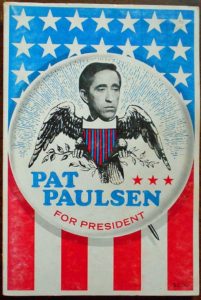
After buying his wine (labeled “My wine has been served in the White House, even if I haven’t”) plus a copy of his Pat Paulsen For President book, I approached him. He responded cordially, signed his autograph (no stamping this time), and humorously posed for video shots with me and my family. After we talked about his life in show business, which included his 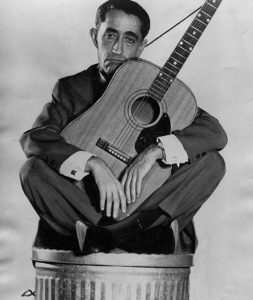 total non-recollection of Emporia (“There were hundreds of towns and concerts”), the TV crew filmed away—focusing on Paulsen and his troubles only, excluding my family.
This time Pat Paulsen, starkly alone and definitely not “on,” spoke with and not at his TV audience. He was refreshingly candid. (Incidentally, his ex eventually got the winery.)
At this writing, several Paulsen sponsored Internet pages are in full operational form. At least they give that appearance. Speculation enters, however. Maybe Paulsen planned to resume the pages after a sojourn south of the border for radical colon and brain cancer treatments. “Be back before you can spell ‘presidential,’” maybe he thought. The cyber messages that tout Paulsen quips and merchandizing now appear frozen in html time.
The messages are there, but the very funny, sad faced messenger is gone.
‘Whizzo’ looks at baby boomer kiddie shows
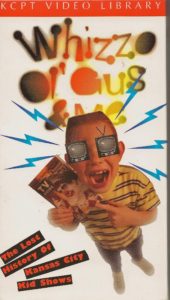 Published in The Kansas City Kansan on Sept. 20, 1996, this Crum on Film column offering essentially promotes the rebroadcast of a two-hour documentary, produced by Kansas City’s Public Television affiliate, KCPT. Since I am featured in the program, sharing my memories of Commander 9 and Gregory Grave, it was appropriate I would write what is purely a nostalgia piece for KC baby boomers. Sadly, the program has not been rebroadcast for several years. Neither has it ever been available on DVD. But it was once sold via VHS. YouTube has a teaser clip only.
By Steve Crum
Maybe Crum on Video is more appropriate this week, since we are returning to those thrilling days of yesteryear via video tape and film clips recalled in Whizzo, Ol’ Gus & Me. If you happened to miss it the first time around, the locally produced 120 minute documentary will be rebroadcast in two parts on KCPT-Channel 19 at 8:30 p.m. this Sunday and Monday, Sept. 22 and 23.
Many have already seen it, but will want to tune in again. It taps directly into a Kansas City baby boomer’s memory vault. That is where all the Whizzo-dust and Cousin Ken’s straw hats are carefully stored.
Produced and directed by the extraordinary Teddy Dibble, who geniused last year’s heralded documentary of the Kansas City Monarchs, Whizzo, Ol’ Gus & Me is a fast, fun, and nostalgic album of locally produced children’s show from the late 1940s to the early 1970s.
Dibble worked overtime to gather this cast and crew together. Vintage clips, including privately shot color and 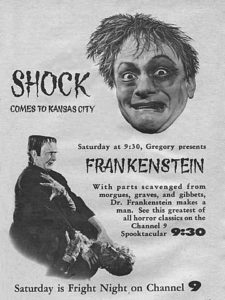 black and white footage, are sandwiched with recent interviews of the original stars. The result is an awesome, polished, and warm-hearted two hours.
Among the nostalgic local stars and clips featured are Gregory Grave (Shock!), Miss Virginia (Romper Room), Fred Broski, and Marilyn the Witch.
My desired interest in the show is not just that I am fleetingly featured as one of the recalling viewers. Television ws a huge part fo my childhood. Being born in the late 1940s means that I was part of the first generation to experience TV. Whizzo, Ol’ Gus & Me reminded me that the very reason to this day I am a collector, obsessively so, of B-westerns is because of KCMO-TV’s Uncle Ezra on Frontier Theater. How often as a preteen I buckled on my double fostered cap guns after an hour with Uncle Ezra, and rounded up my KCK neighborhood buddies Corky Green, Bobby Sixta, and Don Thompson to reenact The 3 Mesquiteers latest adventure (I was always Stony Brook, the Bob Livingston character) or Johnny Mack Brown shooting it out with the outlaws.
As recalled on the program, my earliest local TV memory is of KMBC’s Commander 9, starring Robin League and later Nick Houston as the futuristic time explorer in black uniform, cap, and goggles. One thing Dibble cut from the TV show is that after my father built a really super Commander 9 instrument panel just for me, my 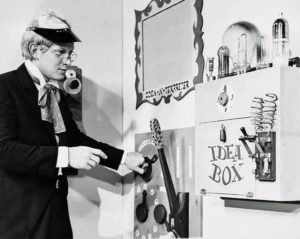 younger sister Becky was rightfully jealous and hurt. That led to argument, tears, punishment, and more tears. However, the best memory is of all the switches, lights, buzzers, and bells that sounded on the panel.
Of the 40 or so programs chronicled, over half of them are recall-rooted. So revered is Murray Nolte’s Dr. N. Ventor show, featuring the doddering doctor’s inventions and those great black and white cartoons. John Bilyeu’s kids’ shows somehow escape me, but Bilyeu and Channel 9 are inseparable. He was around KMBC for a long time, doing a variety of TV duties, superbly so. It is good to see him recently interviewed.
Then there is Whizzo, forever it seems, on Channel 9. Frank Wiziarde’s clown persona entertained Kansas City 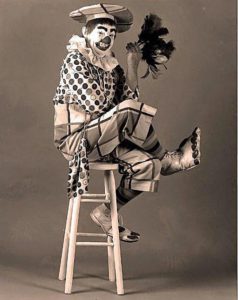 “children of all ages” for 30 years. Like many locals, I saw Whizzo in person numerous times, but never actually got to talk to him. There were several parades I witnessed, some even down Minnesota Avenue, that included the great clown.
What a brilliant acrobat and stream-of-consciousness wit. Cut from Dibble’s documentary is a recording I loaned him of a pre-Whizzo Wiziarde hosting the late 1940s local Luncheon on the Plaza radio show which includes my 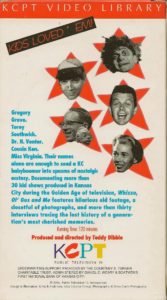 mother as one of the hat-wearing guests. Hearing the radio show, it is difficult to picture Wiziarde’s voice connected to anyone but his clown character. The quick wit and style were pure Whizzo.
What a kick to see a recent interview with KCMO’s Ken Motley, and clips of his fun afternoon daily, Cousin Ken’s Carnival. Remember his introduction to a Warner Brothers cartoon with his slide whistle voice sound? Those of you under 40 might not understand.
By the time Torey and Ol’ Gus took center spotlight, I was in junior high, a little too old to really appreciate their talents. The tape clips featured in the documentary, however, prove that I really missed out by not tuning in more often.
Clearly, Torey, Ol’ Gus, Whizzo, and a cadre of local talents could have have been appreciated and loved on a national scale.
But they were and are ours, exclusively. Forever.
The movie song ends for three composers
During July-August 2004, three superb motion picture composers died. That prompted my piece about the trio in my Kansas City Kansan column, Crum on Film, first published on August 25 that summer. It is reposted here.
By Steve Crum
Imagine movie legends Clark Gable, Katharine Hepburn, and Humphrey Bogart dying with the same month. (They actually passed away years apart.) Essentially that sad coincidence has occurred in the world of movie music. Three superstar film composers have died within the last few weeks: Elmer Bernstein (Aug. 18), Jerry Goldsmith (July 21), and David Raksin (Aug. 9).
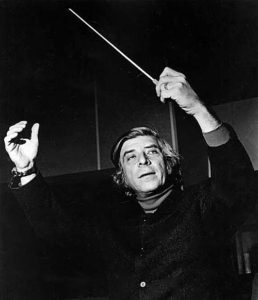 ELMER BERNSTEIN
To the general public Elmer Bernstein will forever be known through his theme for 1960’s The Magnificent Seven, which during the years preceding 1971 was also the Marlboro Cigarettes theme in commercials.
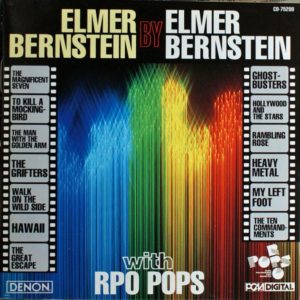
1971 was the year TV banned cigarette ads. Bernstein (no relation to Leonard) began his career as a protégé of American classical composer Aaron Copland. Bernstein’s scores for radio and TV shows led to his first significant movie score, The Man with the Golden Arm (1955). It was jazz, and uncharacteristic. Then again, Bernstein’s scores were always varied in style, always superb. His only Oscar win was for Thoroughly Modern Millie (1967), another sound entirely. Then there was 1963’s The Great Escape soundtrack. Think Steve McQueen on that motorcycle.
The brilliant Elmer Bernstein was the Mr. Variety of film music. Consider (among his 253 film scores): The Ten Commandments, National Lampoon’s Animal House, Far From Heaven, My Left Foot, Airplane!, The Shootist, Baby the Rain Must Fall, The Hallelujah Trail, True Grit, and Sweet Smell of Success.
My favorite among them all: To Kill a Mockingbird from 1962.
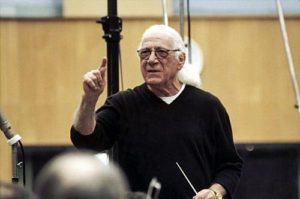 JERRY GOLDSMITH
Goldsmith also began as a classical music student, and soon segued into CBS radio. There he wrote scores and incidental music to hundreds of radio and TV shows 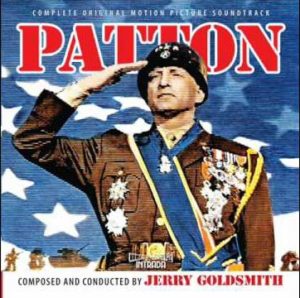 beginning in the early 1950s. His music for The Twilight Zone led to Boris Karloff’s macabre Thriller series. Twentieth Century Fox’s composer-in-residence, Alfred Newman, signed Goldsmith soon after.
Three hundred movie soundtracks later, Jerry Goldsmith’s unforgettable scores are more listenable than ever. Among the best: The Blue Max, The Sand Pebbles, A Patch of Blue, Planet of the Apes, Patton, Star Trek: The Motion Picture, The Omen (his only Oscar winner), Hoosiers, Our Man Flint, Lilies of the Field, Rudy, Poltergeist, and the TV theme from The Man from U.N.C.L.E.
My favorite Jerry Goldsmith score: The Boys from Brazil.
DAVID RAKSIN
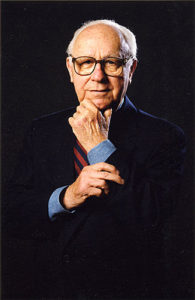 With 170 TV and movie scores, Raksin is lesser known than Bernstein or Goldsmith. Yet with one movie score, he will forever ben remembered: Laura (1944). The Otto Preminger directed movie is about a detective (Dana Andrews) falling love with a missing woman (Gene Tierney) shown in a painting. Raksin had to create and sustain a haunting mood. Without the music, which dominates the story, Laura would not be the classic film it is.
The theme was so popular that lyrics (by Johnny Mercer) were added after the film’s release: Laura is the face in the misty lights/Footsteps that hear down the hall….
On an April Saturday in 1989, David Raksin was my teacher for five hours during a film class I was taking at the Doubletree in Overland Park, Kansas. He flew in that morning from the West Coast 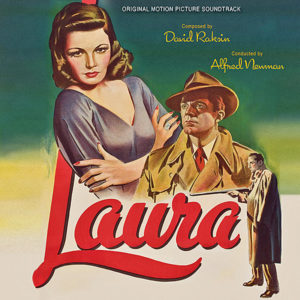 where he was teaching film music course at USC. He was a bit gruff, but very learned.
The grey-haired, robust Raksin spoke of his early days with George Gershwin. He recalled his collaboration the legendary Charlie Chaplin in creating the score for Modern Times and its bittersweet theme song, Smile. (Smile though your heart is aching/Smile even though it’s breaking.) “I’m not so elaborate in theories,” he said. “I just sit down and write a few notes.”
To illustrate that film is “an art of components,” Raksin first ran a scene from Laura without any music. Then he replayed it with his score. Of course, the dramatic effect of the latter was tremendous.
“Music has to say something,” Raksin said, “to assert itself.” In addition to Laura, Raksin’s melodies asserted themselves in films from 1936, including: The Adventures of Sherlock Holmes, Suez, Smoky, The Secret Life of Walter Mitty, Forever Amber, Daisy Kenyon, The Bad and the Beautiful, and the theme to TV’s Ben Casey.
“To be a successful film composer,” Raksin told me during a break, “takes guts, a gift, and the ability to educate oneself.”
What a defining remark for Raksin, Goldsmith, and Bernstein.
His name may not ring a bell, but his face is known
Not long after actor Richard Jaeckel died at 70 on June 14, 1997, I wrote this tribute piece published in my Crum on Film column in The Kansas City Kansan on June 27.
By Steve Crum
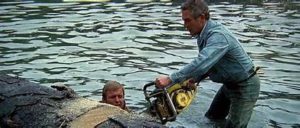 There is a scene in 1971’s otherwise forgettable Sometimes a Great Notion that stays with me. Give some credit to director and star Paul Newman, but it is Richard Jaeckel’s scene. In it, Jaeckel, as part of a family of Oregon loggers and Newman’s brother, has accidentally pinned himself between some floating logs. He is just off shore and underwater to his chest. As Newman desperately struggles to free his brother, Jaeckel is slowly pulled under as the logs shift. Jaeckel knows he is going to die, and expresses his love and caring to his family (including Henry Fonda) and particularly Newman. Even going inches below the surface to breathe oxygen into his brother’s mouth is fruitless. It is a stunning scene, showcasing Jaeckel’s powerful acting.
Richard Jaeckel was nominated for Best Supporting Actor for his fantastic performance, his only nomination in a 50 year movie career. He lost to Ben Johnson in The Last Picture Show. (Incidentally, if you cannot find the video, look for it under its released-to-TV title: Never Give an Inch.) Jaeckel, who died on cancer at 70 on June 14, was always the Dick Clark of motion pictures in that he looked much younger than his age. Short, stocky and blonde, he played teenagers when he was in his 20s. That includes the first movie I recall seeing him in, 1952’s Come Back, Little Sheba.
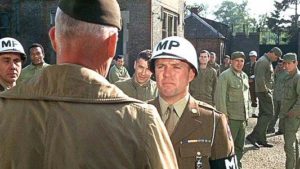 His lasting claim to fame, however, is his support in all four Dirty Dozen movies. That includes the hit 1967 Lee Marvin film and three TV sequels. Remember Jaeckel as Marvin’s right hand MP sergeant? Seemingly monthly cable showings of the classic action film will cement Jaeckel’s movie persona indefinitely.
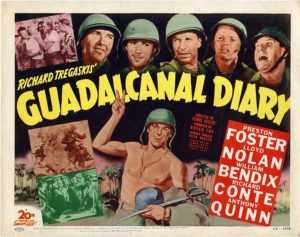 It is not so surprising that the handsomely rugged and buff actor was typecast in films ore so as a military fighting man. That is traced to his very beginning in movies as a teenaged marine in the superior 1943 WWII actioner, Guadalcanal Diary. He played a marine again, this time opposite John Wayne, in Sands of Iwo Jima (1949). Against type, he was featured with Elvis Presley in the western Flaming Star (1960). There were dozens of other pictures.
Jaeckel was truly a working actor, and when not on a movie set, he kept active in TV. That part of his career kept him employed until his retirement five years ago. Most are action-adventure-detective series. No surprise. Thanks to reruns, his solid performances are seen frequently:
•FRONTIER CIRCUS (1961-62)—Jaeckel portrayed an Old West circus advance man in this drama that was rerun many years after on Saturday mornings. Chill Wills and John Derek starred.
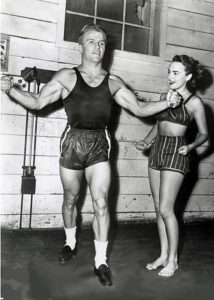 •BANYON (1972-73)—Robert Forster was supported by Jaeckel in a detective drama set in 1930s Los Angeles.
•FIREHOUSE (1974)—This firefighter adventure starred James Drury.
•AT EASE (1983)—A Jimmie Walker comedy touted as the Sgt. Bilko series of the ‘80s. Jaeckel was an Army Major.
•SALVAGE 1 (1979)—An Andy Griffith adventure series about high dollar junk men! Jaeckel played Klinger, an FBI pal.
•SPENSER FOR HIRE (1983-87)—Jaeckel played his best TV support as Lt. Quirk in the Robert Urich series.
•SUPERCARRIER (1988)—Here and gone, the Robert Hooks military drama featured Jaeckel as the Master Chief.
•BAYWATCH (1991-92)—Catch Richard Jaeckel as yet another police lieutenant.