
A brief, one-ply history of TV & movie toilets
Published in The Kansan City Kansan June 25, 1999, my weekly column focused on potty references in a variety of films and TV programs up to that time.
By Steve Crum
Flash! Let’s rephrase that: Flush! It is a dirty job, but someone has to write about it. Even though most decent, clean cut moviegoers tend not to discuss what goes on behind the closed bathroom door in our homes, moviemakers increasingly are setting up widescreen cameras focused on toilet bowls. It is a trend, particularly in comedies, that addresses the basest of adolescent humor.
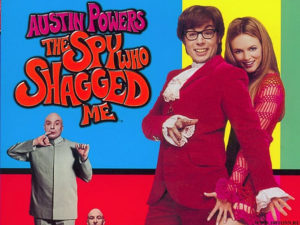 In the past five years, exemplified in Austin Powers, The Spy Who Shagged Me, potty jokes have been written into screenplays with double-ply consistency. Why? They get laughs—huge laughs—from a vast number of ticket buyers.
No surprise that the current No. 1 movie (no potty pun intended), Austin Powers, is laced with bathroom one-liners and sequences. This is not saying that Austin’s appeal is totally john jokes; there are also plenty of sexual innuendo bits and parodies to round out the film. But Le Toilet is a definite co-star.
Movies never used to acknowledge that a toilet even existed. While Marilyn Monroe catches her toe in the bathtub faucet in 1955’s The Seven Year Itch, try to locate a toilet bowl in the scene. (Of course, why would I be looking at anything but Monroe?) That goes for the dozens of bubble bath scenes in movies since silent film days.
Some low/highlights in the media history of bathroom humor:
•I LOVE LUCY—The legendary 1950s sitcom not only never acknowledges a bathroom in the Ricardos’ apartment. Not only that, but most of the time had the couple in separate beds.
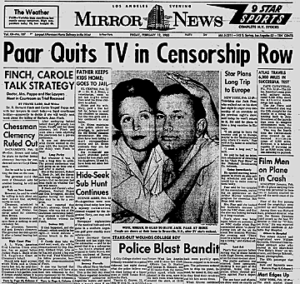 •JACK PAAR—On Feb. 11, 1960, the emotional Tonight Show host left the show while on air after NBC censors snipped his “water closet” joke from his previous day’s opening monologue taping. The word itself, British slang for bathroom, was deemed offensive.
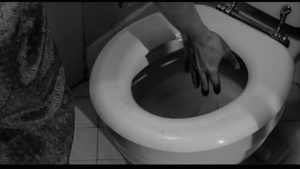 •PSYCHO (1960)—The famous shower scene does include a toilet. However, director Alfred Hitchcock never really focuses on the bowl even when a torn up note is later retrieved from inside the bowl.
•ALL IN THE FAMILY—A breakthrough in restroom humor occurred in the early 1970s. For the first time on TV, the sound of a flushing toilet was heard, and only heard, as Archie Bunker pulled the handle upstairs and out of sight.
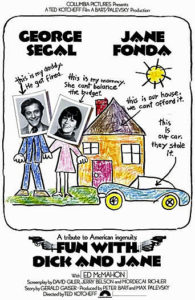 •FUN WITH DICK AND JANE—1977 caper comedy with Jane Fonda and George Segal includes a heretofore no-no sequence. While talking to her husband, played by Segal, Fonda unabashedly walks into the bathroom, drops her pants, and sits on the toilet. The camera stays on her in medium close-up throughout, although never graphically. She never misses a beat talking to Segal, who stands opposite her as they continue their conversation.
•CLINT EASTWOOD—How many westerns and good ol’ boy flicks did he make that included a sequence where some redneck no-good turns up beaten and passed out with his head in some bar’s toilet?
 •DANNY GLOVER—It was perhaps the funniest scene in the Lethal Weapon series: Glover sitting on a rigged-to-explode toilet and unable to move. Mel Gibson, of course, saves the day. The year was 1989, and Lethal Weapon 2 featured dynamite potty humor—literally.
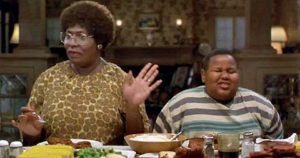 •THE NUTTY PROFESSOR (1996)—The most memorable sequences in Eddie Murphy’s film are the ones where his family sits around the dining room table, taking turns passing gas. Envision Mickey Rooney’s Hardy Family getting away with that. On second thought, don’t.
•THERE’S SOMETHING ABOUT MARY (1998)—Blame the directing Farrelly Brothers for lacing this hit with an abundance of once unmentionable laughs. Note Ben Stiller’s getting caught in his zipper during a urinating scene, and his bathroom masturbating scene, among others. Might as well give the Farrellys credit for potty jokes in their other hits too: Kingpin and Dumb and Dumber. Call them the Lewis and Clark of the Hollywood Potty Trail. 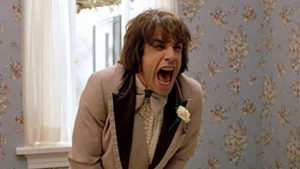
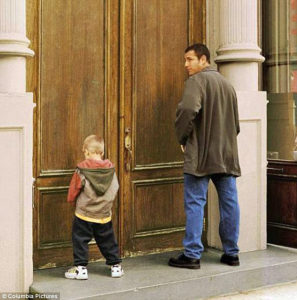 •BIG DADDY—Opening today at a theatre outside of Wyandotte County is this Adam Sandler vehicle in which previews show him and a 6 year-old co-star publicly urinating (backs to camera) on the side of a building. Pure comic genius.
=====
Where is Hollywood aiming with all this? Last week’s premiere of Comedy Central’s The Man Show featured the two hosts blowing up dog feces with a large firecracker on camera. They were covered in the stuff, and the studio audience roared in delight.
Still don’t see the trend? It was recently announced that Mr. Whipple, the toilet paper-squeezing grocer, is returning to commercials.
That really tears it.
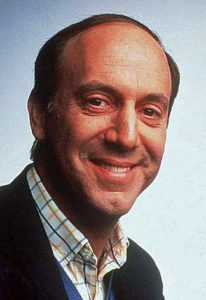
Remembering Gene Siskel
Published in The Kansan City Kansan Feb. 26, 1999, my weekly column focused on the Feb. 20 death of film critic Gene Siskel.
 By Steve Crum
Gene Siskel’s death last week at 53 disturbed me more than I expected. The man was neither a superstar nor a childhood idol—I am only a couple of years his junior. I make the latter reference because of the personal effect of last year’s passings of Buffalo Bob Smith, Roy Rogers, and Gene Autry.
Yet moments after hearing of this movie critic’s death I was stunned. That reaction surprised me until I thought about it. First there were the dozen calls from friends and relatives telling me about how shocked they were. Never in any previous phone conversation had Siskel ever even been mentioned. Yet now he was newsworthy, and spoken of as if it were a distant relative who had died. Then I thought about it some more.
Undoubtedly the calls I received were in part prompted by the fact that I am also a film critic—a media kinship link, perhaps. But that was not the all of it. My callers felt as I did: Gene Siskel, even more than his TV partner Robert Ebert, talked about movies in ways we could all understand. And most of the time. we agreed with him over Ebert. Most of us enjoy movies, and many of us savor them.
Siskel’s joy and passion was evident in each and every broadcast and column, and viewers and readers loved him for it. That does not mean that we always agreed with him. And that does not mean he was the first movie critic ever. But Siskel could be called the first people’s film critic. He was always interesting, incisive, sensitive—be the movie a Mel Brooks farce, a fanciful George Lucas space adventure or a serious Schindler’s List. Conversely, like any critic, when a movie was turkey, he was quick to take the first carving.
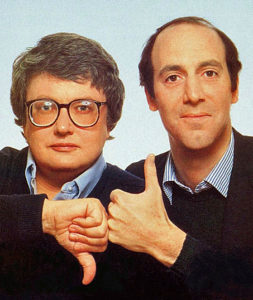 He and his colleague Ebert and franchised the art of movie opinions into a vastly popular TV series that ran in similar forms for 24 years. Their chemistry clicked, and now we know that a friendship and brotherly love developed. Sometimes, especially in the early days, their critical barbs often lashed at each other in addition to the targeted films. In recent years, though, that softened to good natured, highly opinionated discussions.
The last time I watched Siskel & Ebert, three weeks ago, Roger Ebert was soloing. Siskel was absent, having already announced that he was taking some time off to recuperate from brain surgery. Ebert ended the broadcast with: “And Gene, I want you to know that it is awfully lonely up here in the balcony without you. Get better soon.”
Sadly, that was not to be, and Gene Siskel soon passed. Now Roger Ebert’s future as a TV critic is unknown. For a time he will experiment with alternating guest co-hosts, probably hoping that a similar Siskel and Ebert spark will occur. We all know that like any original, no substitute will ever be like Gene Siskel. No one has to reveal that fact to Roger Ebert.
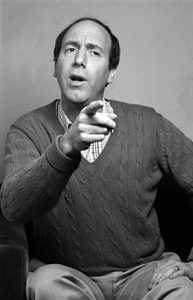 Even in his final days, post surgery, Siskel’s vision and fervor for the motion picture is evident in a Chicago Tribune column he wrote on Dec. 20, 1998. In it, he speaks of the year in films that had ended, and lauds the future years. An excerpt:
“1998 was a magnificent year for movies, the best of the decade, perhaps the best of two decades, fueled largely by advanced use of computer-generated images, which at the conclusion of the first century of filmmaking now must considered a major force akin to someone discovering the use of actors to tell a story.
“Indeed as we move toward a cinematic centenary, what we shall see is truly, more than ever, limited only the imagination of a filmmaker. Most limits are off now.”
If only Gene Siskel could have lived to experience that future, and we could hear about it through him.
Noteworthy Showbiz Kansans—or—It sure doesn’t look like Kansas, Dorothy
Since my following column was published in The Kansas City Kansan 21 years ago, the Kansas State Historical Society has eliminated several names from its list of prestigious “Kansans.” (Some were born in Kansas; some made their name in The Wheat State.) Among the missing in 2019, there are Dee Wallace, Jean Harlow, Larry Parks, Lyle Waggoner, and Don Johnson. I suppose that since they no longer star in movies and TV shows, they are no longer relevant. (However, Dee IS in a current TV show.) If that is the case, then why is “Cheers” star Kirstie Alley still on the list? She has not done anything in showbiz for years. And various sports legends? The contradictions go on and on. Nonetheless, here is my list compiled from the KSHS website in 1998. This story was originally published over several weeks in five installments. Enjoy, learn, and maybe even be surprised.
By Steve Crum
Who can you trust if you can’t trust the Kansas State Historical Society? Sounds like an accurate and reliable source of information. But the fact is the organization has posted an impressively large list on the Internet that includes information short of 100 percent true. In some cases, way short.
The list is dubiously headlined “Notable Kansans—People of Renown Who Have Lived and Are Living Kansas History.” Maybe I am just me, but doesn’t that ring of past and present Kansans who have achieved some celebrity? Problem-with-the-list Part 2: Define “Kansan.” Besides labeling this newspaper, the word denotes a person born in Kansas. That does not mean he or she stayed in the Wheat State thereafter.
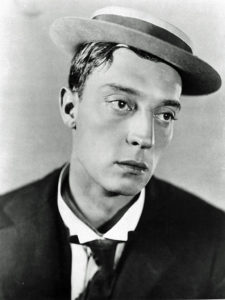
Buster Keaton is a good example. Born in the small burg of Piqua (near the booming Iola) before the turn of the century, Keaton made his first dent in vaudeville houses with his family touring throughout the country. His real fame occurred on the West Coast in silent pictures. Yet Buster Keaton is heralded, rightly so, as a Kansan.
Come we to the “Notable Kansans” list. In parenthesis following each name is a city name. In some cases, several cities are listed, implying the first name is where the person was born, followed by later childhood, and perhaps college residence. Unfortunately, there is no explanation of the city names, only implications.
Explain the inclusion of Wilt “The Stilt” Chamberlain as a Kansan. If memory serves, Chamberlain was born in New York. Certainly he first made news as a KU basketball player. But is it fair to include him on the list? (Lawrence is in parenthesis by his name.) Certainly we Kansans brag and claim him as a great KU athlete. However, it takes a stretch longer than The Stilt’s to call him a Kansan.
Siphoning through the long and some questionable list, I have picked out truly “notable Kansans” who made their marks in show business.
=====
 •KIRSTIE ALLEY (Wichita)—The Emmy winning star of Cheers and the current top 10 hit, Veronica’s Closet, is indeed a Kansan. In a recent interview, Alley scoffed at the idea of ever returning to Wichita. Until TV and film production move to Kansas, her position is understandable. Or did she mean something else?
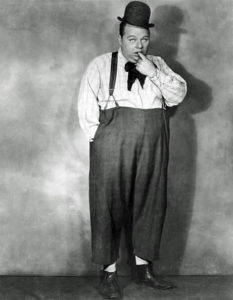
•ROSCOE “FATTY” ARBUCKLE (Smith Center)—In his silent pictures day, Arbuckle was numero uno most popular and highest paid star. Then came a scandal that vicious tabloids laced with sex and murder, and Fatty’s career was history. Even though he was totally absolved of all guilt in court, the damage was done. Interestingly, if he were popular today and underwent similar scandal, his career would probably skyrocket. But those were the days when Victorian values ruled. Sadly, Arbuckle later worked as a film director under an assumed name.
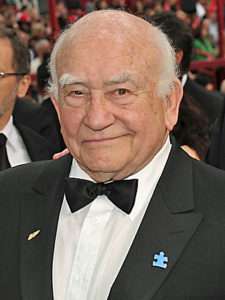
•ED ASNER (Kansas City)—Perhaps the most famous, certainly the longest sustaining TV and movie star to be born in KCK, Asner graduated from Wyandotte High School, my alma mater. A cherished photo of mine is from the Los Angeles Times 20 years ago. It shows Asner jogging through Beverly Hills, wearing a Wyandotte Bulldogs T-shirt. The man remembers his roots. I am proud to say we worked on the same high school newspaper, The Pantograph. But not, no way, at the same time.
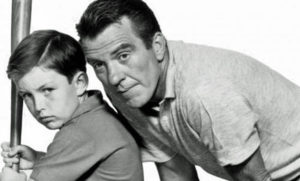
•HUGH BEAUMONT (Eudora)—Beaumont, who died a few years ago, spent his later years as a minister. He will be forever remembered as Beaver Cleaver’s father, Ward.
 •JOHN RICHARD ROMULUS BRINKLEY (Milford)— The pioneer radio broadcaster and Kansas loony was first and fortunately last in several facets. “Dr.” Brinkley, as he was known, not only founded the first radio station in the state (KFKB: “Kansas First, Kansas Best”), but was among the first anywhere to explore its usefulness as public manipulator. In those Alf Landon times, Brinkley campaigned via his station and was nearly elected governor.
But that was not all that almost got him elected. His political power ended when it was discovered 5,000 signatures of dead citizens (“ghost voters”) filled his ballots. In addition, imagine a Kansas governor who also successfully hawked goat gland transplants. But that’s another story entirely.
•KARLA BURNS (Wichita)—Listed only as a Broadway actress, Burns could not be found in any source material readily available. (2019 Update: Karla is actually well known in operatic circles, but is no longer included on the list of notable Kansans.)
•WILBUR “BUCK” CLAYTON (Parsons)—In his glory years, Clayton was usually seen over the border on the Missouri side. That is when played trumpet with the legendary Count Basie.
•WILLIAM “BUFFALO BILL” CODY (Leavenworth)—After minimal research, it was found that Cody did indeed grow up in Leavenworth…er, near Leavenworth. So Leavenworth’s downtown Cody Hotel need not change its entire name. Just knock off a letter or two. The famous buffalo hunter and Wild West showman was actually born in Ohio. He was was also featured in at least one silent movie as himself.
•THOMAS R. BOSTON CORBETT (Concordia)—Corbett is credited with being the shooter of Lincoln’s assassin, John Wilkes Booth. He was part of the posse that hunted Booth after the killer bolted from Ford’s Theater. (Corbett is included in this showbiz list since he shot an actor.)
•LORENZO FULLER JR. (Stockton)—An actor who was the “first American to host a nation TV show,” supposedly KSHS. Yet no such name is even mentioned in available references like Brooks and Marsh’s Complete Directory to Prime Time Network and Cable TV Shows. Who’s Who in Hollywood, a huge source book, has no Lorenzo Fuller either. Maybe someone in Stockton remembers him.
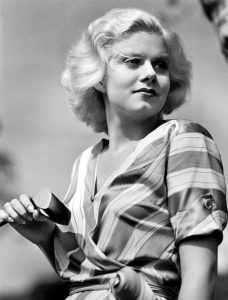 •JEAN HARLOW (Seneca)—Several friends claim that Harlow was actually reared in Kansas City, Kansas. They even name specific addresses where she lived while a child. Most Show-Me’s claim her as a Kansas City, Missourian. Any Harlow stories from readers?
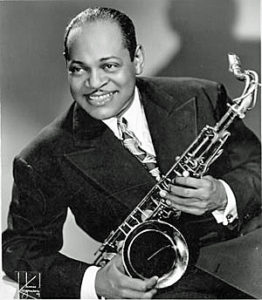 •COLEMAN HAWKINS (Topeka)—The legendary jazz saxophonist played with Dizzy Gillespie, Fletcher Henderson, Duke Ellington, and Count Basie.
•JAMES BUTLER “WILD BILL” HICKOK (Ellis County, Abilene)—Gunfighter, sheriff and marshal, Hickok cut a legendary swath throughout the West. Thanks to movies and TV, he is forever heroic.
•DENNIS HOPPER (Dodge City)—After winning his Oscar for Easy Rider, Hopper’s film output waned. It 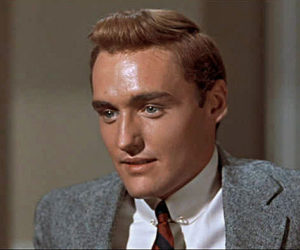 regained in the 1990’s, however, when he took on character roles, particularly as memorable villains in such movies as Speed and Red Rock West.
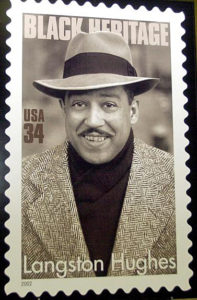 •(JAMES) LANGSTON HUGHES (Topeka, Lawrence)—The talented poet and writer’s works have been adapted for film. His writings are required reading in classrooms across America.
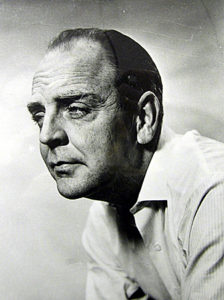 •WILLIAM INGE (Independence)—The Pulitzer Prize winning playwright of Picnic and The Dark at the Top of the Stairs is honored annually in his home territory with an internationally known celebration that attracts superstars of Broadway and Hollywood.
Pittsburg State University’s library has an extensive William Inge collection. Trivia: Inge taught from 1937-38 at Cherokee County Community High School in Columbus, Kansas.
•EVA JESSYE (Coffeyville, Caney, Iola, Pittsburg)—This singer really got around the Wheatland. She was also versatile in her talents. In addition to singing, she acted, composed, wrote poetry and books, and directed a choral group. 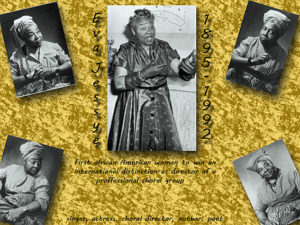
Her papers are kept at the Pittsburg State University library. Jessye was choral conductor for the original production of Gershwin’s Porgy and Bess as well as Director King Vidor’s classic early talkie, Hallelujah.
•DON JOHNSON (Wichita, Galena)—The Nash Bridges star also attended KU, so why Lawrence is not included in the location listing is inconsistent with the KSHS’s style.
•GORDON JUMP (Manhattan)—Known primarily as the Maytag repairman in TV commercials, Jump played the station owner on WKRP in Cincinnati.
•BUSTER KEATON (Piqua)—Perhaps the greatest film comedian of them all, Keaton’s brilliance still shines in his numerous silent and sound movies. Add great film director to his credits.
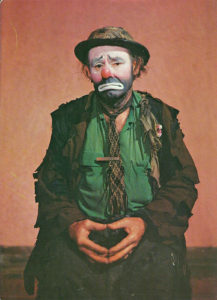 •EMMETT KELLY (Sedan)—In The Greatest Show on Earth, this wonderful circus clown reigned as king of clowns for years. He is still the most famous circus clown of them all.
•ROBERT KELKER-KELLY (Wichita)—Soap opera fans will recognize this daytime TV star from Another World and Days of Our Lives.
•STAN KENTON (Wichita)—He was the Big Band leader who introduced the cool element into his 1950’s jazz arrangements.
•WILLIAM “BILL” KURTIS (Independence, Topeka)—Week after week on the A&E Network, Kurtis produces and hosts his popular and long running Investigative Reports. His previous work includes news reporting and anchoring at local and national levels.
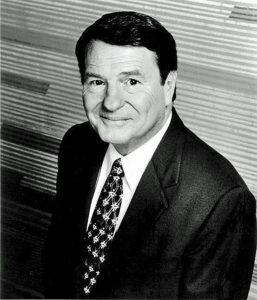 •JIM LEHRER (Wichita, Independence)—PBS’s The News Hour with Jim Lehrer would not exist without this genial and introspective interviewer.
•DELANO LEWIS (Topeka, Arkansas City)—An unsung leader deserving to be recognized for multiple accomplishments: a U.S. Department of Justice attorney; Peace Corps Director in Nigeria and Uganda; and the first African-American President of National Public Radio.
•KERRY LIVGREN (Topeka)—Livgren is an original member of the legendary rock group, Kansas. (For that matter, why isn’t the rock group itself listed as a “notable Kansan”?)
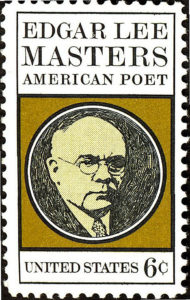 •EDGAR LEE MASTERS (Garnett)—Forever a part of high school literature books is this poet and biographer.
•WILLIAM “BAT” MASTERSON (Ford County)—Masterson ventured into law as a sheriff. When he died, he had been a professional journalist/sports writer for years. Just having Bat Masterson on the staff brought notoriety to the newspaper.
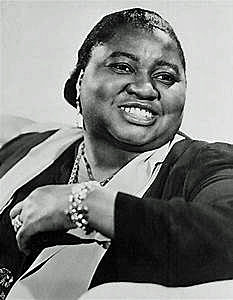 •HATTIE MCDANIEL (Wichita)—The Oscar winning actress was the first African-American to clinch an Oscar (Best Support for her role as Mammy in Gone with the Wind.) McDaniel was also one of several actresses to portray Beulah on the TV series of the same name.
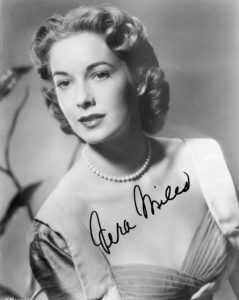 •VERA MILES (Wichita)—The TV, Broadway, and film actress was supposed to be Alfred Hitchcock’s next major star. He groomed her repeatedly by planning to feature her in several films. But for one reason and another, Miles could never time it right to star. As a result, she peaked as a supporting actress in such films as Psycho, wherein she played Janet Leigh’s sister who searches in vain to find Leigh. (Leigh’s character is eventually inside her submerged car in the swamp outside the Bates Motel. Remember?)
•LAWRENCE VAN COTT NIVEN (Topeka)—Listed as a Hugo Award-winning science fiction writer.
•CHARLIE “YARDBIRD” PARKER (Kansas City)—Sure, he is most identified with the Missouri side of the border, but the legendary jazz saxophonist has roots in Kansas.
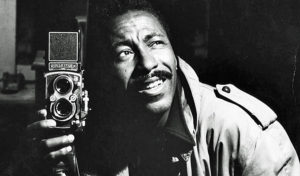 •GORDON PARKS (Fort Scott)—Like Charlie Parker, Parks shares a hometown. The noted photographer, writer, and film director (The Learning Tree) is an extraordinary Jayhawker.
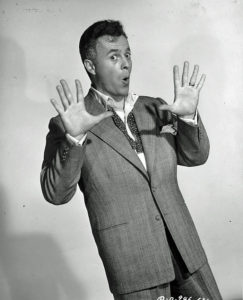 •LARRY PARKS (Olathe)—The Oscar nominated leading man (1946’s The Jolson Story) was indeed raised in nearby Olathe. After making the sequel Jolson Sings Again, wherein the brilliant Parks again meticulously lip synched Jolson’s actual singing voice, Parks’ career crashed. Pulled up before HUAAC Communist hunters, Parks cooperated. But to no avail. He was blacklisted until 1962’s Freud. His career never recovered.
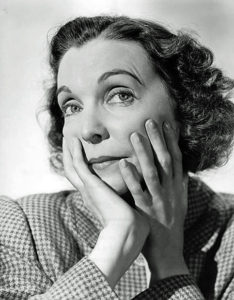 •ZASU PITTS (Parsons)—Anyone who remembers early TV recalls Pitts as Gale Storm’s sidekick-in-mischief on the long running Oh, Susannah. Pitts was primarily known as a comedienne. However, she was also a heralded dramatic actress in silent films. “Well, forever more!”—as she often lamented.
•WILLIAM C. QUANTRILL (Lawrence)—This ex-Confederate’s vicious attack by his raiders on Lawrence a century ago has been retold for many years in movies. Walter Pidgeon portrayed the infamous guy, pursued by John Wayne’s character, in Dark Command.
•SAMUEL RAMEY (Colby)—Not much is known about this opera singer from northwestern Kansas. (2019 Update: Sam is an internationally heralded bass opera singer, having performed at the New York City Opera and in venues around the world. “The most celebrated American-born bass in history,” Ramey is currently on staff at Wichita State University.)
•JAMES REYNOLDS (Oskaloosa, Topeka, attended Washburn University)—He was once nominated for a daytime Emmy for Days of Our Lives.
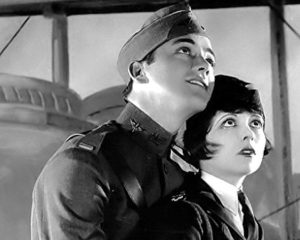 •CHARLES “BUDDY” ROGERS (Olathe)—The actor who soared to great fame when he co-starred with Clara Bow in the hit silent film Wings was also married to Hollywood’s legendary Mary Pickford.
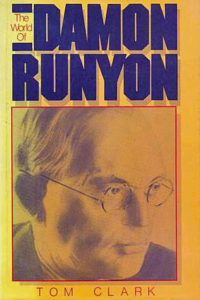 •DAMON RUNYAN (Manhattan)—Runyan from Kansas? It is hard to believe, but it is true. Funny though that Runyan made his reputation as a humorous writer of New York City’s denizens. His characters’ “Runyanesque” slang sure doesn’t have that Kansas twang.
•GALE SAYERS (Wichita; KU Football)—Legendary gridiron star whose concern for dying teammate Brian Piccolo was depicted in 1971’s Brian’s Song. Billy Dee Williams played Sayers.
•MARILYN SCHREFFLER (Topeka)—Forever remembered in animation history as the voice of Popeye’s Olive Oyl.
•DEE WALLACE STONE (Kansas City)—Since graduating from Wyandotte High in 1966, the former Deanna Bowers has made a new name as leading actress in a variety of films. But she will always be remembered as Drew Barrymore’s mother in Spielberg mega-hit E.T. For several years, she and her late husband, Chris Stone, starred in the revamped Lassie TV series. 
•FRED ANDREW STONE (Topeka)—All that is known is his vaudeville song and dance background.
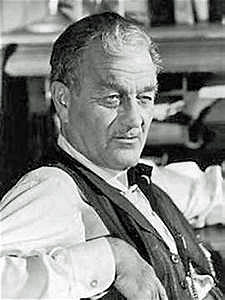 •MILBURN STONE (Burrton)—Forever he is Doc Adams, thanks to his 20-year run on TV’s Gunsmoke. Stone’s career began in early talking pictures where he was often either a villain or action hero.
•REX STOUT (Topeka)—He is the popular mystery book writer.
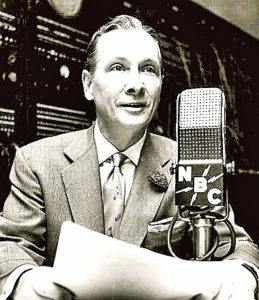 •JOHN CAMERON SWAYZE (Wichita)—Swayze did more than sell Timex watches. He was also one TV and radio’s first news anchors.
•MARION TALLEY (Colby)—Yet another opera singer hails and wails from western Kansas.
•VIVIAN VANCE (Cherryvale)—TV’s Ethel Mertz and Viv (characters she portrayed with pal Lucille Ball in
three series) is a Jayhawker by birth.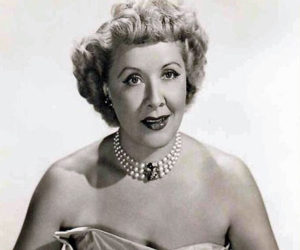
•LYLE WAGGONER (Kansas City)—This KCK native is most remembered for his sketch work and announcing on The Carol Burnett Show.
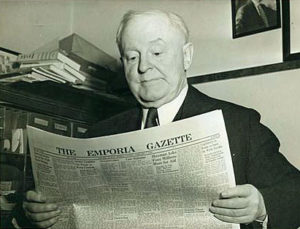 •WILLIAM ALLEN WHITE (Emporia)—The Pulitzer Prize-winning journalist, “The Sage of Emporia,” was the subject of a TV movie, Mary White, based on his famous editorial about the death of his daughter.
=====
So there you have it—the most notable Kansans connected even vaguely to showbiz. Or do we have it all? What about Metropolitan Opera singer Carol Wilcox, who was born and raised in KCK? (I went to elementary school with her.)
Kansas continues to have more than just sunflowers and wheat going for it.
=====
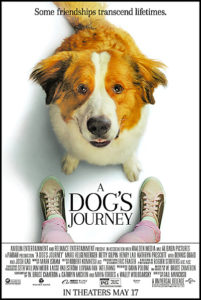
Mediocre ‘A Dog’s Journey’ will deliver joy, tears to canine fans
 By Steve Crum
If you loved 2017’s A Dog’s Purpose, you will love this sequel, A Dog’s Journey. If you adored W. Bruce Cameron’s 2010 best selling book, A Dog’s Purpose, and/or his 2012 best seller, A Dog’s Journey, you will adore A Dog’s Journey, opening today. More inclusively, if you are a dog lover, A Dog’s Journey is definitely up your Alpo alley.
Might as well add that Cameron co-wrote the screenplays to both films. Gail Mancuso, director of TV’s Modern Family, 30 Rock, and more, directs Journey, her first motion picture.
The screening audience, which was packed with kids and families, reacted to A Dog’s Journey with laughs and “Aw’s” —as well as quiet sobs and tears. I was right there  with them, reacting the same way. Even though I have not owned a dog for decades, the schmaltz meter on this movie still grabbed my heart. Bring tissues. In Fido parlance, it’s face-lickin’ good.
NOTE: Be aware that the emotional reaction does not mean the film is perfect. Far from it.
The premise of A Dog’s Journey is the same as its predecessor: “Life is about having fun, saving others, not getting caught in the past or regrets, finding someone to live with, and living for today.” The focus is on Bailey, an aging St. Bernard-Austrian Shepherd, owned by farmer Ethan Montgomery (Dennis Quaid). It turns out that Bailey is actually reincarnated from a dog named Toby, Ethan’s childhood pet—long deceased.
 Flash forward to years later when Ethan and his wife Hannah (Marg Helgenberger) are still maintaining the farm, but also taking care of their recently widowed daughter-in-law, Gloria (Betty Gilpin), and toddler granddaughter, CJ. Because of Gloria’s depression, compounded by alcoholism and paranoia, Gloria angrily takes CJ with her, vowing never to let the in-laws see her or CJ again. Time passes, and a heartbroken Ethan tells his dying Bailey to “protect and never quit looking” for CJ. With a more specific purpose in life, Bailey dies, only to live again in a succession of reincarnations in other dogs. One at a time, they continue on the lookout for CJ, who eventually grows into womanhood.
 It is both a corny and compelling fantasy, of course. Yet it is so packaged in love and redemption, who can avoid the emotional impact of A Dog’s Journey?
Without getting too spoiler-specific, plot elements include parental abuse, sexual assault, mental cruelty, cancer, aging, and death. (Your typical family film.) Of course, death in terms of dogs is only a somewhat temporary, transitional state of being—or been.
For example, Bailey goes through three more doggy personas (Molly, Max, Toby), each varying in breed and sex. That said, A Dog’s Journey has a scattershot story line, covering many years and leaving plot holes and unanswered questions. Coincidences 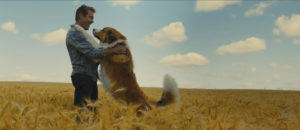 abound to the point of ridiculousness. Bring a calculator for the final tally.
Acting, particularly by Gilpin, Abby Ryder Fortson (young CJ), and Kathryn Prescott (older CJ), is a bit above average. Quaid adds a plus to any film.
Finally, there are kudos for Josh Gad. He voices each dog’s thoughts, providing us with both cute and touching personifications.
=====
It is sadly coincidental that Doris Day died earlier this week at 97. Day was internationally known as both a movie star/singer AND a dog lover/animal rights activist. No doubt she would have enjoyed A Dog’s Journey, despite its flaws.
=====
GRADE on A to F Scale: C
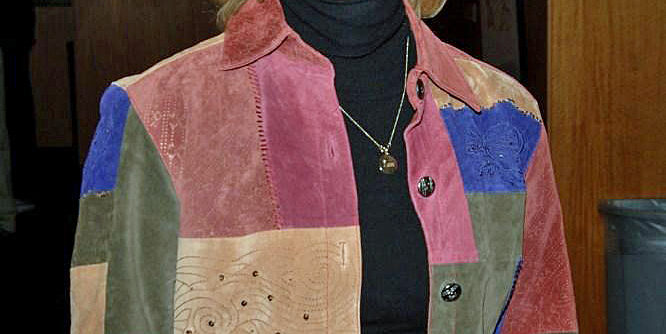
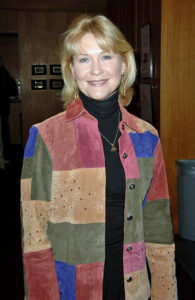
Dee Wallace Stone affectionately remembers her KCK roots
Originally published in The Kansas City Kansan newspaper on Aug. 22, 1997, this story on KCK’s own Dee Wallace (then called Dee Wallace Stone) was and is a personal plus for me. Dee and I were on Wyandotte High School’s Pantograph newspaper staff at the same time (54 years ago)—she as a junior cub reporter, and I as a senior staffer. It was a blast interviewing her. Dee has never slowed down, and has maintained an impressive list of acting credentials that continues to grow. To date, Dee has acted in 247 movies and TV shows. She has been featured on Amazon TV’s family series, “Just Add Magic,” since 2015.
 By Steve Crum
Motherhood is integral to the persona and person of Dee Wallace Stone. Besides her most famous role as Drew Barrymore and Henry Thomas’ mother in the indelible E.T. the Extra-Terrestrial, Wallace Stone’s film and TV career is peppered with momma parts. Seven years after E.T., life copies art. Her daughter Gabrielle is born.
Wallace Stone recalled her movie and real life roles in a phone interview last week. It was a kick talking to her, especially since I had never met her even though we had graduated a year apart (I am older) from good old Wyandotte High School. During those days, I appreciated and admired Deanna Bowers from afar. I saw her perform in plays, most notably the title role in Tammy Tell Me True (yes, the Sandra Dee part). As photographer for the school newspaper, The Pantograph, I also took pictures of her at dress rehearsal. She was a gifted gem then, and still is.
She and Ed Asner both graduated from Wyandotte, and both represent the most world famous duo of thespians ever from KCK. Before Ms. Wallace Stone contemplates pummeling me, I add that Asner graduated from Big Red many years before she.
Born and raised here, Wallace Stone has a collage of KCK memories. “Of course I remember Peters Drive-in,” the long time teen hangout and drive through that has been closed for several years now. “I went back every time I came to Kansas City, Kansas.” The County Club Plaza is still high on her list of places to visit whenever she returns.
REMEMBERING KCK
More memories, and her voice has an emotional break. It is the tear in the throat sound that embellishes her mother roles. Except this time Dee is not acting. She recalls some loved ones who happen to be two of KCK’s most revered.
“Judge Bill and Donna Robinson,” she muses, “took me through a tough time when my dad died.” Incidentally, Dee’s vibrant mother, Maxine, still lives in KCK, and remarried several years ago.
 Recalling the year she taught theater and English at Washington High School (also in KCK), Wallace Stone attributes the Wildcat library as the first step of a significant career leap.
“I was reading a copy of The New York Times, and saw a classified ad placed by Broadway producer Hal Prince,” she said. The show being cast was A Little Night Music. She wrote back, and included her resume. Delightfully shocking Dee, Prince responded, offering to fly her to New York for an audition. Fast forward to Broadway. Dee did not get the part after all. (“I couldn’t sing.”) She stays anyway, picking up work in commercials and industrial films. She takes singing lessons. She dances; in fact, she runs a dance school.
Then a small TV part, and after two years in NYC, Dee has a breakthrough role (as a hooker) on Ed Asner’s great Lou Grant TV show. After a 1979 casting call to Los Angeles, the then billed Dee Wallace has a heralded performance as a prostitute in Blake Edwards’ film, 10. Remember her enticing Dudley Moore?
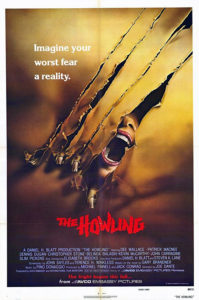
A terrific turn as a reporter caught up in a werewolf community established Dee as a leading actress. The movie is Joe Dante’s 1981 horror classic, The Howling. (Fortunately, she did not appear in the five, count ‘em, inferior sequels.)
PHONING HOME
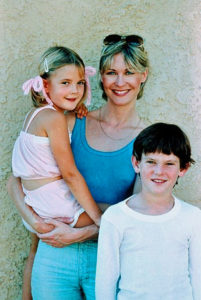
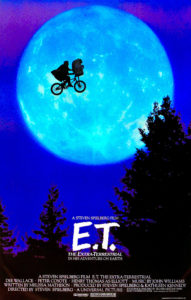 Director Steven Spielberg takes note, and obviously sees Wallace Stone in a diverse mold, that of “E.T.’s mother,” in 1982’s E.T. the Extra-Terrestrial. This was followed by work again as a mom. In fact, she portrays a super mom who protects her sickly son from a rabid St. Bernard throughout most of the intense 1983 thriller, Cujo. This is my choice for her best work so far.
The future includes a short-lived TV sitcom, Together We Stand, which suffers through the 1986-87 season. At mid-point, co-star Elliott Gould’s character is killed off, and the title changes to boost ratings. But Nothing is Easy proves prophetic. Still, Wallace Stone looks back at it wistfully. “I really loved that show. It should have done better.” 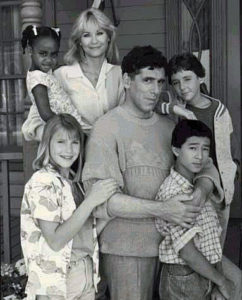
Now she would like to do another sitcom, but only if she is part of an ensemble cast. Otherwise it would take too much time away from raising her daughter.
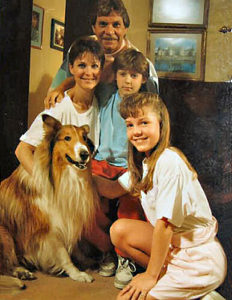 She gets another TV series, but this time things have changed. She has married Cujo and Howling co-star Christopher Stone, and they have a baby. With the assurance that filming could be wrapped around raising Gabrielle and that a large trailer is available on the set to accommodate the entire family, the Stones contract for The New Lassie. The syndicated series lasts from 1989-92.
In the ensuing years, Dee has gotten more TV work, including several TV movies. She continues touring the country, teaching acting, camera, and editing at workshops. One is this coming Saturday and Sunday, Aug. 23-24, at Johnson County Community College. (Call 262-4500 for information. Cost is $250.)
But everything stops two years ago. Her husband, Christopher, dies suddenly. Her career is understandably put on hold.
Eventually, there is more TV work, and a chilling role in the much underrated Michael J. Fox starrer, The Frighteners. And this last March, she remarries. Skip Belyea, a producer- director-writer, is her partner in film 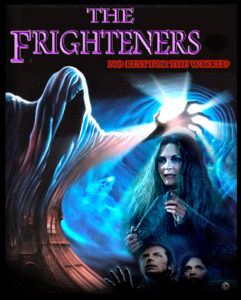 workshops as well. His love and caring for both her and Gabrielle is apparent through Dee’s tone when she speaks of him. She obviously feels likewise.
Now the Dee career is barreling. She just completed a TV movie in Toronto that will be aired in November: Bad As I Wanna Be: The Dennis Rodman Story. She plays the farm wife who helped nurture Rodman early on. (Rodman is played by first time actor, Dwayne Adway.)
Then there is that yet released film, Nevada, in which she plays a lesbian. Kirstie Alley also stars.
Earlier this week, in Kansas City with her husband and daughter, Dee visited relatives and friends. She also threw out a baseball at a Royals game, and dressed up as a Chiefs cheerleader for Dick Clark at the third anniversary celebration of his American Bandstand restaurant in Overland Park.
Dee Wallace Stone’s eventful career, by her own doing, continues to be a shared, family thing. As the screen’s premier momma, it all fits.