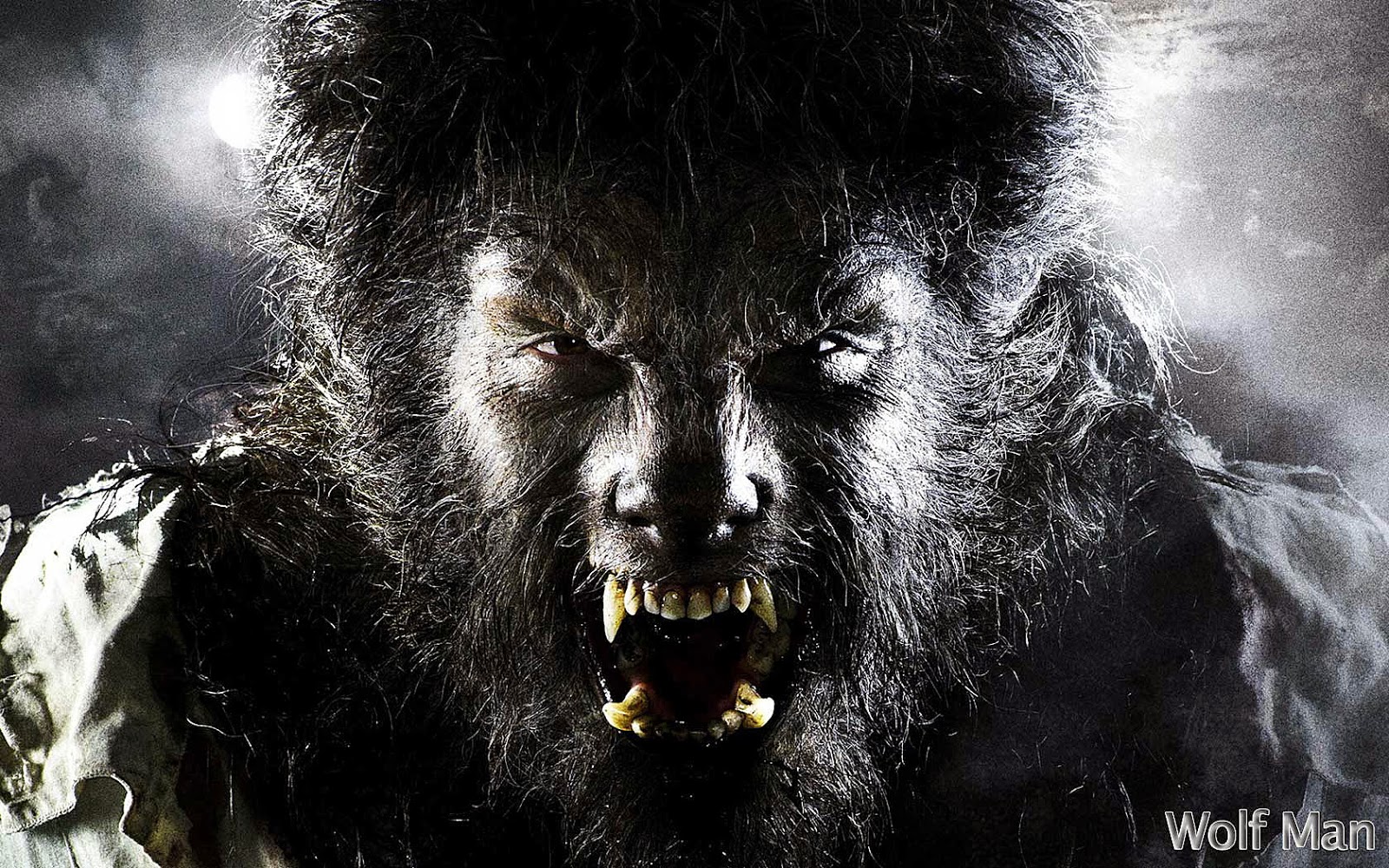
‘The Wolfman’ respects Chaney’s original, features state-of-art effects

By Steve Crum
 
As a fan of classic Universal horror movies, I place Lon Chaney Jr.’s The Wolf Man as my favorite among The Mummy, Dracula, The Invisible Man, and Frankenstein. That is why I anticipated seeing Benecio Del Toro’s werewolf take with trepidation. I could not wait to see it, while fearing it would disappoint. Not to worry, silver bullet fans, The Wolfman is a worthy romp through full moon nights.
 
The original 1941 version is still preferred, but The Wolfman’s director Joe Johnston (Jurassic Park III) pays grand homage while playing to the 2010 crowd. However, why the title has to be spelled “Wolfman” instead of “Wolf Man” is a slight irritant. After all, Universal produced both movies.
 
Writers Scott Stuber, Benicio Del Toro (yep, the star), Rick Yorn, and Sean Daniel based their screenplay on Curt Siodmak’s original, and how. There are references regarding not only the ’41 movie, but to virtually all four, subsequent, Chaney Wolf Man guest appearances in horror films ever produced. For history’s sake, they are: Frankenstein Meets the Wolf Man (’43), House of Frankenstein (’44), House of Dracula (’45), and even 1948’s comedy-horror gem, Abbott and Costello Meet Frankenstein. Never think movie sequels and remakes are a product of just the last couple of decades.
 
About the only contrived element missing from the Siodmak original is wolfbane. Siodmak used it as a plant that had mystical, preservation powers affecting the creature. It was a featured element of the six Chaneys; it is sorely missed in this new version (except for brief mention) only because of the faithful inclusion of most other werewolf legend. To the vast numbers of younger viewers who have never seen any Chaney Wolf Man, it should matter not. As the ad promos say, The Wolfman is “inspired by the classic Universal film.” It is not a Xerox redo.
 
To prove that point, main character Lawrence Talbot (Del Toro) is a Shakespearean actor in this story, which opens in 1891. He is also a British nobleman who returns to his estranged father Sir John Talbot (Anthony Hopkins) at Talbot Hall in Blackwood, England, after his brother Ben is brutally killed. His brother’s fiance, Gwen Conliffe (Emily Blunt), is also at the estate for the funeral. Lawrence’s mother was also violently killed years ago. Lawrence is haunted by visions of his mother’s death, which he witnessed after the fact. Not long after he views what is left of his brother’s butchered remains, nearby villagers begin to suffer brutal attacks on the foggy moor by what appears to be a large, wolf-like animal. The inclusion of beset villagers is a staple of Universal horror films, yet another tip of the hat to horror movie history.
 
The big difference between then and now filmmaking is the special effects and violence level. It is no spoiler to say the killer is a werewolf (a “wolf man”), but realize the monster this time around is a full blown mass murderer, taking on a dozen villagers, police or whomever one sharp claw and long tooth rip at a time. And he is fast. Decapitations occur, pardon the term, at breakneck speed. Chaney’s wolf guy would pull off maybe one kill per full moon rising evening.
 
How can there be a werewolf loose before Lawrence even arrives home? Ah, the twist of the story surfaces, but will go without much explanation due to ruining it for viewers. When Lawrence is indeed bitten by the creature, and is transformed himself into a werewolf, then the story takes unique turns as there is double trouble in the woods.
 
In keeping with Universal tradition, there is Scotland Yard’s Inspector Aberline (Hugo Weaving) hot on the bloody trail. There is also a band of gypsies camped across the swamps. While the original old gypsy woman Maleva, gloriously played by Maria Ouspenskaya in the original, is long gone, an unrecognizable Geraldine Chaplin does a credible job in the role. It is she who recites the famous werewolf credo: “Even a man who is pure at heart, and says his prayers at night, may become a wolf when the wolfbane blooms and the autumn moon is bright.” It is all very campy, and mood appropriate.
 
As with previous Universal horror films, do not expect a complex script. The Wolfman is basically a mass hysteria, villagers versus monster opus. There is also a developing love story, but the real attraction is Rick Baker’s memorable wolf transformations and body count mayhem. Action dominates. Expect lethal silver bullets and cane handles.
 
Del Toro handles the anguish of being a werewolf about as well as Chaney did nearly 80 years ago, but in this respect, it is hard to top Lon Jr. I do want the brand name of the durable shirts and trousers both Lawrence Talbots wear. After each transformation, in which their bodies are stretched five ways and a killing spree follows, Talbot always wakes up shoeless, but with his shirt and pants intact.
 
Obviously, the clothing is more complex than the script.
——————–
On an A to F grade scale: B
——————-
Share:

Worth 1,000 Words: AL JOLSON ready for takeoff


By Steve Crum

SUPERSTAR AL JOLSON takes the “pause that refreshes.” More is now known (as of an hour ago) regarding this UNPUBLISHED photo of The World’s Greatest Entertainer, Al Jolson. Thanks to input from Jolson scholars as well as my own web research, it is thought the pic was taken during a flight to Sacramento, California in January, 1947, to attend the second inaugural of Earl Warren as Governor of California.

Others, possibly Friars Club members, on the plane included Bud Abbott and Lou Costello. The unidentified gentleman with Jolie is an executive with American Airlines, so says the accompanying caption. And Coca Cola bottles are product placement-like displayed hither and yon. As far as I know, Jolie never did any Coke ads. Is Jolson traveling coach? [from Steve Crum’s showbiz memorabilia collection]

Share:

Worth 1,000 Words: JEAN HARLOW in KANSAS CITY


By Steve Crum

JEAN HARLOW, MGM’s “Blonde Bombshell,” poses with an unidentified Kansas City, Kansas neighborhood child (one of her grandmother’s neighbors) at Kansas City, Missouri’s Union Station in 1933. Harlow was preparing to board a train for her return trip to Los Angeles. (A couple of porters are barely visible at left in the background.) Feast your eyes, since this is a heretofore unpublished photo of the famous Harlow, who died far too young four years later at age 26. For more on Harlow’s visit, please scroll down a couple of stories or so. [from Steve Crum’s showbiz memorabilia collection]

——————–
For a nice tribute to Jean Harlow: http://www.youtube.com/watch?v=o_7J_IDIdJQ
Share:

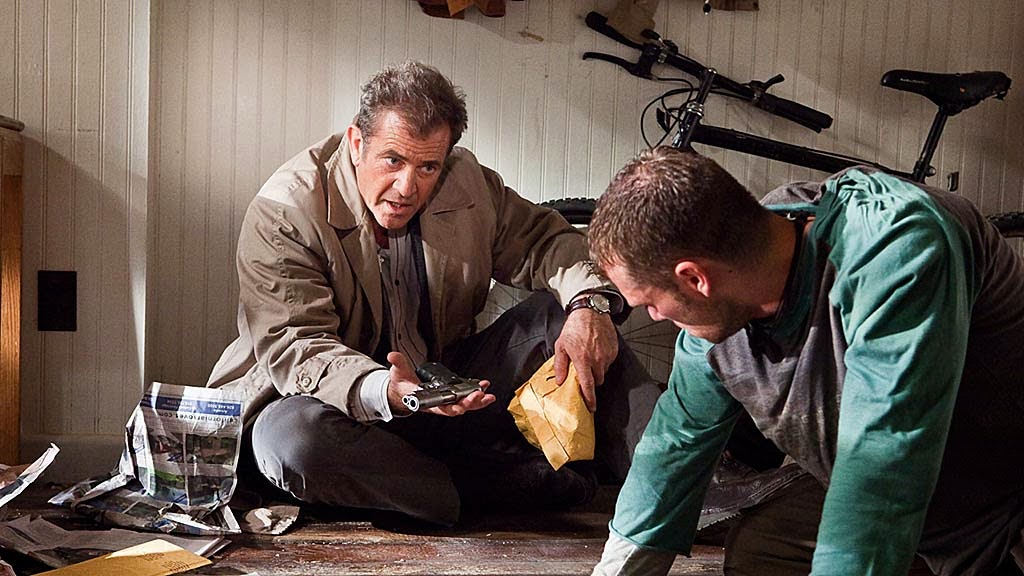
Gibson returns in violent, vengeful ‘Edge of Darkness’

By Steve Crum
 
Much has been said and written about Mel Gibson’s return to film stardom after eight years. Since 2002’s Signs, Gibson forsook acting for writing and directing the controversial and critically praised Apocalypto (2006) and The Passion of the Christ (2004). Apart from his professional successes, there were his highly publicized antisemitic slur, drinking binges, and divorce. They are mentioned here only because of their potential box office drag.
 
Now, looking his age but still showing road warrior grit, Gibson headlines Edge of Darkness, playing a Boston cop revenging his murdered daughter. Although written and directed by others, Edge has its share of Gibson movie earmarks: violence, heroism to the point of martyrdom, and spirituality. The Thomas Craven character Gibson portrays flashes his crucifix necklace several times, and one of his lines (from the screenplay by William Monahan and Andrew Bovell) curiously channels The Passion of the Christ: “You had better decide whether you’re hangin’ on the cross…or bangin’ in the nails.”
 
Edge of Darkness is a solid action movie with a strong, believable performance by Gibson. Just as effective is Ray Winstone’s turn as philosophical hit man Jedburgh.
 
Labeling Edge as violent is an understatement. There are more bullets to the head and torso in this flick than an entire season of CSI shows. Director Martin Campbell (Casino Royale) has supplemented the homicides with a plot line of government corruption and conspiracy–and the aforementioned revenge.
 
Based on the 1980’s British mini-series of the same name, Edge of Darkness is aptly named. After his 24 year-old daughter Emma (Bojana Novakovic) is shot-gunned to death as they both walk out the front door, the veteran Detective Craven fixates on finding the murderer. In the process, Craven dodges and lobs bullets while encountering a cover-up. Among the guns, fisticuffs and kicks, Gibson plays Craven as both vulnerable and lethal. Mel Gibson + lethal. That is an original concept.
 
As the heartbroken and hateful Craven seeks his kid’s killer, he links with government operative Jedburgh, who is essentially a crisis clean-up guy. If eliminating someone is necessary, so be it. Jedburgh becomes conflicted when he sympathizes with Craven, and therein lies a plot element.
 
With a relentlessly driven take by Mel Gibson, including his credible Boston accent, Edge of Darkness car crashes and body slams to a surprisingly spiritual conclusion. The finale is also corny and touching enough to elicit tears.
——————–
On an A to F grade scale: C+
——————–
Share:

‘Crazy Heart’ is among Bridges’ finest work

By Steve Crum

Jeff Bridges does justice to a beautifully written lead role in Crazy Heart. As down and nearly out country western singer Bad Blake, echoing Hank Williams, who performs both between and during booze binges, Bridges’ performance is the stuff of which Oscars are won.

Director Scott Cooper adapted Thomas Cobb’s novel about a more than middle aged country singer (Blake) who was a near great in the good old days. At his peak, Blake likely toured with his band and manager; and probably played stadiums, fairs, and even headlined showrooms in Vegas. We don’t know much about his past. But we know his lifestyle now is picking up gigs wherever.

The film opens as he drives his old car to a dive of a bowling alley in Santa Fe, New Mexico, and checks in as the lounge act therein. The local musicians know him well, and he recognizes them more when he is sober. He checks into a nearby motel, retires to his room, and the whiskey slams begin. By show time, he barely makes it to the bowling alley stage. Performing without retching during a song is the challenge. So goes Bad Blake’s daily regimen.

A local newspaper reporter, Jean Craddock (Maggie Gyllenhaal), wrangles an interview or two from Blake, and the story predictably goes from there. Jean’s fascination with the legendary singer turns to sympathetic adoration. At first, Bad treats her as a groupie, which in several ways she is. A mutual admiration and love develops, particularly after Blake meets her young son. There is a particularly moving scene late in the film involving Blake and her son at a shopping mall.

Thanks to Jean, Blake tries to sober up and regain a life lost. He tries to reestablish relationships with a surrogate son of sorts who was once one of his sidemen, and is now the major country singing star Tommy Sweet (Colin Farrell). There are good scenes with his former partner, played by Robert Duvall. There are effective, original songs written by T-Bone Burnett.

The story is simple, really, but Cooper’s direction is praiseworthy, conveying both the claustrophobic privacy of Blake’s drinking contrasted with the vast desert landscape (gorgeously photographed by Barry Markowitz) of the nearby, real world just outside his sleazy motel room. However, it is Bad Blake’s tortured complexity that sells Crazy Heart, and Jeff Bridges captures Blake body and soul.

Thinking of memorable portrayals of alcoholics in films, several are recalled: Jack Lemmon and Lee Remick in The Days of Wine and Roses, Ray Milland (The Lost Weekend), Nicholas Cage (Leaving Las Vegas), Susan Hayward (I’ll Cry Tomorrow), and even Dudley Moore as a comedic lush in Arthur. Jeff Bridges is included in this group, not necessarily at the top of the group, but at the top of his acting game. On second and third thought, Bridges deserves to be placed at the top of the group as well.

Crazy Heart definitely ranks among Jeff Bridges’ finest work, including: The Big Lebowski, Wild Bill, The Fisher King, Starman, The Fabulous Baker Boys, Tucker: The Man and His Dream, Tron (yes, Tron!), and The Last Picture Show. After four Oscar nominations, he will surely–and deservedly–grab the proverbial ring with Crazy Heart.
——————–
On an A to F grade scale: A-
——————–
Link here to the Crazy Heart trailer: http://www.youtube.com/watch?v=Y0349E7kFEM


Share: