
‘Iron Man 2’ delivers heavy metal, superhero thrills

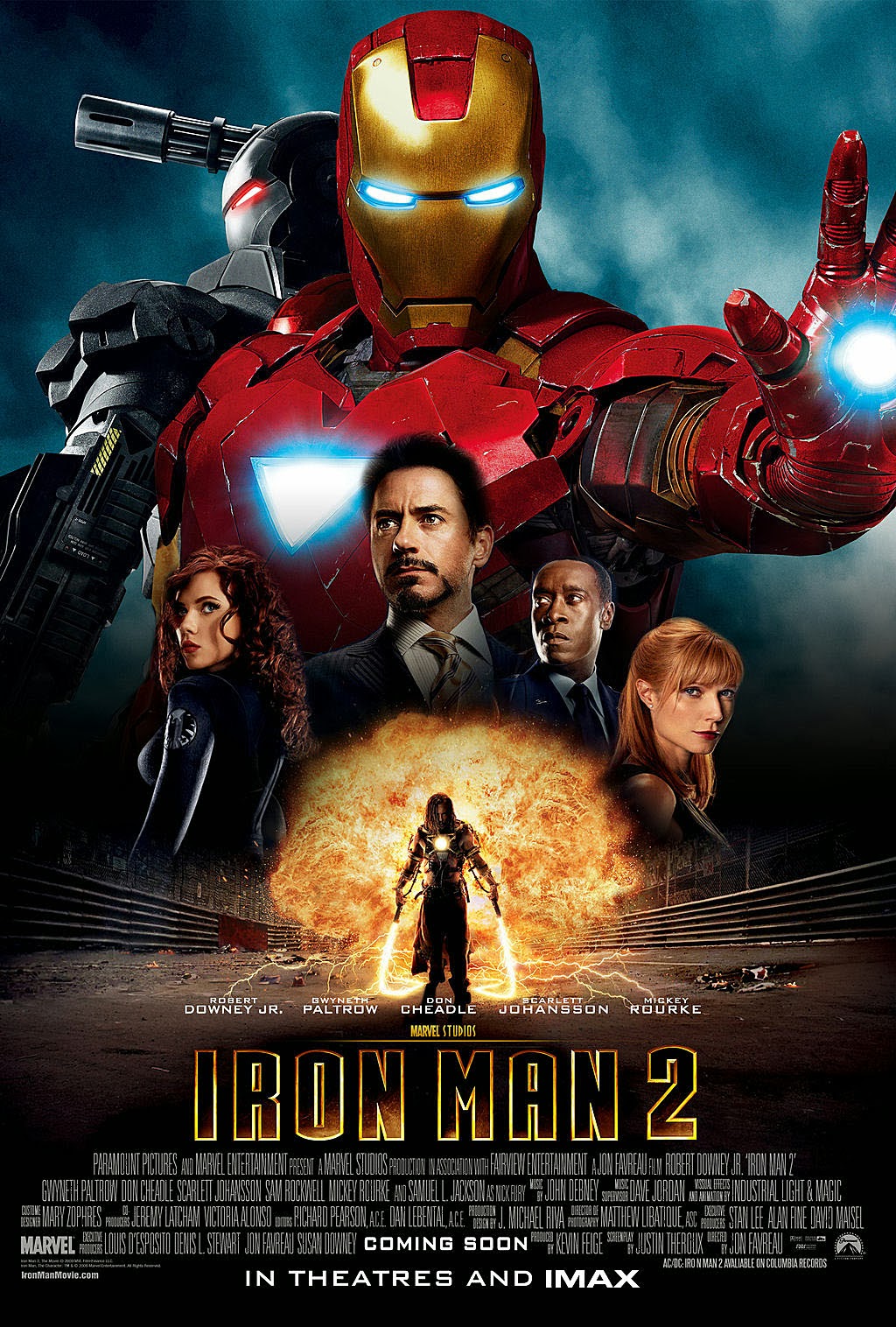 It is no secret that there are newly introduced (super)heroes in IM2. (Actually, they are long time, Marvel Comics characters.) Samuel L. Jackson’s Nick Fury was briefly shown in IM1, but occupies major screen time here. However, his scenes are of the static, non-action, confer-with-Tony Stark variety. This begs the question: What is the tough looking, eye-patched, man in black’s function in IM2? His protege, Black Widow/Natalie Rushman (Scarlett Johansson), certainly pays her entertainment dues via her sexy, kick booty action takes. Fury is a man of talk, not action.
 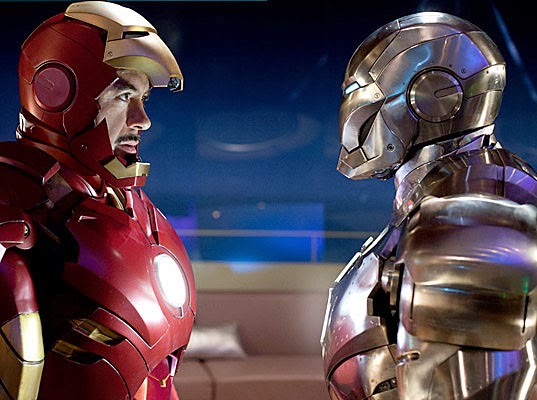 I’ve saved my comments about director Jon Favreau and his writer Justin Theroux until now. Theroux has perfectly captured Tony Stark’s egocentricity as well as his drive to live life over the top out of fear of impending death. It is never clear whether Stark is driven by fame and hero worship alone. He talks patriotism and peace for mankind, but delivers the message like a carnival pitchman. Theroux makes this complexity believable.
 Worth 1,000 Words: JIMMY DURANTE & DANNY THOMAS, nose to nose

By Steve Crum
Obviously enjoying their photo op at a 1958 Christmas benefit in Los Angeles, JIMMY DURANTE (Feb. 10, 1893-Jan. 29, 1966) and DANNY THOMAS (Jan. 6, 1912-Feb. 6, 1991) rub proboscises amongst what appears to be Navy officers…or ushers. Could that be a laughing LENNY BRUCE (Oct. 13, 1925-Aug. 3, 1966) to the right? [from Steve Crum’s showbiz memorabilia collection]
Worth 1,000 Words: MARTHA RAYE entertains the troops

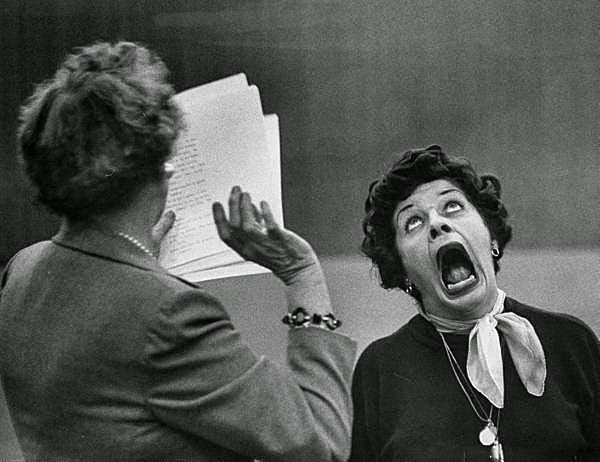
MARTHA RAYE (Aug. 27, 1916-Oct. 19, 1994) was one of the great entertainers of the 20th Century. Born Margy Reed in Butte, Montana, Martha’s show business career, sounding like Judy Garland’s “Born in a Trunk” song, began as a three year-old in her vaudevillian parents’ act.
 When WWII began, Raye was among the first entertainers to sign with the USO to help build morale for the troops. Despite an extreme fear of flying, she traveled the world in doing so. This is something Martha Raye continued to do during both the Korean and Vietnam Wars. She distinguished herself for her relentless trips to Vietnam. During one trip, Raye even assisted in nursing wounded soldiers within a battle zone. Her support and courage earned her an Honorary Green Beret commission and the nickname, “Col. Maggie.”
  Fans of Martha Raye must check out recently released CD’s of many of her regular appearances on radio’s The Lifebuoy Show, starring Al Jolson. She was featured on the 1936-39 program as both singer and comedienne, including duets with Jolson. (By the way, she co-starred with Jolson in his 1940 Broadway musical comedy, Hold On to Your Hats.) The newly found Lifebuoy recordings are available only through The International Al Jolson Society, and can be purchased only by members. So…PLEASE JOIN! Details are at the impressive Jolson Society website: http://www.jolson.org/
Before Kevin & Jay, there were Skitch & Johnny

 As for Skitch Henderson, born Lyle Russell Cedric Henderson on Jan. 27, 1918, his reason for leaving Johnny Carson was far from just wanting to explore new vistas, as Kevin Eubanks seemed to express to Jay Leno the night of his departure announcement. After an illustrious career that began on radio, conducting for Frank Sinatra and Bing Crosby on their respective programs, Skitch led the band and did comedy bits on The Tonight Show with Steve Allen until Jack Paar took the reigns, bringing his own bandleader, Jose Melis. Then Skitch returned to The Tonight Show when Carson headlined.
  During an interview I had with Skitch (for the college newspaper) following rehearsal, he spoke of many things, musical and otherwise. He talked of why he left The Tonight Show with Johnny Carson. “‘The Good Ship Lollipop,’ as we have always called the show, has been leaking at the seams for the past year,” Henderson said. Essentially, Henderson revealed he was leaving a sinking ship, ratting out, per se. Funny thing, The SS Tonight Show with Johnny Carson continued its nautical run as more of a super cruiser than a Titanic. Johnny Carson helmed it for another 25 years, followed by Jay Leno’s 18 years at present. Incidentally, following Skitch’s concert held at the Civic Auditorium in downtown Emporia, I chatted with him over cocktails at a private party on campus.
Worth 1,000 Words: EDDIE CANTOR & Family

By Steve Crum
EDDIE CANTOR (Jan. 31, 1892- Oct. 10, 1964) is a true icon in American show business. This multi-talented entertainer excelled as a comedian, singer, dancer, actor and songwriter for over 50 years. Cantor, nicknamed “Banjo Eyes” because of the prominent eyes which he frequently rolled to the delight of audiences, was a showbiz trailblazer, starring in vaudeville and Broadway shows (the latter mostly produced by the great Flo Ziegfeld); via his records and sheet music; starring in enormously popular movies; and headlining his own highly rated TV shows, notably The Colgate Comedy Hour. Though not billed “The World’s Greatest Entertainer” as was his close friend and fellow artist, Al Jolson, Eddie Cantor (aka “The Apostle of Pep”) was nonetheless a superstar in his own right and one extraordinary entertainer and human being.