
Among best of best Republic serials…
Published Feb. 2, 1996 in my weekly Crum on Film column that ran in The Kansas City Kansan.
MORE SCREENINGS OF SOME OLD FAVORITES
By Steve Crum  After all these movie-going, widescreen years. After all the popcorn that has spilled by the aisle-side. Those schlocky, corny films are dear and near. Rarely Oscar caliber, true, but fun to view. Consider this installment of a critic’s Shameless Screenings.
Movie Serials
Originally shown an episode once a week for 10-15 weeks before the Saturday feature film (along with a cartoon, previews and newsreel), dozens of serials can still be appreciated via videotape. The best were made by Republic Pictures, the cream of B-movie producers during the 1930’s-early ‘50s.
These action-packed black and whites packed the best special effects (of the time) and the most spectacular stunt work into each 20-minute chapter. The hero was always on the verge of being crushed, crashed or exploded. But we’d have to wait until next week to see how he would get out safely.
_12.jpg)
•The best of the best is 1941’s The Adventures of Captain Marvel, featuring upright Tom Tyler as the comic book “Shazam” superhero in the best flying sequences this side of Commando Cody. Also, this Marvel guy is no slouch about carrying out violent death sentences on his enemies, such as gleefully pitching a hoodlum from atop a 20-story warehouse. (Note the same falling scream used in all Republic serials.)
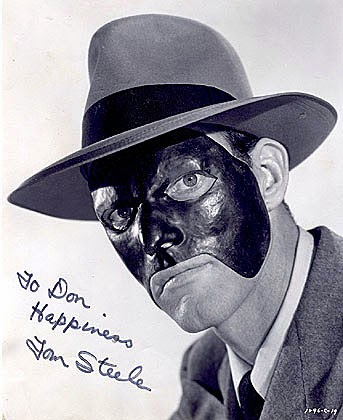 •1943’s The Masked Marvel (no direct relation to Captain Marvel—except they both have their origins in Marvel brand comic books) is a modern (’43) action hero in a double-breasted, gray flannel suit and hat! Add a black upper face mask, and you get some of the best two-fisted fighting in serials. The gimmick in this one is there are five guys dressed in the same wardrobe, working as insurance agents side-by-side. One by one, they are killed off, finally revealing the real Masked Marvel’s secret identity. MM is laced with propaganda, typical of serials and mainstream films of the WWII era. In this one, he battles a Japanese infiltrator and his gang of saboteurs.
Though not possessing super powers, MM does turn a neat trick in one scene by jumping from a standing position straight up, over 100 feet, lighting atop a wall. And he does it backwards!
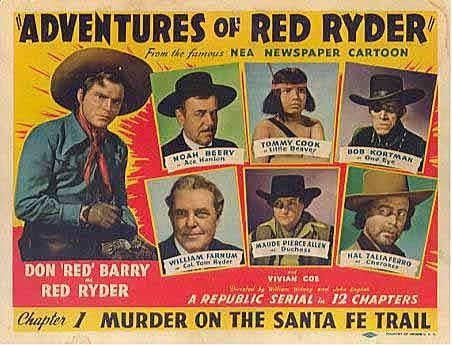 •The Adventures of Red Ryder (1940) stars Don Barry as the Fred Harman comic strip western hero, always accompanied by Native American sidekick Little Beaver. (“You betchum, Red Ryder!”) So popular was the serial that it not only made Barry a major B-western star, it gave him a nickname for life, Don “Red” Barry. In real life, Barry’s hair was not red.
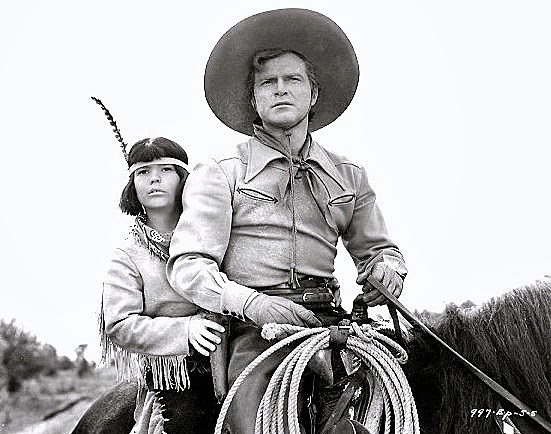 This is a great stunt film that ends in the last chapter with an incredible fall by Red and the bad guy down what looks to be the Grand Canyon. No way could Republic writers come up with a logical way he could survive the death dive. So in the last 30 seconds of the final chapter while everyone, including Little Beaver, is crying and mourning the late Ryder, who do you think comes galloping from out of nowhere, his arm in a sling? Yep, pardner, Red Ryder lives.
His classic explanation to the Beav: “Well, we fooled ‘em this time, sprout.” The end. Fadeout.
——————–
And now, boys and girls, the coming attraction promo for The Adventures of Captain Marvel: https://www.youtube.com/watch?v=kn8PJ4AEhmY
Remembering Ben Johnson…
Published on April 19, 1996 in the Kansas City Kansan on the occasion of actor Ben Johnson’s death.
COWBOY ACTOR’S DEATH MEANS END OF AN ERA FOR WESTERN FILMS
 By Steve Crum
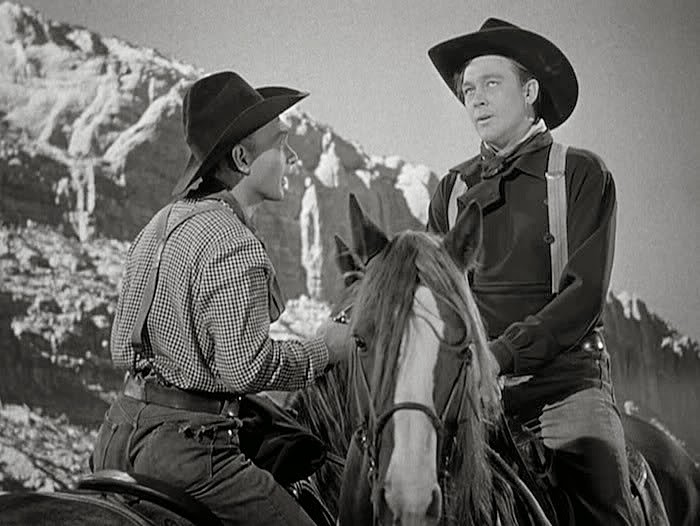
Ben Johnson rode with the best of them on and off screen during his 60-plus cowboy years as a trick and stunt rider, rodeo star, actor, and ultimately Academy Award winner. His death at 75 on April 8 adds closure to the great era of Western movies that spanned from William S. Hart and Tom Mix silents to John Wayne and Clint Eastwood. Most of his cowboy co-stars and directors are long gone, including mentors Duke Wayne, Ward Bond, and John Ford—the revered “John Ford Stock Company.” Under Pappy Ford, Ben Johnson’s gutsy, hard riding heroics forever dazzle in She Wore a Yellow Ribbon, Ford Apache, and Rio Grande.

Yet his best Western work, Ford’s low-keyed Wagonmaster, gave him his first stretch as star actor. Teamed with another Ford stock actor, Harry Carey Jr. (who is still alive), Johnson is terrific as a cowpuncher who very reluctantly agrees to guide a group of Mormon settlers (led by Ward Bond) to their promised land out West.
It was always Ben Johnson in a cowboy hat, even in monster film Mighty Joe Young (he ropes that giant ape), and later roles as a modern day Lone Star lawman in The Sugarland Express as well as owner of a has been movie theater (his Best Supporting Actor Oscar) in The Last Picture Show. A late career highlight was his gritty part as a weathered outlaw in Sam Peckinpah’s The Wild Bunch, restored and re-released last year.

The Oklahoma cowboy off-screen was devoted to raising thousands for afflicted children via his annual charity rodeo in Scottsdale, Arizona. He was also devoted to his fans, appearing regularly at dozens of nationwide film festivals.
Alan Brehm, a friend of mine who is a premiere film collector and historian possessing a fantastic collection of John Ford memorabilia, witnessed Johnson’s open persona at last summer’s Memphis Film Festival held at a local hotel there.
“Ben was the main reason I went down there,” said Brehm. “He was supposed to come in early on a Friday, but arrived late, at 9 p.m.” Brehm said Johnson had not been feeling well, and was encouraged by an aide to go to his room to rest. Twenty minutes later, Johnson appeared at the door of the festival’s main area, his friend still pressuring him to get some sleep. Ben Johnson was adamant about staying.
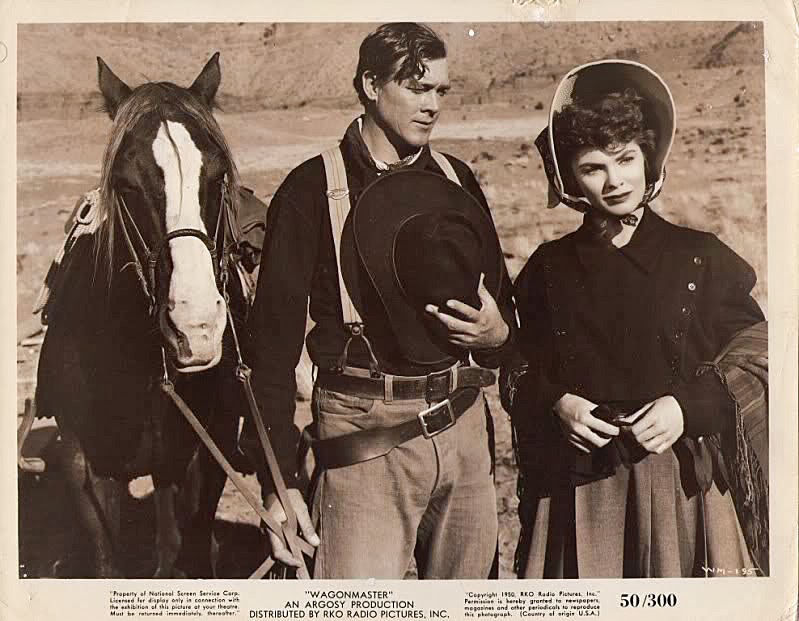
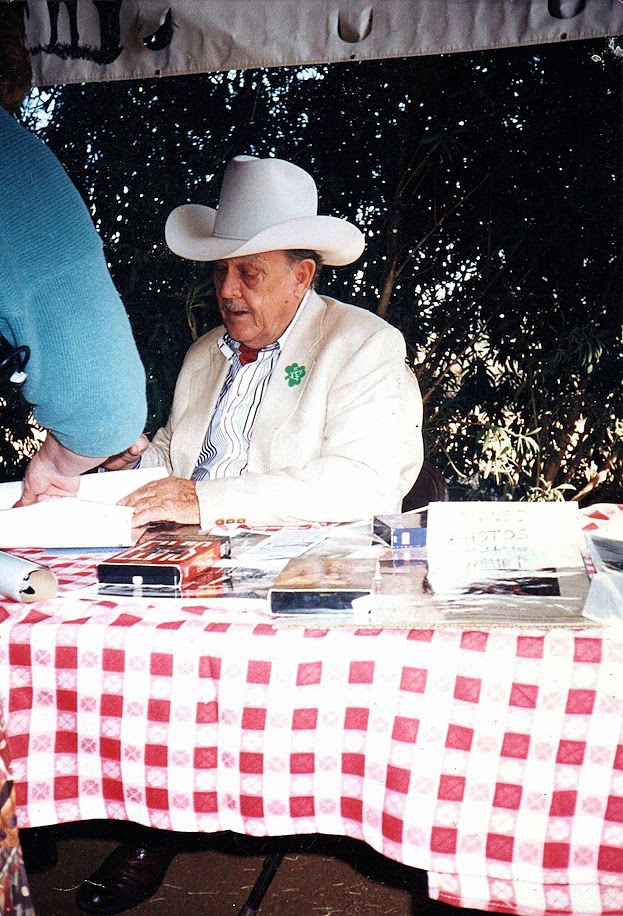
“These are my fans,” he said. “If it weren’t for them, I wouldn’t be here.” For the next hour or so, Johnson tirelessly greeted fans and signed autographs. Then he returned to his room. Brehm, who was staying at the same hotel, was in the hall at about 1 a.m. and saw Johnson carrying an armload of folders to his room.
“Goodnight, Ben!” yelled Brehm. “Get some sleep!” “Yeah, boy!” was his reply.
 A treasure of Brehm’s is the movie still of Rio Grande that Johnson personalized with a quote directed to his character in the same film: “You’re a man I can trust. Your friend, Ben Johnson.”
Reports are that Johnson died of a heart attack after visiting his mother at the retirement community in which they both lived. The beloved old cowboy will be missed.
——————–
This photo of Ben Johnson was taken during the 1995 Memphis Film Festival.
——————–
Retro book review: ‘Hollywood Hi-Fi’
This book review/feature was published July 12, 1996 in The Kansas City Kansan.
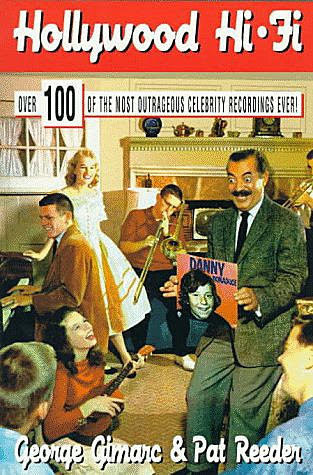 WHILE ACTORS MAY LOOK GOOD, THEY AREN’T ALWAYS VOCALISTS.
By Steve Crum
Truly bad celebrity vocalizing can be both painful and fascinating to the discriminating listener. Take Burt Reynolds, who warbles Cole Porter with Cybill Shepherd in 1975’s disastrous musical, At Long Last Love. PLEASE take Burt Reynolds! Yet the double soundtrack record album is collectible more so for Reynolds’ strained singing. Figure that out.
Authors George Gimarc and Pat Reeder have not only figured that out, but tapped into a gold mine of bizarre musical gigs with their fascinating soft back book, Hollywood Hi-Fi. Subtitled Over 100 of the Most Outrageous Celebrity Recordings Ever!, the 128-pager chronicles movie and TV stars who should have stuck with what they knew best and left the songs to the singers. Luckily they didn’t. Otherwise posterity and recordings would suffer from not having the likes of Pee-wee Herman singing “Surfin’ Bird,” and Archie and Edith Bunker screeching “Oh Babe, What Would You Say?”
 Gimarc and Reeder contend that “laughing yourself limp” while listening to Bette Davis sing the soberest “Mother of the Bride” (on a 45 rpm recording) is far more entertaining than, say, “listening to 45 minutes of C-minor arpeggios from John Tesh.” Good point. The book is also a salute to “a whole genre of records that has been largely ignored by pop culture historians.”
 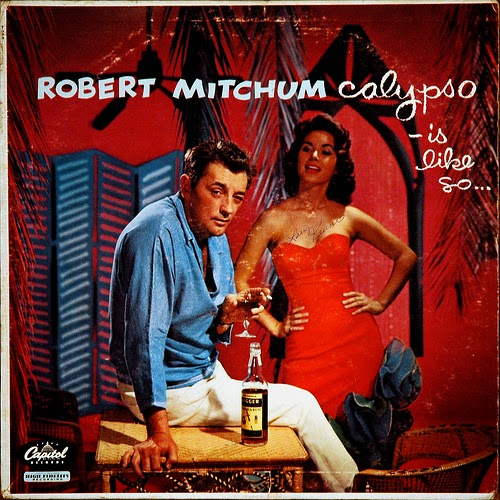 Robert Mitchum singing? Yep, on an album called Calypso…Is Like So…. If you can take that, then take the commercially recorded songs of Marlon Brando, Walter Matthau, Lee Marvin, and Rock Hudson.
Dozens more stars have been pressed on vinyl, tape, and CD; and all are documented herein. Eighteen of the tracks, in fact, are available on a co-produced (by the book’s authors) via Hollywood Hi-Fi CD. It makes beguiling background noise while reading the companion book.
————— Checking my own truly strange celebrity recordings, I found a wealth of weirdness, some included in Gimarc and Reeder’s book. Those not chronicled, but that I have:
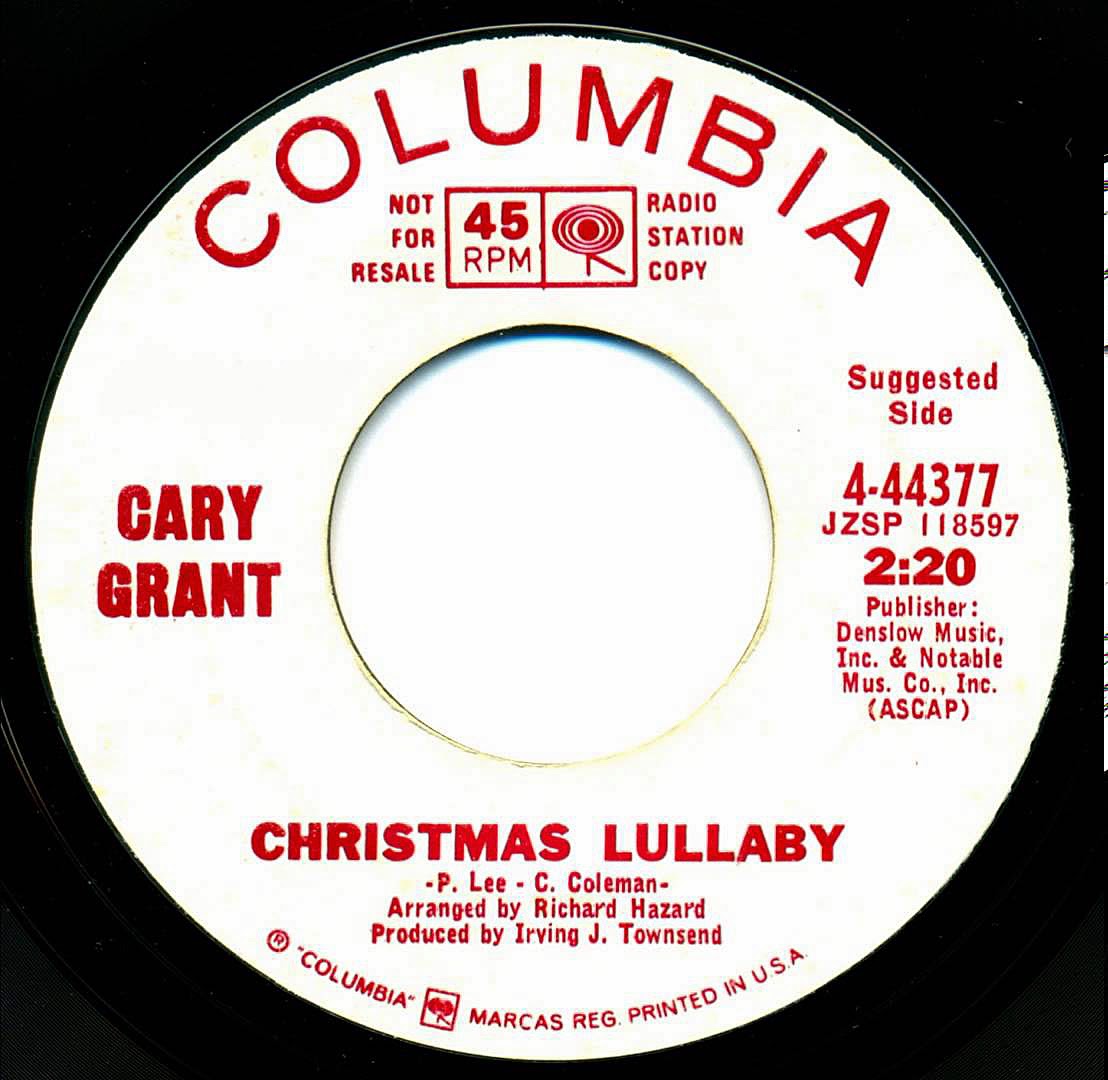
•Cary Grant warbling “Christmas Lullaby,” a mostly talked, string-sappy, tearful earful found on a limited edition Christmas album produced by the now defunct Grant’s store chain. No relation to Cary.
•Tough guy star John Garfield reading “Raymond the White Rabbit” on a children’s album.
•Ted Knight doing his Ted Baxter voice on a single, “May the Bird of Paradise Fly Up Your Nose.” At one point, he quips, “Are you as tired of this song as I am?” Oh, yes. 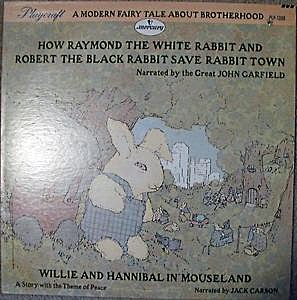 •Renee Taylor (now the nanny’s mom on The Nanny) singing a 1960’s forgotten tune, “I’m In Love With Jack.” The Jack is John F. Kennedy, and Taylor sings the song a la Jackie’s voice, accompanied by a cha-cha arrangement. (“I really fell in love…cha-cha-cha…on the night of the Great Debate…cha-cha-cha.”) A collector’s showcase.
 •Other all-time forgottens include: “The Humphrey Bogart Rhumba,” Red Buttons’ “The Ho Ho Song,” Bill Cosby’s “Stand Still For My Lovin’,” and Richard Chamberlain barely modulating “Close To You,” recorded during his Dr. Kildare days.
Imagine what could have been done with this material had MTV existed back then. Staggering.
——————–
Authors Gimac and Reeder are featured in this promo for their book in which we get to hear William Frawley aka Fred Mertz sing: https://www.youtube.com/watch?v=vDUFw0GA-2E
Movie Asides: ‘THE GODFATHER’
 By Steve Crum
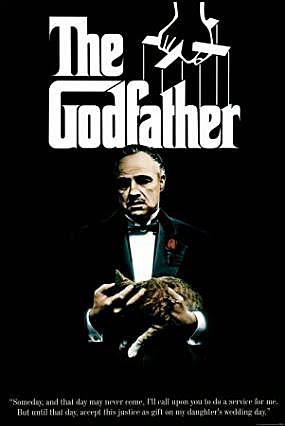 It pissed off another burly guy so much he screamed at the interrupter to get the hell out of the way. A fist fight immediately began between the two, juxtaposed with the godfather softly talking on the screen, stroking his kitty cat. Meanwhile, ushers (remember when movie theaters had ushers?) made their way to quell the disturbance. Surprisingly, no police were involved, and the two quarrelers finally, quietly settled down a few seats apart, and the focus was back on The Godfather and its own tale filled with fist fights and endless killings. Life imitates art imitates life imitates ad nauseam.
 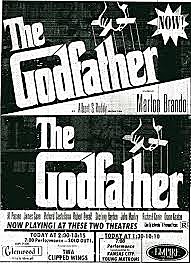 Igniting the audience’s edginess was the fact we all had to wait in line so long to get in, and it was a sold-out showing. The Godfather was also a highly publicized and anticipated event. Anxiety reigned.
 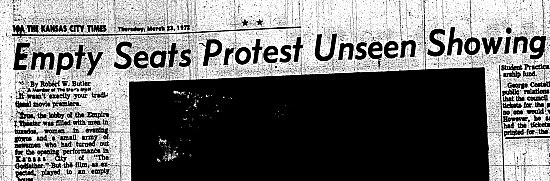 *Even though I attended what I thought to be opening night, it has been reported that the actual opening night was the night before. KC’s Italian-American Unification Council “felt the movie was harmful, so harmful that two of its leaders spent their own money buying every ticket to the premiere showing.” Therefore, opening night played to an empty house. Maybe that fist fight in the audience the second night was a planned event?
——————–
Here is an offer you cannot refuse…the trailer to The Godfather: https://www.youtube.com/watch?v=sY1S34973zA
‘Waiting for Godot’ continues to frustrate, challenge
 Among the first reviews I ever wrote is Waiting for Godot. Seasoned professional theatre critics still struggle with making some semblance out of Beckett’s tragi-comedy, featuring a surreal plot and eccentric characters. As a 20 year-old college student, I sat there taking notes, never really knowing what the hell was happening on stage. But the actors were acting, so I figured whatever I tried to explain about the goings-on would be just as valid as anyone else’s interpretation.
  By Steve Crum
 Being one of the most famous of the “Theatre of the Absurd” productions, Godot traditionally incorporates several recognizable qualities: broken dialogue, inconsistency in progression and harmony, a minimum of props and scenery, and at times, almost hellish dreamlike visions.
 Jim Daniels and Larry Remmers should undoubtedly be applauded for their frequently too realistic characterizations of Gogo and Didi. Daniels, as the sarcastic and sleepy hobo, blended appropriately with Larry Remmers, portraying the bombastic bed wetter and sometime intellectual.
  Waiting for Godot will run through Oct. 21. Tickets are still available at the College Theatre box office, New Humanities Building. The price is 50 cents plus activity ticket, which is an inexpensive way to see an extremely high caliber play.
——————–
An excerpt from the 2014 Broadway revival of Waiting For Godot, featuring Patrick Stewart and Ian McKellen: https://www.youtube.com/watch?v=MUXtzkLTABI