
And now, here’s Jack…on a great DVD
Published in The Kansan City Kansan April 21, 2004, my weekly column focused on the great talk show host/comedian Jack Paar (1918-2004). By the way, the DVD set mentioned is still available at around $20.
 By Steve Crum
There was a time before Letterman, Leno, and even Johnny Carson when Jack Paar dominated late night TV. A favorite question of those days, often repeated by Paar himself, was “What is Jack Paar really like?”
Since he was known for sincerity and frequently shedding tears on camera, the question was of course unnecessary. Jack Paar was who we saw five nights a week for 90 minutes per. He remains the most revealing, fascinating, what you see is what you get personality in show business history.
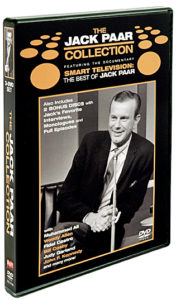
A three-disk DVD set, The Jack Paar Collection (Shout Video, approximately $30) is sublime nostalgia for former Paar addicts like myself, and surely an appetitive-wetting sampling for young talk show and TV history enthusiasts who missed Parr’s far too brief career. Whereas 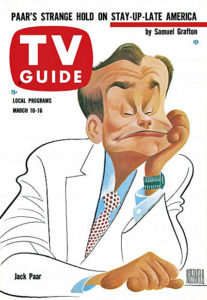 Johnny Carson retired after 30 years at The Tonight Show helm, Paar called it quits after five. His choice. Tired of the daily grind, Paar then hosted a popular one hour Friday evening variety-talk show for the next three years.
With little fanfare (his choice again), he retired to spend more time with his beloved wife Miriam and daughter Randy. Anyone who watched the Paar show knows these names since Jack often talked of them.
Paar certainly talks family on this nicely packaged DVD set, and he talks showbiz, too. Big time. Paar attracted THE stars of his time, including politicians (Richard Nixon, Fidel Castro, JFK, and RFK); movie stars (Bette Davis, Judy Garland, Richard Burton); sports celebs (Cassius Clay before he was Muhammad Ali); authors (Alexander King, Jack Douglas); and comedians. Bill Cosby’s career was launched on Parr’s program, and Jonathan Winters and Woody Allen certainly benefited from their appearances.
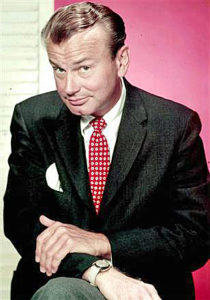 All the above are featured during a boggling six hours, 40 minutes covering the themed disks: “The Best of Jack Paar,” a PBS documentary; “Complete Interviews” + “Jack’s Favorite Monologues”; and finally three complete hour-long episodes. Some highlights:
•During a choice interview with Richard Burton in which he reminisces about Sir Winston Churchill, a DVD feature enables one to click on a detour clip of Burton performing Hamlet on Broadway.
•Vaughn Meader impersonates John F. Kennedy in a cut from his best selling First Family record album.
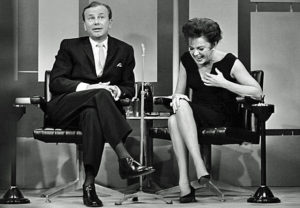 •Judy Garland is hilarious joking about Marlene Dietrich, and sings two show stopping numbers.
•Jack interviews the new Cuban leader Fidel Castro in Havana.
•Cassius Clay recites poetry to Liberace’s piano accompaniment.
•Robert Kennedy speaks publicly for the first time since his brother’s assassination,.
•A very young Bill Cosby does his classic sketch “Noah!”
•Jack walks off The Tonight Show after his “water closet” joke is censored.
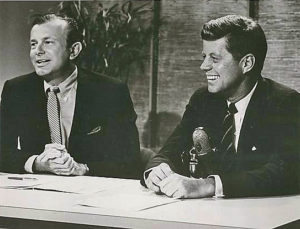 •Senator John F. Kennedy speaks as a presidential candidate.
•Jack fights a bull in Mexico with Cliff “Charley Weaver” Arquette.
•Former announcer Hugh Downs and The Smothers Brothers recall the Paar years.
•Hear Jack’s catchphrase, “I kid you not.”
Picture quality is very good overall, considering the age and rarity of the material. All footage is in black and white. Sound is monaural and quite clear. It is a shame the original 1957-62 Paar Tonight Show years are unavailable. These were pre-videotape times when the shows were performed live.—except for Kinescoping. Footage for this set is mainly from Parr’s 1962-65 weekly show, the earliest days of videotaping.
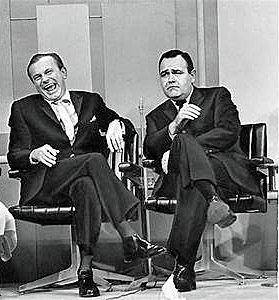 Jack Paar did not stay retired for long after 1965. In 1973, he was lured back by ABC to host a talk show opposite none other than Johnny Carson, who had replaced him at NBC. Even with the old Paar charm and wit, and returning veteran guests like Genevieve and former regular guest Peggy Cast as his announcer, the show folded after a few weeks. Paar “came back” for two specials in the 1980s. His fourth nonfiction book, P.S. Jack Paar, was published in 1983. Then it was truly retirement to his home in Connecticut.
Paar’s career began in the Army when as a sergeant, he entertained fellow soldiers with monologues. Jack Benny was so impressed he offered Paar a radio job after military duty. Paar took Benny’s offer. That led to more radio shows, and a brief movie career that included 1951’s forgettable Love Nest, co-starring Marilyn Monroe. Quiz show hosting and a CBS morning variety show followed. Then came The Tonight Show gig.
 In 1998, Paar had triple-bypass surgery complicated by an embolism. In March of last year, he suffered a mild stroke. During the years before his Jan. 27, 2004 death, Paar enjoyed friends and family. He loved painting miniature replicas of classic paintings.
“I’m complicated, sentimental, lovable, honest, loyal, decent, generous, likable, and lonely,” Paar once said. “My personality is not split, it’s shredded.” Enjoy the complicated genius of Jack Paar with this superb DVD collection.
=====
Stan Freberg fans—your fix has arrived
Nearly 20 years ago, on Sept. 10, 1999, this piece about the wunnerful, wunnerful Stan Freberg was published in The Kansas City Kansan. I was a Freberg fanatic then, and continue to be. The man  introduced satire and parody into my sense of humor, and I shall be ever grateful. My column that day was essentially a review of a brand new boxed set of Stan’s CDs.
Unfortunately, that set has been out of print for some time, but Amazon and other sites still have a few used and new copies available. These sterling recordings represent a chunk of showbiz comedy history, ladies and gentlemen. Since 1999, my friend Dave Laudick has died. But then I discovered another friend, Craig Delich, is a Freberg fan too. Now we sometimes share our foreign language à la Stan.
Stan Freberg died April 7, 2015 at 88.
 By Steve Crum
Invariably, it’s Freberg. Somehow, somewhere, sometimes—a Frebergism invites itself into my conversation. Of course, the person with whom I am conversing must understand Frebergian tongue. Since only one of my friends, David Laudick out west in Scott City, Kansas, connects with this language, the majority of my acquaintances miss out. And they do not realize their deprivation. The source of quotes is the brilliant satirist Stan Freberg. I have had a love affair with his words for almost 40 years.
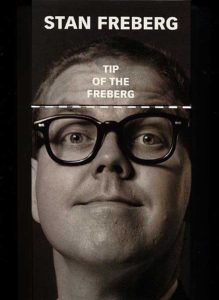
Let us nail the fact that Freberg is an infrequent movie actor, so fitting him into this film-based column is valid. But the latest cause for Roman candles is the recent release of a fantastic box set of Freberg’s greatest words, images and sounds (from songwriter to sound effects expert), titanically called (with no apology to icebergs): Tip of the Freberg: The Stan Freberg Collection 1951-98 (Rhino/$59.97).
For Freberg fans, it is the ultimate heaped ladle-fun of the best in satirical comedy and funny commercials. For anyone not already Freberged, just listen. Then tru NOT to absorb each memorable minute contained on the four CDs and one VHS 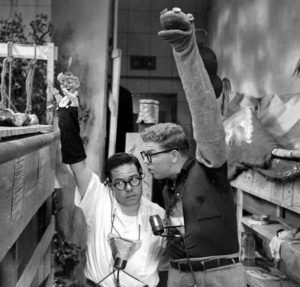 video. You are hooked. The 70ish Stan Freberg has been called “The Father of the Funny Commercial” and “The Dean of American Satire”—with good reason. After beginning as a Warner Brothers cartoon voice in the 1940s when a teenager, Freberg soon after starred in a modestly funny network radio show before working in early TV with Bob Clampett as one of the puppet masters and voices on the live action Time for Beany show. Daws Butler was his fellow puppeteer and voice guy. Freberg enjoys telling that Albert Einstein was a huge fan.
During the early 1950s, Freberg teamed with Butler (later the voice of Captain Crunch, Huckleberry Hound, and many others) in writing and performing a string of hit singles for Capitol Records. They are all featured within this humongous box set. Each is a Dr. Demento delight, and often played on his radio shows. Remember Freberg’s version of Jack Webb’s Dragnet, renamed St. George and the Dragonet?
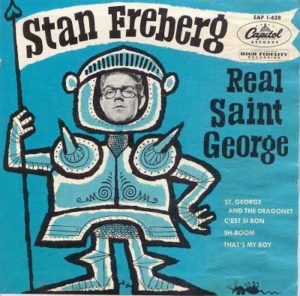 St. George, the knight who sounds like Jack Webb, ready to arrest the fire breathing dragon: “I’ve got you on a 412 too.”
Dragon (screaming): “A 412! What’s a FOUR-TWELVE!!??”
St. George (glibly): “Overacting. Let’s go.” (Theme from Dragnet is played.)
Included in the nearly four hour spectacular is his parody of soap operas, John and Marsha, wherein Freberg, playing both the man and woman, repeatedly interprets the words “John” and “Marsha” for three minutes while a sympathetic organ drones on in the background. The 45 rpm record sold a million. Then there is Freb’s slam on Lawrence Welk, Wunnerful, Wunnerful, during which the Aragon Ballroom fills up with rampant bubbles and floats away to outer space. How could one miss his Harry Belafonte takeoff of The Banana Boat song (Day-O): “Hey man, like I don’t dig 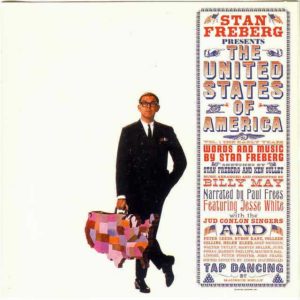 spiders”? Excerpts from Freberg’s half dozen comedy albums, long out of print, are also featured. That batch includes his gem, Stan Freberg Presents the United States of America (both volumes) and Freberg Underground.
The familiar hits have been available on tape and CD for years, but The Tip of the Freberg has recordings this fan had never heard or knew existed. Since Freberg made his millions in advertising, running his own “Freberg Ltd., But Not Very” agency, audio and video commercials are well represented here. Would you believe over 50 audio sports on CD #4, and 20 minutes of TV commercials on a video? Pizza is well represented, particularly with Clayton Moore and Jay Silverheels in Lone Ranger and Tonto wardrobe hawking Jeno’s Pizza Rolls. (Tonto to Lone Ranger: “Want a pizza roll, Kemosabe?”)
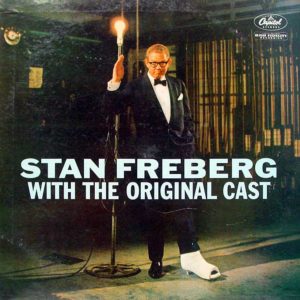 Many excerpts in the set are from Freberg’s hit CBS radio series from the summer of 1957, The Stan Freberg Show. The mock commercial for Puffed Grass still grabs. We are talking actual lawn mowing grass here, by the way. Discovered accidentally when a janitor threw some clippings down a Puffed Oat gun, the result was Puffed Grass. “You can always tell a Puffed Grass eater. He has a green mouth.”
Spend a few hours listening to this gotta-have Freberg library. You might get arrested for over-laughing.
=====
GRADE on an A to F scale: A
A reflection on Mel Gibson’s intense ‘The Passion of the Christ’
This commentary about the then recently released movie, The Passion of the Christ, was published on March 10, 2004 in The Kansas City Kansan as the centerpiece of my weekly Crum on Film column. I never reviewed the movie, but instead saw it after its release at an area theater. (I would have given it an “A,” however.) Of the over 2,000 films I have reviewed and probably another thousand referenced in my columns over the decades, this one turned out to be my most controversial. I do not tout my religious convictions, either publicly or privately, but I did here—to a degree. I stop way short of my being labeled a Bible thumper or the like. At least I tried not to go that far. That I went as far as I did should be credited to Mr. Gibson and his remarkable work.
 By Steve Crum
There was no outright sobbing at the mostly packed theater when I saw The Passion of the Christ, but there was quiet solemnity. Friends have since told me that many at their screenings were loudly crying. Recently, a sixth grader eagerly shared with me that not only did he cry, but so did his parents and young brothers and sisters. “Everybody was crying at that show!”
Remember that The Passion is an “R” rated film, so children must be accompanied by parents. Realize too that the movie is considered with good reason the most violent film ever made. “If The Passion weren’t about Jesus,” said one critic, “the rating would be NC-17.”
But it IS about Jesus, and that is precisely the point. The fact that The Passion made an incredible $125 million in its first five release days is testament…sorry, Testament.
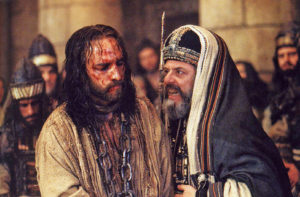 Certainly the controversy surrounding the role Jews played in the arrest, torture, and eventual crucifixion of the Son of God has helped more than hurt the movie’s box office. Both curiosity seekers and true believers filled those seats, and continue to do so. The bottom line is Mel Gibson, the Lord love him—and I believe He does, has succeeded in producing and directing the first major motion picture ever that is both spiritually and historically challenging.
From this Christian’s viewpoint, the Jewish depictions are probably apt. I say this with sensitivity to the Jewish religion and without malice or anti-Semitism. The film shows the religious leaders, who happened to be Jewish, as feeling threatened by Jesus Christ and then aggressively seeking his demise through their Roman governor. Throughout history, religious factions too often used violence against their enemies, whether or not the “enemies” were justifiably so. Both Catholics and Christians perpetrated their own Inquisitions and Crusades in the name of religion. It just so happened Jews were involved with Christ’s last days on earth. That is my possibly too simplistic take on the controversy of The Passion of the Christ.
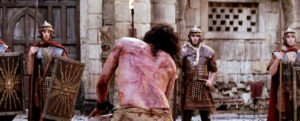 Technically, Gibson’s direction is taut, vivid, and subjective. His cameras pull us into the scenes, often crossing the line into the discomfort zone, like someone talking to you but getting too near your face in the process. In The Passion, that includes the relentless scenes (a good 90 minutes of the two hours, seven-minutes film) of actor James Caviezel’s Jesus being whipped, clubbed, and kicked until his outer skin is gone. We feel literally close to the pain through extreme close-up visuals and sound effects.
A fellow critic complained to me, “Gibson made his point 10 minutes into the film, so why did he have to give us two more hours of needless violence?” My response: Gibson’s point is that Christ DID suffer more than 10 minutes during his final hours. He suffered more than any normal human could or should suffer, and yet he survived—barely—to carry his own cross over a long, uphill road, to bear even more pain of nails, thirst, and degradation And then forgave those who did all this to him.
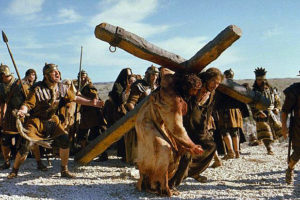 But does this message justify what some call Gibson’s glorification of torture upon Christ? Yes. I say this even though Gibson used a similar tact in the horrifying disembowelment of Scotland’s rebel hero William Wallace in 1995’s Braveheart. In a literary sense, no sacrilege intended, both Christ and Wallace were martyrs…with Christ being the supreme martyr. The fact that Mel Gibson made these two blockbuster films that are also graphically violent makes Passion an easy target for naysayers.
The Passion is not for the faint of heart. Whether it is for young children to see is up to parents. For believers, it is the most credible telling of Christ’s suffering in the history of film. Although I am very glad I saw The Passion of the Christ, for both religious and critical reasons, a second viewing would be too traumatic.
=====
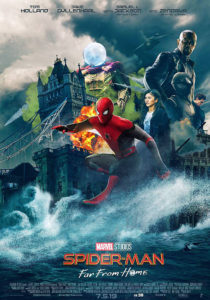
Plot surprises, surreal effects, great casting follow ‘Spider-Man: Far From Home’
 By Steve Crum
“People nowadays, they believe anything.” This quotation from a character in Spider-Man: Far From Home is both timely and telling. The believability factor, even in a Marvel superhero flick, needs to exist if for no other reason than to contrast reality with superhuman acts. That mesh of science and science fiction can be full of wonder and fun. So it is with this wonderfully fun Spider-Man escapade, a sequel to 2017’s Spider-Man: Homecoming, also directed by Jon Watts.
The believability aspect is central to Far From Home’s plot, carried forward to the movie’s end, and even to the end credits’ finale. (Stay seated in the theatre, and you’ll get a double punchline.) Chris McKenna and Erik Sommers deliver a doozy of a story packed with visual surrealism and clever plot surprises.
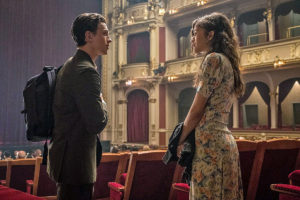 The plot involves a two-week high school class trip to Europe, wherein Peter Parker (aka Spider-Man) is traveling with a group of his fellow classmates from the Midtown School of Science and Technology. Fellow travelers include Peter’s best buddy Jacob (Ned Leeds) and MJ (Zendaya), Peter’s love interest.
Once in Venice, the first tour stop, Peter is contacted by Nick Fury (Samuel L. Jackson, of course, for any knowledgeable Marvel Universe fan). Fury wants Spider-Man to aide a newly introduced superhero, Mysterio aka Quentin Beck (played by Jake Gyllenhaal), in defeating a group of literally stormy weather villains from destroying Earth. The villainy appear as gigantic hurricane-like beings, 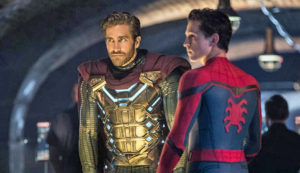 representing wind, fire, and ice. They are appropriately called the Elementals.
The death of Tony Stark/Iron Man (see Avengers: Endgame) is acknowledged throughout the film, and becomes a major plot element due to a gift Tony has designated for Peter. The “gift” is the crux of much of the film’s laughs as well as violent action. Speaking of the late Tony Stark, his long time head of security, driver, and bodyguard “Happy” Hogan (Jon Favreau) returns…as driver and bodyguard to Peter Parker.
As usual, Peter Parker multi-tasks as both a “friendly, neighborhood” superhero and a regular high schooler, now more than ever on the make for MJ. He just wants to fit in, have a girlfriend, and see the sights of Europe. And when he’s not doing that, he’s helping save the planet with his new Marvel guy, Mysterio. What a vacation!
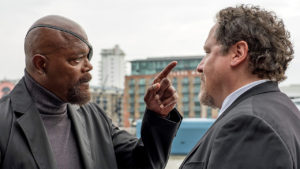 Storyline aside, bravo for the casting of the current Spider-Man franchise—or is it sub-franchise? Since there have been several Spidey movies as of 2019, with three actors portraying Parker/S-M over the years, it is awkward to call the series a franchise unto itself. What I am trying to say is that the current casting is THE best ever, with actors of old (Jackson, Favreau) perfectly jelling with the younger whippersnappers. (Yes, I just summoned the spirit of Gabby Hayes.) Besides superbly acting their roles, the current leads (Holland, Zendaya, Batalon) actually LOOK their high school parts—even though they are respectively 23, 22, and 22.
Well worth mentioning are J. B. Smoove and Martin Starr, who portray the group’s chaperones. They help provide comedy relief, and remind me of myself when I chaperoned high schoolers on various trips. No doubt I was as dorky as these two guys.
 Finally, a note about the casting of Aunt May. In the comic books and early Spider-Man movies, she was always appropriately portrayed as a sweet, little ol’ lady with gray hair in a bun, and wearing a granny dress with long sleeves. Now we have the cute and sexy Marisa Tomei as Peter’s Aunt May Parker. (Tomei is a 54 year-old who looks maybe 40.)
Va-va-voom for Aunt May! Now there’s a senior citizen reaction the late Stan Lee never originally envisioned.
=====
GRADE, On A to F Scale: A
Hollywood’s stars have dimmed in recent days
Published in The Kansan City Kansan July 9, 1999, my weekly column focused on three showbiz celebrities who had recently died.
By Steve Crum
Life goes on. Life ends. Of course that applies to show biz celebrities as much as anyone. But few of us will have our deaths reported on the front page of the newspaper. When DeForest Kelley died last month, his Star Trek fame as Dr. McCoy made his death national news. The public has a fascination, albeit morbid, about the passing of famous people. Maybe it is because of images that are forever captured on film, tape, or disc. How long will Kelley’s work on Star Trek be viewed and re-viewed on TV alone? His shadow lives on, timelessly.
As fleeting as fame is, one’s celebrity is usually short-lived. That is why this column occasionally enlightens mass media fans about the deaths of the once famous. It is hoped that readers will warmly and nostalgically link with their own pasts while scrolling down this mostly unreported listing of recent celebrity deaths. Remember, reflect, and enjoy.
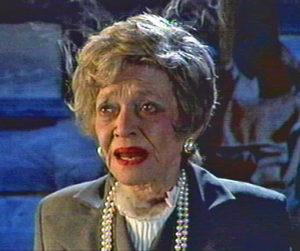 •SYLVIA SIDNEY (died July 1; 88 years old)—British actress Sidney made her film acting first impressions during the 1930’s, notably in Alfred Hitchcock’s 1935 thriller, Sabotage. A long career followed, later in supporting roles, in movies and TV. Small screen fans might recall her turn as Mama Carlson in the pilot episode of WKRP in Cincinnati.
She is best remembered for her supporting work in two Tim Burton films: 1988’s Beetlejuice (she was the case worker who blows cigarette smoke out of her slit throat); and Mars Attacks! (1996), whose grandma character saves the world with her volume-blasting Slim Whitman record. There is an interesting sidelight to Sidney’s final film work in Mars Attacks! She played her scenes with a recently broken hip, suffered from a car accident that occurred just before filming began. Sylvia Sidney eventually died of throat cancer.
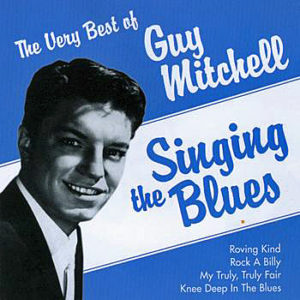 •GUY MITCHELL (July 1; 72)—The 1950s pop singer really took off after Mitch Miller guided his career. Following some singing years with big bander Carmen Cavallaro’s Orchestra in the late 1940s, Mitchell was contracted by Columbia Records. Miller, then head producer-arranger at Columbia, successfully guided Mitchell much as he did Doris Day, Frankie Laine, and Tony Bennett. Guy Mitchell had million-seller hit after hit: “My Heart Cries for You” (1950—after Frank Sinatra turned down recording it); “Singing the Blues” (1956); “The Roving Kind” (1956)—remarkably the “B” side of “Singing the Blues”); and “Heartaches By the Number” (1959). Like me, maybe you remember the songs but had forgotten the name of the singer.
Apart from show business, Guy had cowboy aspirations, making saddles and riding horses. Often headlining in Las Vegas during his heyday, Mitchell died in a Vegas hospital after “complications following surgery.”
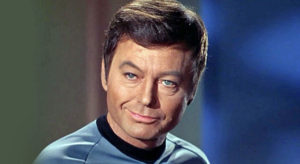 •DEFOREST KELLEY (June 11; 79)—Yes, it is old news by now, but maybe there are some career tidbits outside his Star Trek legacy. For one, are you aware that Kelley played Morgan Earp opposite Burt Lancaster’s Wyatt in 1957’s Gunfight at the O.K. Corral? Of course, we all know that Kelley was a support in a multitude of B-westerns and crime dramas throughout his pre-Star Trek days.
But did you know his last known screen performance is as the voice of Viking 1 in the direct-to-video animated feature, The Brave Little Toaster Goes to Mars? Or that he might, just might, appear as Dr. Bones McCoy in Secret of Vulcan Fury, a rumored upcoming Star Trek movie? (Gossip says that the production is currently stalled due to lack of funds.) If I hear anything about that movie, I will let you know. If any readers know anything, please let me know.
Kelley died after a long illness at the Motion Picture-Television Fund Hospital in Los Angeles. Carolyn, his wife of 55 years, was at his bedside. Coincidentally, Mrs. Kelley just happened to be a patient in the same hospital due to her recently broken leg.