
Dream-based ‘Inception’ boggles eyes, mind
By Steve Crum


 That specialized unit, like most fictional units (think The A-Team, Leverage, and even The Great Escape trappings), is composed of not only experts, but experts with nicknames. There is Arthur aka “The Point Man,” well played by Joseph Gordon-Levitt. He and Cobb go way back, and are trusted friends and co-dreamers. Cobb plans the job, Arthur organizes the details. Ellen Page is Ariadne, “The Architect,” who designs and builds places that do not exist. THE visual highlight of Inception is Ariadne’s creation of a huge city that literally folds up onto itself. One can walk to the end of the street, up a wall with buildings and people intact, and continue strolling upside-down, gravity free. It must be seen to be appreciated, and believe me, you will appreciate it.
 Worth 1,000 Words: JOLSON, RATOFF & DARNELL at Fox
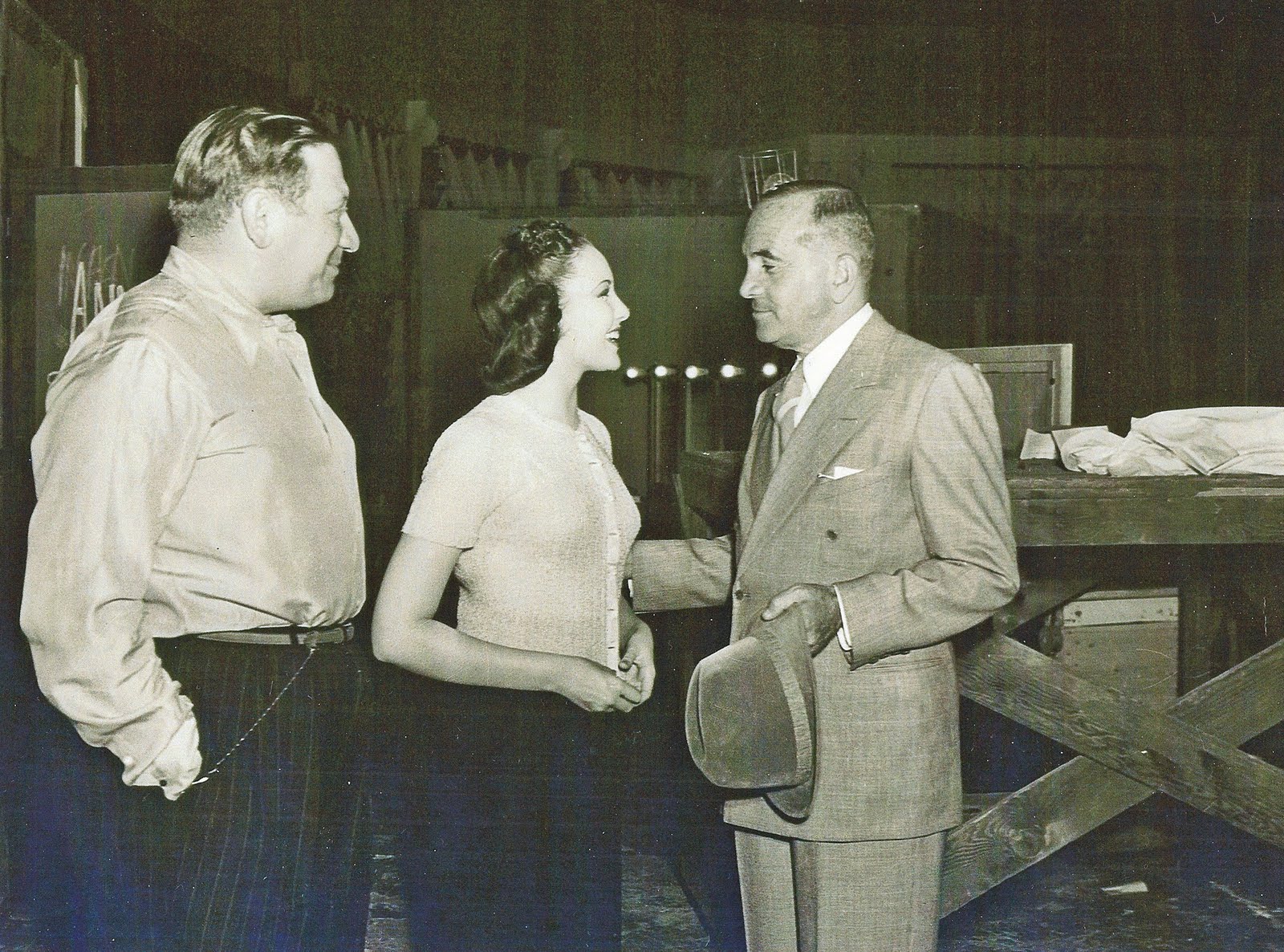
On the set of 1939’s HOTEL FOR WOMEN (20th Century Fox), featuring 16 year-old LINDA DARNELL in her first starring role, a sharply suited AL JOLSON visits both Darnell and her director, GREGORY RATOFF. Jolson had recently finished his own Fox film, ROSE OF WASHINGTON SQUARE, in which he starred with Alice Faye and Tyrone Power. Both Rose and Hotel were directed by Ratoff. That chain leading to Ratoff’s right pocket might be connected to the infamous whistle he often blew for effect while directing. [from Steve Crum’s showbiz memorabilia collection]
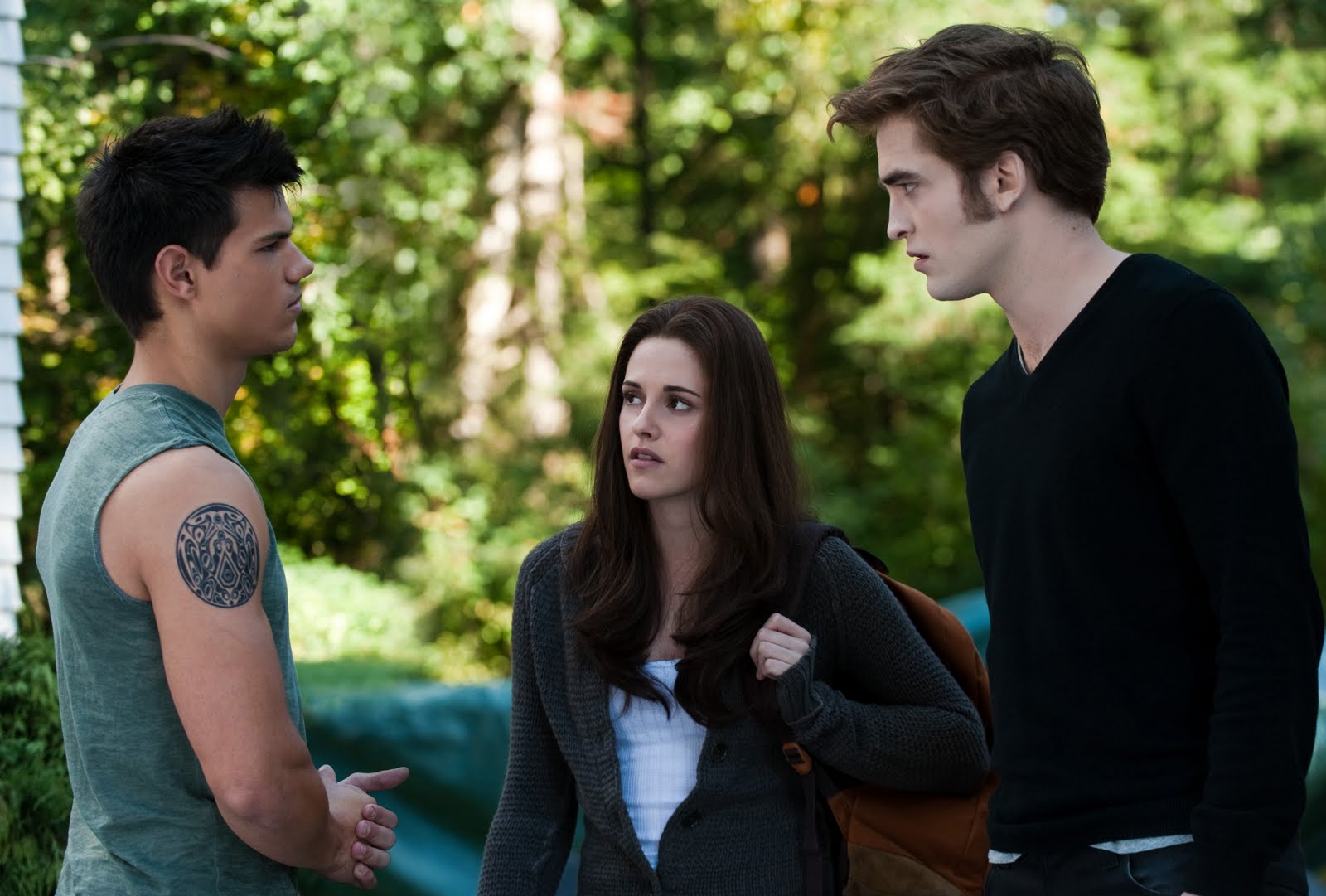
Rethinking, recasting ‘Eclipse,’ a saga unto itself

By Steve Crum
Amazing what a screening of The Twilight Saga: Eclipse and eating linguini after 10 p.m. can conjure. That night was filled with a monaural, full blown Hollywood horror-romance story in vivid Black and White analog. Being a child during the 1950’s, I flashed back to simpler, Legion of Decency-driven days when rock and roll was just beginning to shake, and relatively bloodless monster movies ruled.
The inspired casting:
ELVIS PRESLEY……Edward Cullen (replacing Robert Pattinson)
NATALIE WOOD……Bella Swan (replacing Kristen Stewart)
STEVE “Hercules” REEVES……Jacob Black (replacing Taylor Lautner & pecs)
Between tossing and turning in my non-sleep-adjustable bed, the nightmarish scenario developed…
Bella (Natalie Wood, in her Splendor in the Grass period) once again finds herself surrounded by danger as the San Fernando Valley is ravaged by a string of mysterious killings as Tuesday Weld’s malicious vampire continues her quest for revenge. In the midst of it all, Bella is forced to choose between her love for the loose hipped, guitar strumming blood sucker Edward Cullen (Elvis Presley, in his Jailhouse Rock days) and her friendship with an older, black bearded, and sublimely muscled older man, a werewolf in so many ways, Jacob Black (Steve Reeves), whose English is dubbed on the soundtrack. Bella must decide to either be with her avowed love Edward, and thus be transformed into a teenage vampire, or run with Jacob’s hairy pack of full moon rising werewolves. Either choice is a pain in the neck.
Meanwhile, a war is coming. It will be the vampirish Cullens teamed in an unholy alliance with Jacob’s band of wolf men versus a bunch of hungry, homeless, newborn vampires en route from Oakland. The newborns (Sal Mineo, Tab Hunter, Jamie Farr, Dennis Hopper, and Mercedes McCambridge among them) track the scent of Bella blood, while the Edward-Jacob alliance vows to protect their fair, air-headed, typically adolescent, and hormone inducing heroine.
The relationship between Bella and her two predatory boyfriends, Edward and Jacob, is more than a match. It is a cigarette lighter.
At this juncture, I woke up in heavy sweat, took a Tums, and turned on TV for return to normalcy. There was Taylor Lautner in a remake of Buffy the Vampire Slayer. He was Buffy, and topless! I turned off the set, and popped two more Tums.
——————–
Worth 1,000 Words: CAGNEY & CO. salute ‘YOU’RE A GRAND OLD FLAG’

Filled with GEORGE M. COHAN’S patriotic songs, 1942’s YANKEE DOODLE DANDY includes a particularly rousing, stand-up-proudly-and-salute production number featuring a song Cohan wrote in 1906, YOU’RE A GRAND OLD FLAG. Contrary to what the movie says, Cohan was born the day before Independence Day, July 3 (1878). No matter. His unabashed Americanism and flag waving spirit is forever symbolic of the Fourth of July.
Worth 1,000 Words: JOLSON sings ‘SWANEE’ in ‘RHAPSODY IN BLUE’

Perhaps THE iconic moment from Warner Brothers 1945 musical biography of George Gershwin, Rhapsody in Blue, is Al Jolson singing Swanee. Written by Gershwin and Irving Caesar in 1919, the song was on the road to failure until Jolson stepped up, singing it in his Broadway hit, Sinbad. It was then associated with Jolie for the rest of his life.