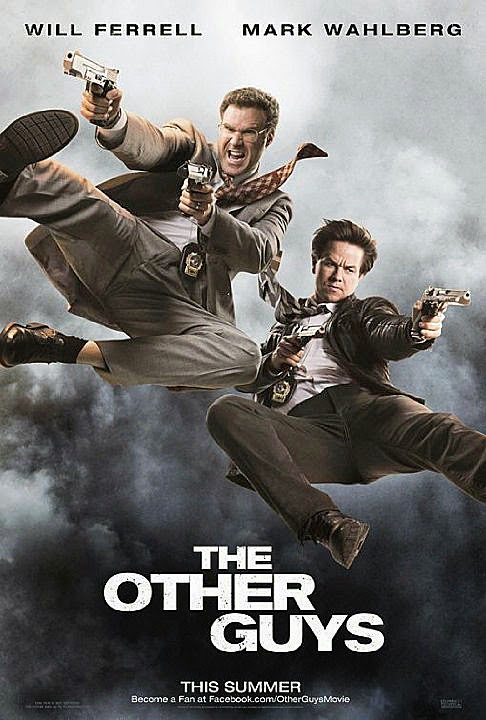
Mediocre ‘Other Guys’ features Ferrell in cop parody
By Steve Crum
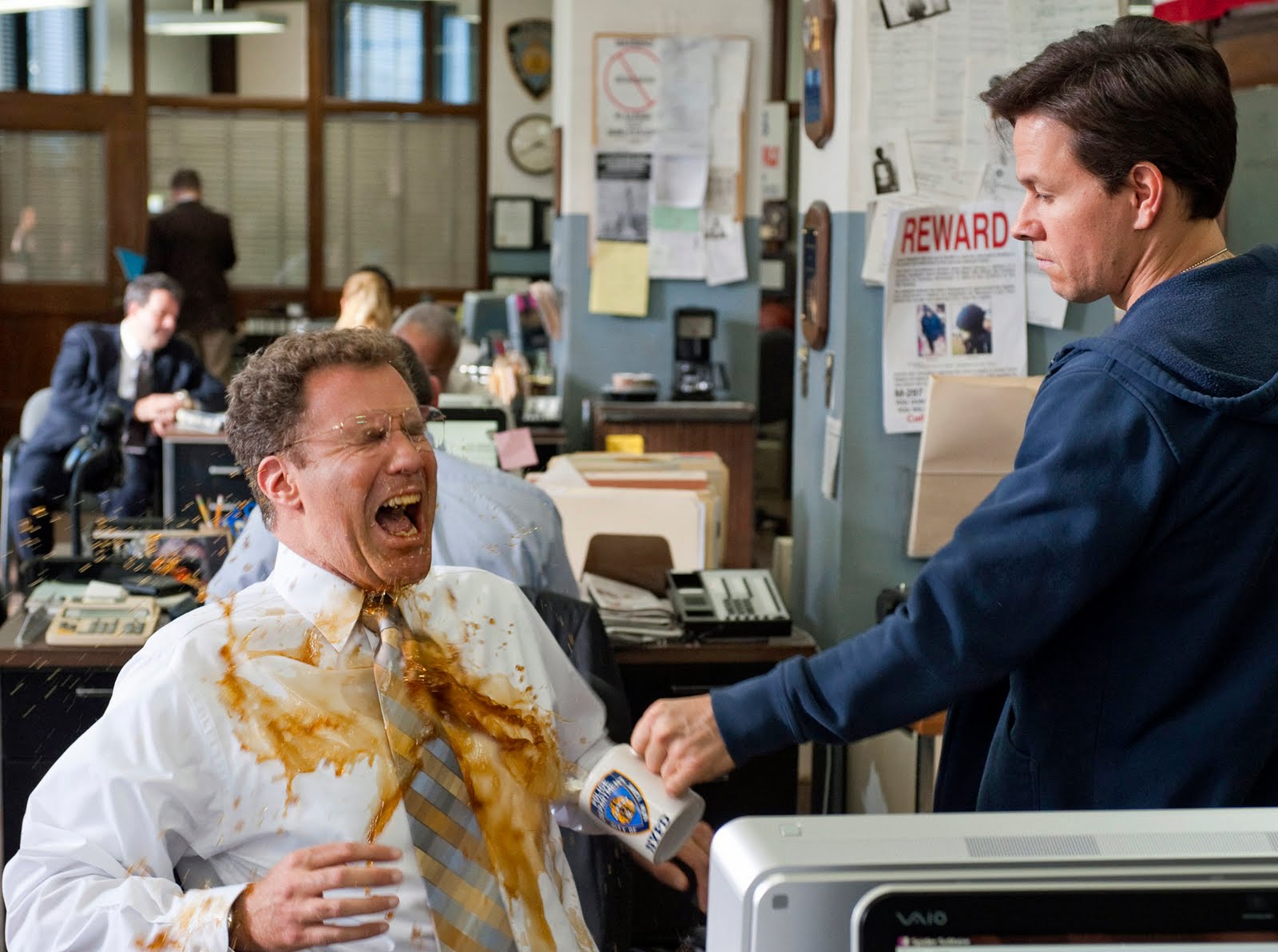
When I think of The Other Guys, like virtually any Will Ferrell movie, I think of Olympia Beer. Except instead of the slogan, “It’s the water,” the Ferrell motto is, “It’s the writing.” This is more a negative than a compliment, since The Other Guys suffers from a premise that pays off in the first 10 minutes of the story. Up to that point, the writing is fun, fast, and full of broad parody. The remainder of the film has spurts of laughs, but is laden with a Will Ferrell central character purposely lackluster and dull.

Writers Adam McKay (who also directed) and Chris Henchy deserve a little praise and a bunch of grief over their treatment. At least McKay’s previous screenplays (Anchorman: The Legend of Ron Burgundy, Talladega Nights: The Ballad of Ricky Bobby, and Step Brothers) cast Ferrell as aggressive egocentrics and, as such, interesting to watch. Ferrell’s Allen Gamble in The Other Guys plays against that type, and places the prominent comic role upon co-star Mark Wahlberg (as Gamble’s partner, Terry Holtz), who can act humorously, but is not a comedian. It turns out that the funniest person in the movie, after the opening sequence, is Michael Keaton’s police captain, Gene Mauch.

And that opening sequence, without ruining its gag, features Samuel L. Jackson and Dwayne Johnson. It is slam, bang action, and hilarious.

The story kicks off with NYC police detectives Christopher Danson and P.K. Highsmith (Johnson and Jackson) showcasing why they are press and public favorites as the most feared and successful cops on the force. The macho duo relish spectacular car chases, tote magnum-plus pistols, and thrive on adulation. They are heroes inside the squad room as well, even to undistinguished officers Gamble and Holtz. They are the forgotten “other guys” referred to in the title. In fact, Officer Gamble prefers being a desk jockey, since he desires nothing more than being an accountant. “I just want to be an accountant for law and order,” says Gamble. His pal Holtz, however, was relegated to a desk job after failing on a security detail involving a well known football star. He desperately wants another chance to prove his mettle.

Inevitably, the two get their chance on the street. There is a bar fight featuring a funny Irish round robin of singing as well as a ballet (!) by Ferrell’s Gamble, and a suicide call gone awry, But the funniest set-up, sustained throughout the film, is Gamble’s insistence that gorgeous women like his wife (Eva Mendes) mean little to him. Yet they are physically attracted to his dorky demeanor everywhere he goes.

Ferrell’s forte, in fact, is the overextended joke or shtick. Do the gag, lace it with outrageousness (like pulling down or off your pants), get the shock value laugh, and…keep on with it, wringing the laugh empty. His humor is of the adult child, often given to the “I hit you last” or “I know you are, but what am I” variety, as in Step Brothers.

Above all, Ferrell’s butt cheeks he displays for absurd hardy-har-hars has been integral to his comedy. That is what’s both right and wrong about his Allen Gamble character in The Other Guys. No booty show here. That is a refreshingly good exclusion. Then again, what does that leave Ferrell with except to overdo each and every set-up. Push the punchline to the max. Squeeze the laugh past its potential. Timing is nothing unless it is exceeded. This is also a common fault of Saturday Night Live sketches, Ferrell’s training ground.

It has been said before that Will Ferrell movies would be funnier if trimmed and refined to a half hour max. The Other Guys sure qualifies.
——————-
GRADE on an A to F Scale: C
——————–
Enjoy highlights of The Other Guys in its trailer: http://www.youtube.com/watch?v=D6WOoUG1eNo
Share:

Worth 1,000 Words: SID CAESAR & IMOGENE COCA

By Steve Crum
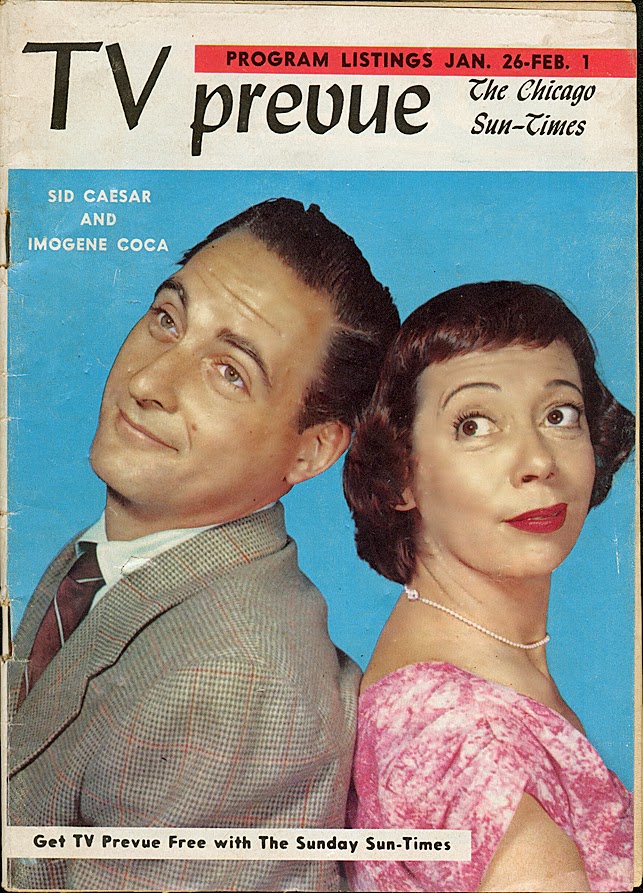
Sixty years ago, NBC-TV could have opened each program with “Live, from New York, it’s…!” Except this was two and a half decades before Saturday Night Live. The referenced program is Your Show of Shows, which ran 160 hilarious, innovative, and ground-breaking episodes for 90 minutes each Saturday night, Feb. 25, 1950-June 5, 1954. Created by Sigourney Weaver’s dad, Sylvester “Pat” Weaver, Your Show of Shows starred Sid Caesar and Imogene Coca. Although called a variety show, it is now considered the ultimate sketch comedy, TV showcase, truly the first of its kind. (Note: Caesar and Coca first teamed on TV’s Admiral Broadway Review, Jan.-June, 1949.)
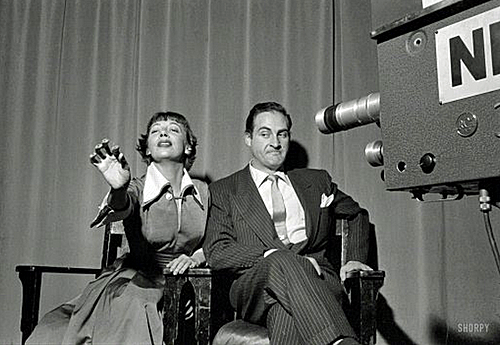

Born Isaac Sidney Caesar on Sept. 8, 1922, SID CAESAR is particularly noted for his use of comedy dialect, timing, and body language. He has appeared in several movies, including It’s a Mad, Mad, Mad, Mad World, many TV shows, on Broadway, and is an author. He is fondly remembered playing Coach Calhoun in Grease and Grease 2.

IMOGENE COCA, whose birth name is the mouthful Imogene Fernandez de Coca, was born Nov. 18, 1908. Perhaps her most well known role to modern audiences is Aunt Edna, Chevy Chase’s forlorn aunt (remember her leashed dog?) in National Lampoon’s Vacation. Coca died June 2, 2001.


Your Show of Shows was live, directed by both Max Liebman and Nat Hiken at various times. Its writers included Mel Brooks, Carl Reiner (who also acted in the sketches), Neil Simon, Danny Simon, and Mel Tolkin. (Larry Gelbart did not write for YSOS, but did write for Caesar’s Hour, 1954-57. Woody Allen only wrote for Caesar in later TV specials.)
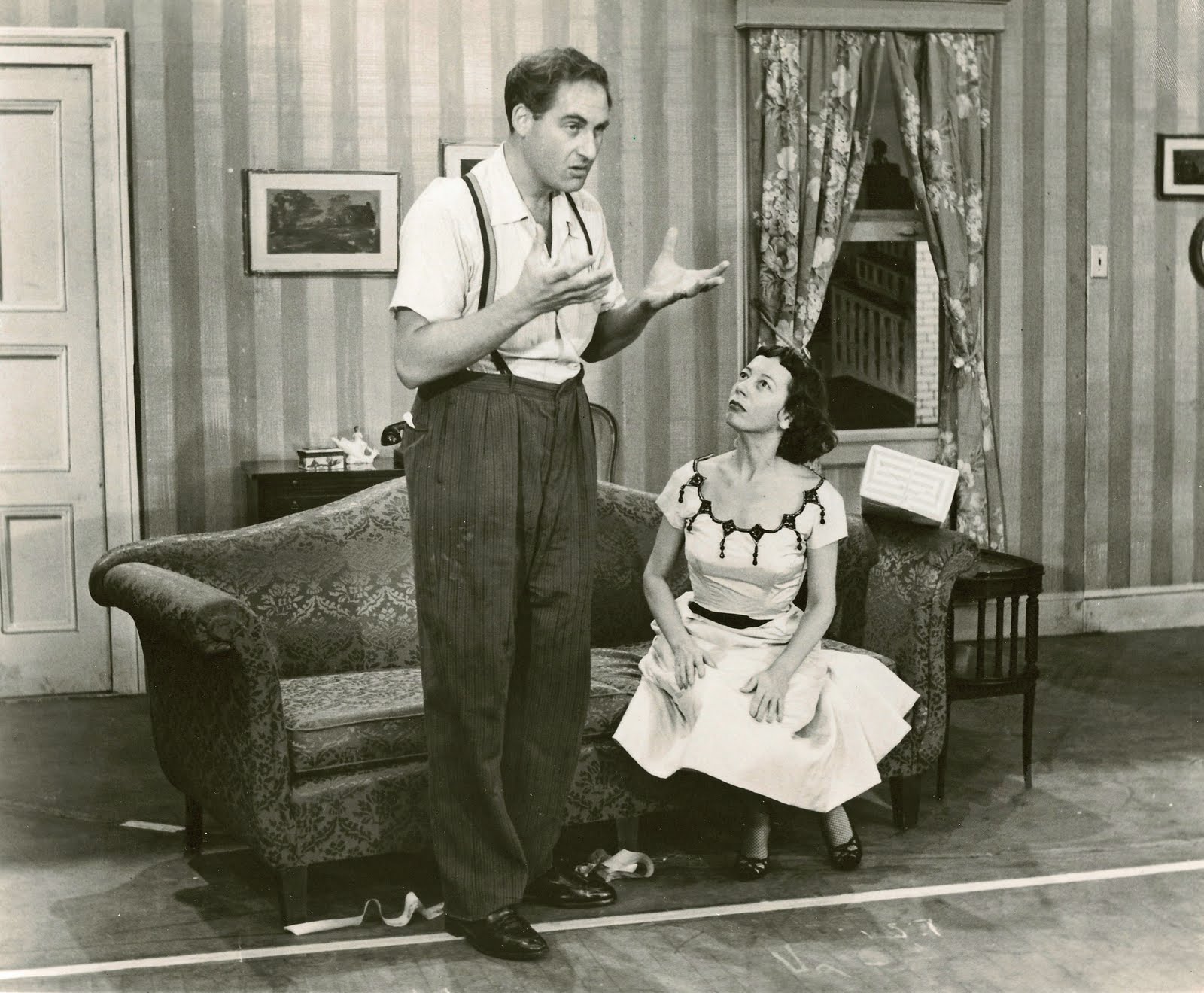

Rounding out the cast were Howard Morris (Ernest T. Bass on The Andy Griffith Show), Nanette Fabray, and Reiner. The program greatly influenced future sketch comedy programs, particularly The Carol Burnett Show and Saturday Night Live. Your Show of Shows remains a true classic of television history. It inspired Carl Reiner to create his TV gem, The Dick Van Dyke Show. It was also the basis for 1982’s My Favorite Year, and Neil Simon’s play, Laughter on the 23rd Floor.
——————–
The rare still (at left) from Your Show of Shows depicts Sid Caesar in hand flailing intensity as he makes a point to Imogene Coca during one of their memorable sketches. The photo could be of a rehearsal since there is masking tape in various states on and around the floor, probably for stage blocking. [from Steve Crum’s showbiz memorabilia collection]
——————–
Funny is funny for all time. Enjoy this classic “clock” bit from Your Show of Shows: http://www.youtube.com/watch?v=T0SG4YhiuYU&feature=related

Share:

Worth 1,000 Words: SCOTTY BECKETT as JOLSON, the boy


SCOTTY BECKETT, portraying the young AL JOLSON in THE JOLSON STORY [1946], whistles from his bedroom window to his neighbor. Soon a ladder will afford escape to run away from home and start his show business career.

——————–
The Columbia Pictures’ caption on the reverse of this seldom seen still states: “…BOY AL JOLSON-The boy Al Jolson, played by Scotty Beckett, is a shown whistling to his girl in Columbia’s Technicolor music drama, THE JOLSON STORY. The adult Jolson is played by Larry Parks.” [from Steve Crum’s showbiz memorabilia collection]

The whistling was actually provided by Jolson himself, who was a noted whistler in addition to his comedy, singing, dancing, and acting talents. Throughout the film’s boyhood sequences, however, it was RUDY WISSLER (no whistling pun intended) who provided the actual singing as Scotty Beckett lip synched. In the same vein, Jolson himself sang for the adult, Larry Parks, Jolson. Parks moved his lips perfectly to Jolie’s songs.
——————–
Scotty Beckett, born Scott Hastings Beckett (Oct. 4, 1929-May 10, 1968), began his brief career as one of Hal Roach’s Our Gang (aka Little Rascals), often playing opposite Spanky McFarland. Career highlights include featured roles in King’s Row, The Charge of the Light Brigade, A Date with Judy, radio’s The Life of Riley (as Junior), and TV’s Rocky Jones, Space Ranger. His role as the young Asa Yoelson aka Al Jolson in The Jolson Story was his crowning achievement.

Tragically, the last decade of Beckett’s life was filled with drugs, alcohol, arrests, marital problems, and illness. He died in a nursing home at age 38.
——————–
Share:

Worth 1,000 Words: JIMMY DURANTE & GENE AUTRY on the set


By Steve Crum

Republic Pictures chose to increase the budget on one of its GENE AUTRY movies, and hired a pretty bizarre cast for any western, JIMMY DURANTE and ANN MILLER among them. Released in 1940, MELODY RANCH became one of Gene’s biggest box office successes. It was later considered culturally significant by the Library of Congress, and is now preserved in the United States Film Registry.


The plot has Gene Autry, portraying radio and movie cowboy star Gene Autry (a stretch), returning to his Arizona hometown (Gene was actually raised in Oklahoma, so this is a stretch) where he restores law and order while starring in his own radio show. Others in the cast include Barton MacLane, Barbara Jo Allen (better known as Vera Vague on the Bob Hope radio show), and Gabby Hayes, venerable sidekick to Roy Rogers as well as Gene. Durante’s character is Cornelius J. Courtney. Inka Dinka Do.
——————–
The rare Republic publicity still (top) is unique in several ways. When in the history of Durante did you ever see him on horseback and sporting cowboy boots? (His horse doesn’t look any too happy with him yelling and waving his hat. Notice the steed’s ears are pointed back.) That is Gene Autry himself–at least his back–headin’ toward his trailer on Champion, World’s Wonder Horse. The caption pasted on the photo’s backside explains: “At last, here I am at the peak of me power, ha-cha-cha!!” Jimmy “Schnozzle” Durante cheers as he successfully reaches the deck of the tamest horse in the Gene Autry stable. “What a man! What a cowboy! Where’s me rope and gun!” Durante clanked a mean spur with Autry and Ann Miller in “MELODY RANCH” at Republic Pictures. In the background here is Autry heading into his stable trailer. [from Steve Crum’s showbiz memorabilia collection]
——————–

Share:

Worth 1,000 Words: RICKY NELSON & TRACEY GOLD


By Steve Crum

Significant as RICKY NELSON’S last appearance on either TV or film, 1981’s CBS-TV Movie, A TALE OF FOUR WISHES (originally broadcast Nov. 8, 1981) headlined Ricky along with future Growing Pains star TRACEY GOLD. Rick (then billed as such) portrayed Skeeter. Tracey was Jane, a girl who learns important lessons from her grandfather after wishing for more.

———-
RICKY NELSON, born Eric Hilliard Nelson [May 8, 1940-Dec. 31, 1985], died in an airplane crash four years after this made-for-TV film. His career includes his revered role starring with his real life family in radio and TV’s The Adventures of Ozzie and Harriet. There are also his 53 Billboard Top 100 recording hits, 19 of which placed in the Top 10.
 
TRACEY GOLD, born May 16, 1969, became popular as Carol Seaver, one of the teen cast of TV’s Growing Pains series. Like many child actresses (and actors), her private life has included many physical and emotional challenges.
——————–
This rare, CBS-TV publicity photo is identified on the backside as A Tale of Four Wishes, CBS–Tues., July 6, 1982–4:30-5:30 p.m. E. T. No doubt this was a rebroadcast. Interesting to note that Ms. Gold is identified as Stacy Gold instead of Tracey Gold. [from Steve Crum’s showbiz memorabilia collection]
——————–
Share: