Unfortunately, ‘The Lone Ranger’ is really Tonto’s variety show

By Steve Crum
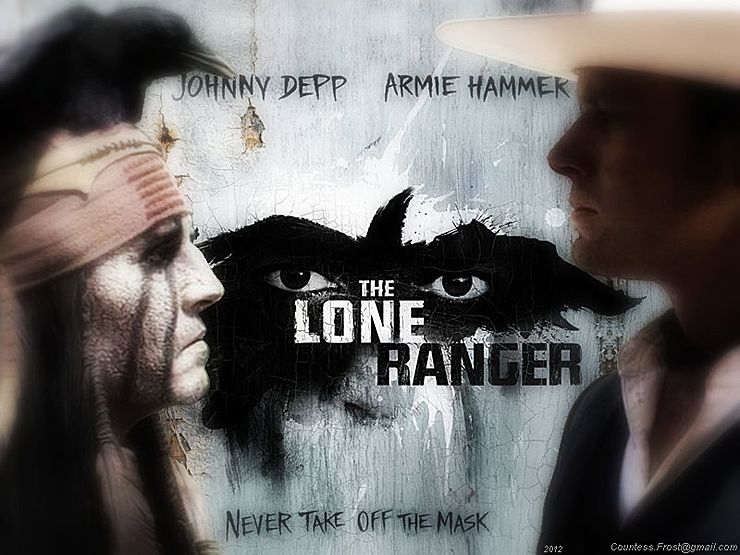

Lone Ranger creators George W. Trendle and Fran Striker are surely doing pinwheels in their respective graves. This new take on the legendary masked man is far from what the radio pioneers had in mind back in 1933. The Lone Ranger (2013, not the 1956 feature film) is an odd mix of parody, homage, and re-imagining of the legend. Tis pity, since just about all the basic elements are present: sidekick Tonto, horses Silver and Scout, the mask, a silver bullet (but only one), bad guy Butch Cavindish, and The Lone Ranger himself. Even the famous theme music,  Rossini’s William Tell Overture, is included big time in the film’s exhausting finale.

The primary reason The Lone Ranger fails is because cohesiveness is missing. Written by Justin Haythe, Ted Elliott, and Terry Rossio, the story plays out like three drafts meshed together. The marketing strategy was obviously to please three targets: elderly Lone Ranger fans, pre-teens who have never heard of The Lone Ranger, and hard core action movie fans. As for the latter, the head outlaw cuts out and eats the heart of one of his victims! Why has Butch Cavendish (William Fichtner) become Hannibal Lector? 

God knows there have been endless send-ups of The Lone Ranger, including Lenny Bruce’s famous routine, Thank You, Masked Man, which was even made into an animated short. Stan Freberg satirized the Ranger on radio and record, turning him into a psychiatrist on horseback, The Lone Analyst. Pronto was his sidekick. Freberg even hired the “real” Lone Ranger and Tonto, Clayton Moore and Jay Silverheels, to appear fully costumed in a pizza commercial: “Hi-o, pizza rolls!” After a dud revival movie, 1981’s The Legend of the Lone Ranger, how could the Ranger be salvaged in 2013?

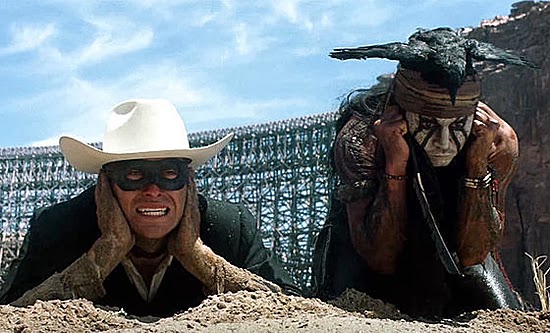
Disney Studios hired Pirates of the Caribbean director Gore Verbinski to fashion this Lone into a makeshift Pirates movie,   substituting trains for ships, and starring Captain Jack himself, Johnny Depp, as what used to be The Lone Ranger’s sidekick. However, in this bastardized version, Tonto is the star and the masked man is his sidekick. Depp’s Tonto is definitely the reason to see this movie, from his quirky, mystical silliness to his elaborate Native American war paint and dead crow head gear to his obviously superior intelligence. The Lone Ranger aka John Reid (Armie Hammer) is characterized as a half-witted, cowardly, Eastern dweeb. His only save is that he has traveled West to practice law and visit his brother, a truly heroic Texas Ranger. Hammer plays the role the best anyone could, that of a drab, one dimensional character. 
I do need to sandwich in a couple of actors whose roles call for flamboyance, and they succeed fabulously. One is the always watchable Tom Wilkinson as a seething railroad bad guy, and the other is Helena Bonham Carter’s saloon owner, Reed Harrington. Her role is definitely one Striker and Trendle could and would never have created. Not only does she dress like the madam she is, she sports a pistol firing mechanism at the base of her false, porcelain leg. Just another goody for the kids in the audience.
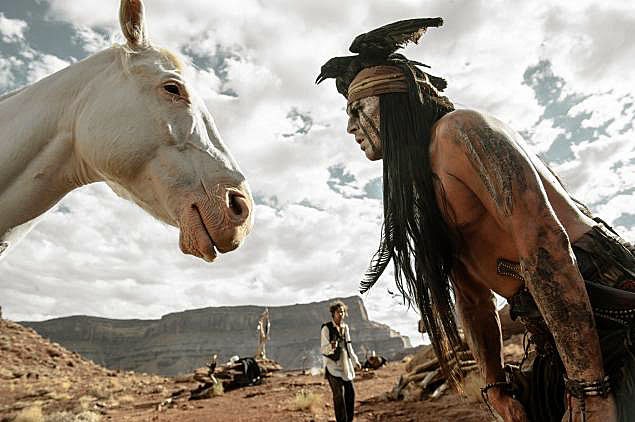

At the outset, Tonto’s disdain for his future saddle pal includes him dragging a wounded Reid across the prairie, and through horse dung. It is Tonto who opens the film, come to life in Night at the Museum fashion, in a San Francisco museum, circa 1933. His skin looking akin to Jack Crabb’s in Little Big Man, Tonto becomes storyteller to a young Lone Ranger fan, who is a museum patron. In flashback, we learn how Tonto met John Reid in 1879 after saving him when he, his brother, and a band of Texas Rangers are left for dead after being ambushed by the Butch Cavindish gang. The huge rewrite here is that Tonto reluctantly rescues Reid. Mentoring Reid by teaching him to ride and shoot was never remotely in his plan. Incidentally, the great horse Silver miraculously appears in the desert when John Reid needs transportation. Even Silver has more savvy than Reid/Ranger, and certainly more sense of humor. Tonto refers to the steed as a “spirit horse.” 

For 80 years, the legendary Lone Ranger has endured pop culture, and much of that is debunked during this nearly two and a half hours of misguided storytelling. Much like Silver’s sudden appearance, The Lone Ranger himself undergoes a miraculous transformation via the visually stunning finale. All of a sudden, he and Tonto work as a team; the Ranger rides the great horse Silver across the top of a speeding train; and all his pistol shots are bullseyes. Without explanation, via Tonto’s sage recollection, a superhero of the Old West is born. Clark Kent indeed becomes Superman, per se. 


Hollywood has already done its hack job, rather successfully, on Sherlock Holmes, making him a kick boxing sleuth. Now it’s the Lone Ranger. Prepare yourself for Armie Hammer as good guy spy Illya Kuryakin in next year’s The Man From U.N.C.L.E., based on the TV series. Henry Cavill, currently playing Superman in The Man of Steel (another hero reworking), will star as Napoleon Solo. 

It seems everything old is new again, but not nearly as entertaining. 
———-
GRADE on a Scale of A to F: C-
——————–

Is The Lone Ranger really depicted as a wimpy idiot in this movie? The answer is in this trailer: https://www.youtube.com/watch?v=JjFsNSoDZK8

Compare it with the trailer to 1956’s The Lone Ranger: https://www.youtube.com/watch?v=mjQPxtMv3vY
Share:

F-bombing, raucous Melissa McCarthy dominates ‘The Heat’


By Steve Crum
 
Were funny man Steve Allen still alive, what would he think of Melissa McCarthy? Two of Allen’s best selling books analyzed comedians, and his last book, Vulgarians at the Gate, blasted the deterioration of comedy and the mass media overall due to…well, vulgarity. In the 12 years since that book was published, foul language has become commonplace on TV and in movies. Just what Allen feared.
 

The Heat, starring Melissa McCarthy and Sandra Bullock as law enforcement buddies, is McCarthy at her bawdiest. The f-bomb isn’t just used, it is part of McCarthy’s character’s breathing process. Frankly, after the 38th f-you, it had gone beyond boring. The word itself is used an incredible 190 times, so put that in your Guiness Book. Yet there were many at the screening–puzzlingly, mostly women–who howled with laughter each and every time McCarthy blasted profane. 

 
Katie Dippold’s cop buddy movie plot is saved only by director Paul Feig’s choice to let McCarthy veer from her lines to improvise, which is her forte. That the improvisations tend to build in crassness is also her forte. They sound spontaneous because they are, making Melissa McCarthy the Robin Williams of the potty mouth set. She’s not as outright sleazy as standup Lisa Lampanelli, but she reaches. Feig undoubtedly knew McCarthy’s manic schtick talent before he directed her in Bridesmaids. Her penchant for pratfalls is unique among female comics, reminiscent of rotund comics Chris Farley and Fatty Arbuckle.
 
So goes The Heat, in which McCarthy’s bar fighting and wrestling with seedy bad guys are punctuated by endless f-bombings. McCarthy portrays Boston undercover Detective Shannon Mullins, whose daily regimen includes stakeouts and takedowns of local drug pushers. FBI Agent Sarah Ashburn (Sandra Bullock) is tracking an elusive Russian drug lord centered in Boston, so the two law enforcers are teamed up. The impetus of the story is that Ashburn and Mullins are total opposites in style and personality. 
 
Ashburn is straight laced and by the book. Her arrogance and showboating have made fellow agents avoid her as a friend or colleague. She is bucking for promotion to head of her division, but even her soon departing boss cannot stand her braggadocio. “No wonder she’s single,” an agent tells another. Her existence is a mundane private life without any close friends. 
 
Then there is Officer Mullins, who is raucous, instinctive, and bullies her suspects. She is so macho she snacks on large, red peppers. Well known and respected in her community, Mullins is pretty much out of control down at her precinct. She has little respect for her captain. In fact, a scene inside the captain’s office develops into Mullins’ tirade about the size of his testicles…shouted in a lengthy McCarthy riff that is shamelessly hilarious. Yes, I laughed. 
 
It becomes clear why Detective Mullins acts the way she does. Her large family behaves the same way. We first see them gathered around the dining room table, cursing, shouting, and punching each other. 


From the get-go, Mullins and Ashburn despise each other. I will not divulge their relationship at film’s end. If you’ve seen other buddy cop movies, you will predict the conclusion as I did. 
 
Did I mention the movie’s gangster rap soundtrack, heavy on f-bombs? Consider it mentioned.


———-
GRADE on a Scale of A to F: D+
——————–
Share:

‘World War Z’ is ‘A’ budget zombie flick deserving ‘B-’ rating

By Steve Crum
 
It used to be that a make believe foot race between a mummy and a zombie would pretty much be a dead heat, per se. Now, thanks to the zombie-redux thriller World War Z, any zombie could beat a slow shuffling mummy, gnarled hands down. In fact, a WWZ zombie can run, dodge, and jump as fast or faster than its terrified human prey. Talk about motivated flesh eaters! 
 
Understand from the outset that I have never been a zombie movie fanatic. However, I consider 1968’s Night of the Living Dead a genre classic, and it still elicits chills groping down my back. Zombie productions, including the mega popular TV series The Walking Dead, dwell on blood and gore close-ups of the many ways to kill a zombie. The bashing and slashing of a zombie’s cranium resembles comedian Gallagher’s Sledge-O-Matic crushing of a ripe watermelon. It’s not my cup of joy juice. 
 
World War Z certainly includes its share of zombie violence, but it is lighter on graphic imagery such as gray matter spattering. Its director, Marc Forster, has made his reputation at the helm of such diverse, non-horror titles as Finding Neverland and The Kite Runner. Based on Max Brooks’ best seller of the same name, WWZ has a narrative that emphasizes the central human characters, particularly Brad Pitt’s Gerry Lane, during the race to contain and hopefully eliminate the worldwide zombie takeover. 
 
Screenwriters Matthew Michael Carnahan, Drew Goddard, and Damon Lindelof have restructured Brooks’ anecdotal novel into a cohesive, traditional story line. Whereas the book borrowed its segmented style from Studs Terkel, the film is structured with a clear beginning, middle, and end. It all works quite well with enough jumping out of the shadows, teeth chomping scenes that should satisfy the mainline zombie fan. Ultra zombie-ites, however, might be disappointed with the lack of grossness. 
 
One of the half dozen set pieces, in fact, includes a nightmarish scene directed at viewers’ nerve control center. It takes place in the World Heath Organization’s building, wherein Pitt’s Lane is entrapped inside a lab while an especially obnoxious zombie guy leans outside the door glass. He wants to get at Lane so much that he makes rapidly chattering bites with his disgusting front teeth. It is horrifyingly funny. 
My favorite sequence occurs aboard a packed airplane, and our hero and central character Lane is aboard. (His wife and two young daughters have been left on a military ship, sailing the ocean, for safety reasons. Don’t zombies swim?)  Without ruining any surprises not already divulged in the previews, let us say that WWZ  segues into Zombies on a Plane. No doubt other critics will make the same reference, which proves we have no shame. The scene, however, is pretty terrifying, relying on innate fears for many of us: airplane flight + claustrophobia. Mix in a heap of zombies for bad measure.
 
Not that it greatly matters, but Lane is an agent of the United Nations assigned to find a reason and cure for the world’s zombie pandemic. Not only do these living dead things run, but they have super sensitive hearing, which makes hiding from them daunting. Immediately after being bitten, the victim transforms to zombie and so on and so on. Scenes of thousands of zombies on the move, even climbing on top of each other, to form a squirming ladder to scale high walls, are disturbing, memorable visuals.
 

Seeing WWZ in 3D will add little to the overall viewing experience. In fact, it is hard to recall any particular scene that pops into one’s eye space. 

As for acting notables, it is pretty much a draw between Brad Pitt and the zombies. Extraneous cast members Mireille Enos (portraying Lane’s wife), James Badge Dale (as Captain Speke, Lane’s friend and boss), and David Morse (a psychotic prisoner) are given sparse scenes and lines. 
 
Pitt plays out as the cool hero who steps up to battle zombies when necessary, while never exhibiting much fear. His character could use some Kevin McCarthy/Invasion of the Body Snatchers frantic demeanor.
———-
GRADE on a Scale of A to F: B-
——————–

Zombies live! Proof is in this trailer: https://www.youtube.com/watch?v=HcwTxRuq-uk

Share:

Summer movies I want to see, kind of want to see, and don’t want to see…Part 2/June 2013

By Steve Crum

Objectively reviewing a movie is a misnomer. Try as I try, personal preferences and influences affect the viewing of any film. Call it being human. Reviewing has always been an “in my opinion” process, so why not admit it? Of course, I am aware there are many tastes out there who turn to a movie review for information and guidance. There needs to be a word for the film critic who falls between subjective and objective. Come to think of it, that should describe all film critics. 

That said, if I had to pay to see summer movies, instead of screening them for free, I would avoid these repugnant-to-my-taste film factors: coming-of-age/teen romance-sex “comedies”; animation; martial arts; anything Seth Rogen; sequels, particular the 5th or more; slasher horror; and zombies. True, I often exist outside the mainstream bubble. 

Of 109 summer releases, my list happens to include 29 subjectively chosen titles. Opening dates, in parenthesis, might change. The June sampling:

TO SEE

•AFTER EARTH [Originally slated for June 7, but released May 29] 
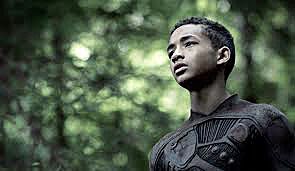
Real life dad and son, Will and Jaden Smith, were effective in The Pursuit of Happyness, so this sci-fi yarn should benefit as well. After crashing on an angry planet (Earth), the two encounter life threatening challenges. This is co-penned by director M. Night Shyamalan. (I wrote and rated this before viewing the film, and would now place it in the So-So viewing category.) 
•THE BLING RING [June 14]
Sofia Coppola directs Harry Potter’s Emma Watson in a fact-based crime drama involving teens teaming up to steal jewelry from celebrity homes. The real story is the kids’ obsession with their own reality show-like celebrity, criminal as it certainly is. 
•TWENTY FEET FROM STARDOM [June 14]
Morgan Neville’s documentary focuses on the unheralded backup singers who make pop stars like Mick Jagger and Sting look and sound even better. I could care less about pop stars like Jagger and Sting, so why would I be interested in their assistants? (OK, I’m a little interested.) 
•WORLD WAR Z [June 21]
Producer-star Brad Pitt’s six-years-in-the-making, $170 million sci-fi spectacular is all about a virus killing millions, and their reanimation into calculating, fast stepping zombies. The Running Dead. Maybe I could truly enjoy a zombie movie after all.

SO-SO’s
•THE INTERNSHIP [June 7]
Those partial to Vince Vaughn and Owen Wilson (like me) should enjoy this Shawn Levy directed comedy that pits two jobless pals as competitive interns at the Internet’s tech central, Google. Probably good for at least a Google giggle. 
•MONSTERS UNIVERSITY [June 21]
Before Sulley and Bill (voices of John Goodman and Billy Crystal) buddied up in Monsters, Inc., they attended Monsters U., when they were not yet buds. This animated comedy prequel is referred to as a Pixar-esque Revenge of the Nerds. 
•THE HEAT [June 28]
Since her comedic breakthrough two years ago in Bridesmaids, Melissa McCarthy has embellished her popular, starring comedies with pratfalls and crude laughs. Here teamed with Oscar winner Sandra Bullock, it is a flip of the tried and true male buddy cop movie, featuring two females. 

•WHITE HOUSE DOWN [June 28]

 Jamie Foxx plays the President, with Channing Tatum his Secret Service guy (sort of). The real draw here is director Roland Emmerich (Independence Day), who orchestrates a White House under siege by mercenaries. 

NO-NO’s…only one sticks out
•THIS IS THE END [June 12]
Seth Rogen always appears to have a tobacco chaw behind his lower lip, which is the funniest thing about him. And that’s not funny at all. Rogen, the force behind the disastrous The Green Hornet, directs and stars in this star-laced comedy. Look for Judd Apatow/Freaks and Geeks grads James Franco and Jason Segel as well as Jonah Hill and Emma Watson. They’re together at a wild party somehow connected to the world’s end. The title says it all. If they live through it, it could be Hangover 4. For joy.
——————–

This trailer for This Is The End reinforces my expectations: https://www.youtube.com/watch?v=Yma-g4gTwlE

Share:

Glitz, glamour, director flourishes cloud ‘The Great Gatsby’s’ base story

By Steve Crum


Had it only been the use of rap music on the soundtrack of this tale set during the Roaring Twenties, an invasion enough on one’s sensibilities, The Great Gatsby would nearly have failed. But Baz Luhrmann, the director and co-screenwriter, went so much further in his overwrought presentation. Luhrmann, lauded by many for his flamboyant movies (Moulin Rouge, William Shakespeare’s Romeo and Juliet), surely won’t disappoint his followers with Gatsby. It is all about style: ultra colorful, superb costuming, knock-out set design, and all in 3-D. That last ingredient pops the imagery past one’s eyes and deep into the brain cells. Way past my comfort zone. 


Luhrmann’s Gatsby is a movie of and for our times. That is, it’s purely targeting the teen to 30-something watcher with glitz and glamor. The demographic raised to think the mediocre shouters on American Idol are instant superstars and the real superstars surround themselves with pyrotechnic special effects will surely savor and devour this lower-the-bar treatment of The Great Gatsby. All its smoke blocks a classic F. Scott Fitzgerald story.

So what is enjoyable about this tragic tale centered on the lush life of the 1920’s upstate New York rich? For one, there is a strong cast headed by Leonardo DiCaprio as title character Jay Gatsby. He is the mysterious, charismatic, wealthy bachelor who lives in the mansion across the sound from the Buchanans, Daisy and husband Tom (Carey Mulligan and Joel Edgerton). No one knows much about Gatsby, except the fact he throws parties, big parties, and throws them often. People know his abode much more than they know him. DiCaprio, ever an underrated actor, impresses in a role demanding because it is so repressed. Gatsby is a troubled, driven soul given to faint smiles, and hidden glances. He is so insecure, there are scenes with him literally hiding in the bushes on his estate. He has issues, yes. 


The root of his psychological imbalance, as the millions who have read the novel already know, is the exasperating love and obsession of his life, Daisy. Mulligan has similar challenges in portraying Daisy, since she is virtually the female counterpart to Jay Gatsby. Again, it is her underplaying that is required. This means numerous sequences of darting eyes and reflective glances by both DiCaprio and Mulligan, when together or apart. Director Luhrmann, of course, embellishes these scenes, like he does everything throughout Gatsby, with extended slow motion takes. Egad, even when a character gets hit by a car and is shown airborne in slo-mo, Lurhrmann chooses to repeat the ghastly occurrence in a flashback. I was looking at my watch each time like it was an Olympic time trial. 

Told from the viewpoint and narrated by bond broker/writer Nick Carraway (Tobey Maguire), The Great Gatsby lumbers along quite spectacularly. Again, the 3-D sets and costumes are pretty enticing…for about the first half hour. Unfortunately, the film clocks at 143 minutes.


Gatsby’s story is of unrequited love, friendship (Nick and Jay become fast friends due to unexplained reasons, except both are loners), and ultimate tragedy on several levels. These are the same reasons the novel has sustained and is still required reading in American high schools. Of course, the 1925 novel also has the style and distinctive voice of its author, F. Scott Fitzgerald. Part of its credence is the knowledge that Fitzgerald was himself a mix of Carraway and Gatsby, and suffered many demons in his life. This movie version, the latest in adaptations dating from black and white, silent movie days, seems more caricature than real in depicting the pretentiousness of the wealthy. Maybe the next version of Gatsby will connect better than this one. 

——————–

GRADE: On an A to F Scale: C-
——————–

Glitter and glamour are evident in this trailer: https://www.youtube.com/watch?v=OULhlaX6JY4

Share: