

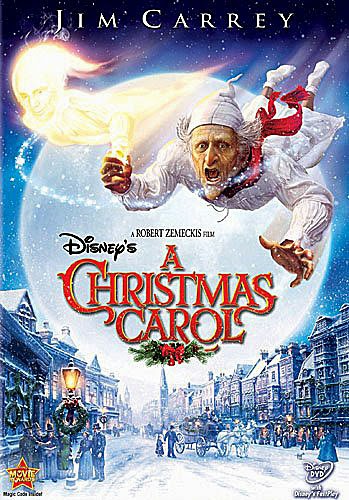
Soon we are introduced to the story’s central character, Ebeneezer Scrooge, perfectly realized by Jim Carrey. Director-Writer Robert Zemeckis again morphs his actors via “motion capture,” a process he successfully used in The Polar Express (2004). Actors are first filmed performing their lines, and then “skinned” as their bodies are digitally transformed into cartoon-like visuals. Skeptics of The Polar Express criticized its characters’ lifeless eyes; they appear more lifelike in A Christmas Carol.
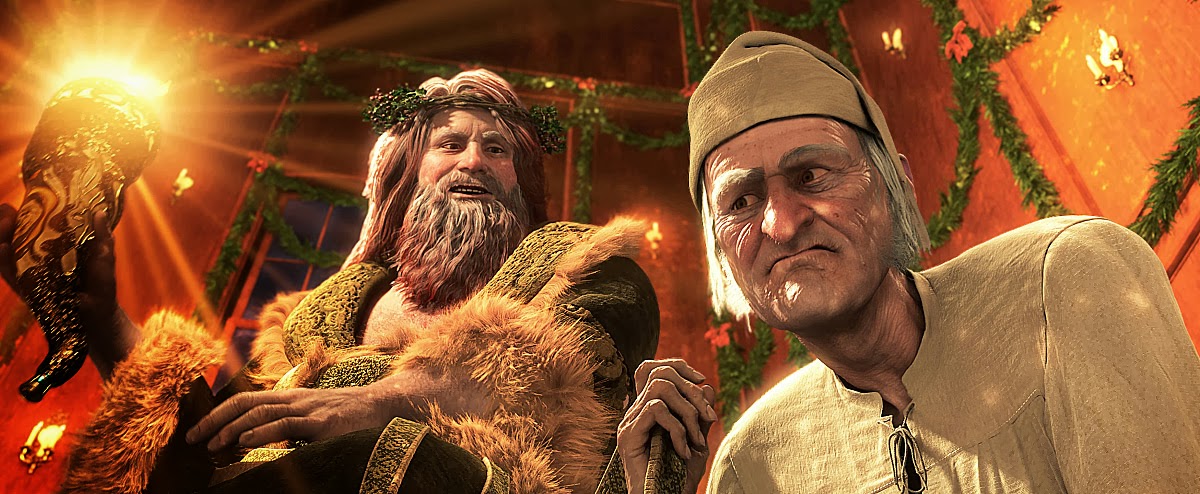
Before this review is whisked away by the movie history ghost, here is the plot synopsis for the three out of 50 million who have neither seen any stage, TV or film version nor read Dickens’ story: In 19th Century London, old Ebeneezer Scrooge is visited by the specter of his late partner, Jacob Marley (Gary Oldman), who warns Scrooge that due to his miserly ways and bad temperament, he will be visited by three ghosts on Christmas Eve. Earlier that day, Scrooge had again shown his hateful attitude toward his employee, Bob Cratchit (Oldman, in another role), his nephew Fred (Colin Firth), and two charity collectors. As Scrooge is physically taken to his past, present and dim future by each spirit, he secretly observes the Cratchit Family’s poverty along with the extreme needs of the young, crippled Tiny Tim (Oldman, voicing even again), and the disdain others have for him due to his heartlessness. This includes his one love, Belle (Robin Wright Penn). In the end, Scrooge is transformed, and at last shows–and feels–good tidings for his fellow man.