
Despite glitches, ‘Selma’ is powerful filmmaking
 By Steve Crum
 In the process of chronicling those transitional, too often grim days following The Civil Rights Act of 1964, director Ava DuVernay and screenwriter Paul Webb have Hollywoodized the story to the extent of depicting President Lyndon Johnson as an obstructionist to the African-American cause. Nonetheless, Selma is compelling cinema. Opening with King’s 1964 acceptance of the Nobel Peace Prize in Oslo, a tragic event in Birmingham, Alabama is then shown: the murder of four youngsters in a Sunday morning church bombing. (That terrorist act actually occurred in 1963.)
  Cut then to Annie Lee Cooper (Oprah Winfrey) as she attempts again to register to vote in the Selma courthouse. Once again, she is thwarted by ridiculous regulations like having to recite each of Alabama’s 67 county judges. Faced with a requirement not required for the white population, she leaves defeated and unable to vote. Jump to Dr. King (David Oyelowo in a superb performance) meeting with President John (Tom Wilkinson) at the White House. “We want the right to vote,” King says to LBJ’s noncommittal ears. “This administration will just have to set that (voting rights) aside,” Johnson retorts. According to the film, LBJ later meets with FBI Director J. Edgar Hooever to nullify any voting agitation stirred by King and his followers. Wire tapping King in his bedroom is Hoover’s method of choice.
As Alabama’s Governor George Wallace (Tim Roth) consults with his henchmen, as well as President Johnson, about how to physically deal with Dr. King, meticulously planned, peaceful protests resume. The culmination of that event was the march from Selma to Montgomery, Alabama. incidentally, the movie was filmed in various George and Alabama locations, including the Edmund Pettus Bridge, where the Bloody Sunday assault by Selma police actually occurred.


Technically, DuVernay uses, maybe overuses, shadows in many closeups of King. Since Oyelowo is not an exact match for King, maybe this was a wise choice.
Pluses extend to Carmen Ejogo as Coretta Scott King and Bradford Young’s cinematography.
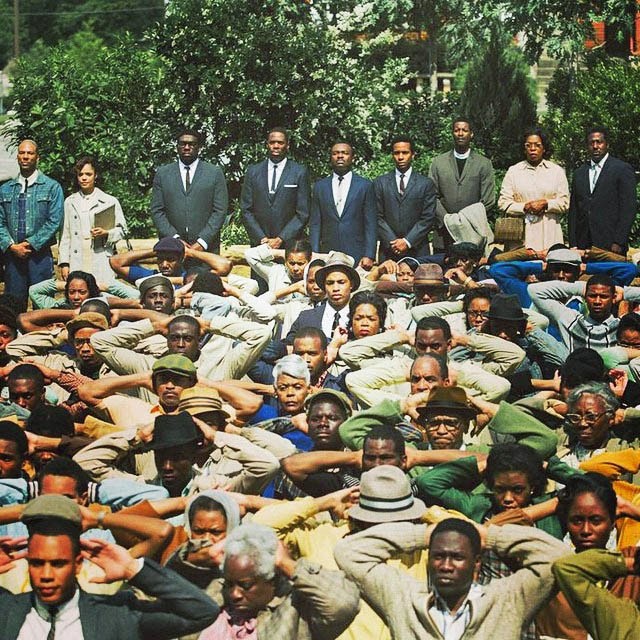
However, the minuses center on a couple of miscasts and a few historical flaws. Why Tom Wilkinson and Tim Roth were cast as Southerners is a puzzlement, particularly since neither physically resemble their characters (LBJ and George Wallace). Neither do they exude the necessary fervor nor speak with believable accents.
 Throughout the film, I was shocked to see LBJ portrayed as such a racist obstructionist to the Civil Rights Movement. Later I commented to a screening rep that I had no idea Johnson used the n-word when he was president (referencing King and his followers), that he pushed Hoover into wiretapping King, and that he repeatedly refused to compromise in regard to the Voting Rights Act.
 “I wasn’t interested in making a white-savior movie,” DuVernay boldly asserts. In other words, the devil with Lyndon Johnson.

GRADE on A to F Scale: A-
2014 celebrity obits: a personal connection
 •Shirley Temple Black [85, Feb. 10]…One Sunday a month, for many years, my parents, sister, and I would drive about an hour to get to our cousins’ farm located in Birmingham, Missouri. I never watched “Shirley Temple’s Storybook,” which ran from 1958-61, except when we visited our cousins. But my cousins did, and we were guests.
 So my sister and I watched too.

•Sid Caesar [91, Feb. 12]…
I have dim recollection of watching Caesar’s early TV work, but his wonderful acting in 1963’s “It’s a Mad, Mad, Mad, Mad World” always makes me smile as I also think of my Dad. He had divorced Mom a few months before, so he, my sister, and I were pretty dazed and depressed. Adding to that was the recent assassination of President Kennedy. Not long before Christmas that year, Dad treated us to the movie, in Cinerama, at the Empire Theatre in Kansas City, Mo. Dad laughed at Caesar and his cohorts…big time, nearly falling off his chair. His explosive outbursts made my sister and me crack up even more. I’ll never forget it. We three really needed those laughs.
 •David Brenner [78, March 15]…It was Brenner my second wife, Peggy, wanted to see perform when we vacationed in Las Vegas. He was actually her second choice after Siegfried and Roy. But they were sold out. Peggy made a good choice in David Brenner. He was very funny.
•Mitch Leigh [86, March 16]…
I think of the “Man of La Mancha” composer and associate him with Dr. Richard Rohan, my World Literature professor at Emporia State. When the touring musical was about to play in downtown Emporia, Kansas, Rohan was its greatest promoter, wearing a large “I’ve Seen ‘Man of La Mancha’” button to class every day for weeks. I saw the great production free while ushering it via my Alpha Phi Omega service fraternity.
 •Mickey Rooney [93, April 6]…Here is another great who starred in “It’s a Mad, Mad, Mad, Mad World.” Like Sid Caesar in the same film, Rooney contributed to making my Dad extremely happy. I also have to mention a hilarious bit Rooney did in the late 1950’s on “The Ed Sullivan Show” with Joey Foreman. Rooney played a man on the street who is pranked on a “Candid Camera”-like TV show. Mickey is absolutely hilarious.
•Lee Marshall [64, April 26]…It seems like a thousand times I heard Tony the Tiger, along with his animated image, pitch Kellogg’s Sugar Frosted Flakes on Saturday morning TV during the 1950’s and ‘60s. Marshall voiced Tony with that deep, resonant voice. He was “Grrrrreaaaat!”
 •Ann B. Davis [88, June 1]…Davis won an Emmy for portraying Bob Collins’ office secretary Schultzy, on “The Bob Cummings Show,” 1955-59. THIS is the show I associate with her, not “The Brady Bunch.” Bob Collins was a glamour aka cheesecake photographer, and my father loved the show enough to take up photography as a hobby.
 •James Garner [July 19]…The impact of “Maverick” on the TV audience was so great that when my family visited our cousin’s house in Raytown, Mo. in late 1957, all activity and talking ceased when the show started. We gathered around the TV to enjoy Bret’s latest escapade. James Garner had everything to do with that attraction.
  •Don Pardo [96, August 18]…As often occurs, when one divorces, one loses friendship with favorite in-laws. My ex-wife’s aunt and uncle, Karen and John, were very near our ages. We were best friends, in fact, seeing each other virtually every weekend for the years their niece and I were married. It was a tradition among us to watch “Saturday Night Live” together, which we had done since the show began in 1975. Don Pardo’s distinctive voice introduced each program.
  •Richard Attenborough [90, August 24]…A perk of being a film critic is the free screenings of movies not yet released. For many years, I took my daughter with me if the movie would so warrant. “Jurassic Park” was such a film. Shelley was 12 in 1993 when we saw it. Afterwards, on the way back to the car, the impact of the movie was still with her. “Dad,” she said, “I feel like I’ve been with real dinosaurs!” Richard Attenborough’s role as the park keeper no doubt added to the illusion.
 •Robin Williams [63, August 11]…The first time I really appreciated Williams’ stunning gift of humor was when I saw his HBO “Off the Wall” special that my best friend, David Laudick, had recorded on Beta tape in 1978. I was visiting David in Scott City, Kansas when I watched Robin’s creativity stretch from stage to audience to him literally climbing up to the balcony of the theater. This was funny, improvisational, and electric. David has since unexpectedly died, and now Robin.
  •Ben Bradlee [93, October 21]…Nothing impacted my teaching high school journalism like the publishing of both the book and movie of “All The President’s Men.” When the film was released in 1976, interest in journalism, particularly investigative journalism, increased enrollment in college and university journalism programs nationwide. It certainly impacted my j-classes at J. C. Harmon High School. Ben Bradlee’s real-life role as editor of The Washington Post was a vital element.
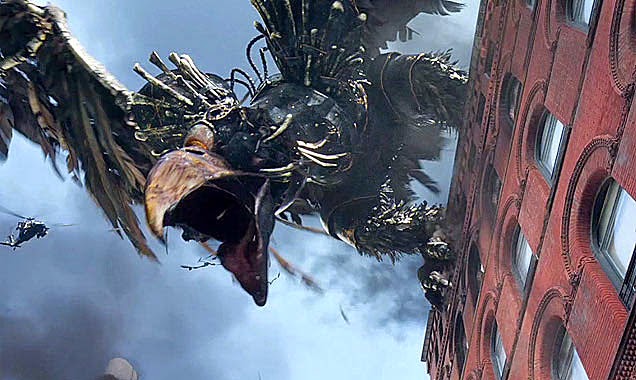
 Unique ‘Birdman’ grabs four KC Film Critics Circle awards
 By Steve Crum
 —————
—————Whizzo, Ol’ Dad, and Me
 By Steve Crum
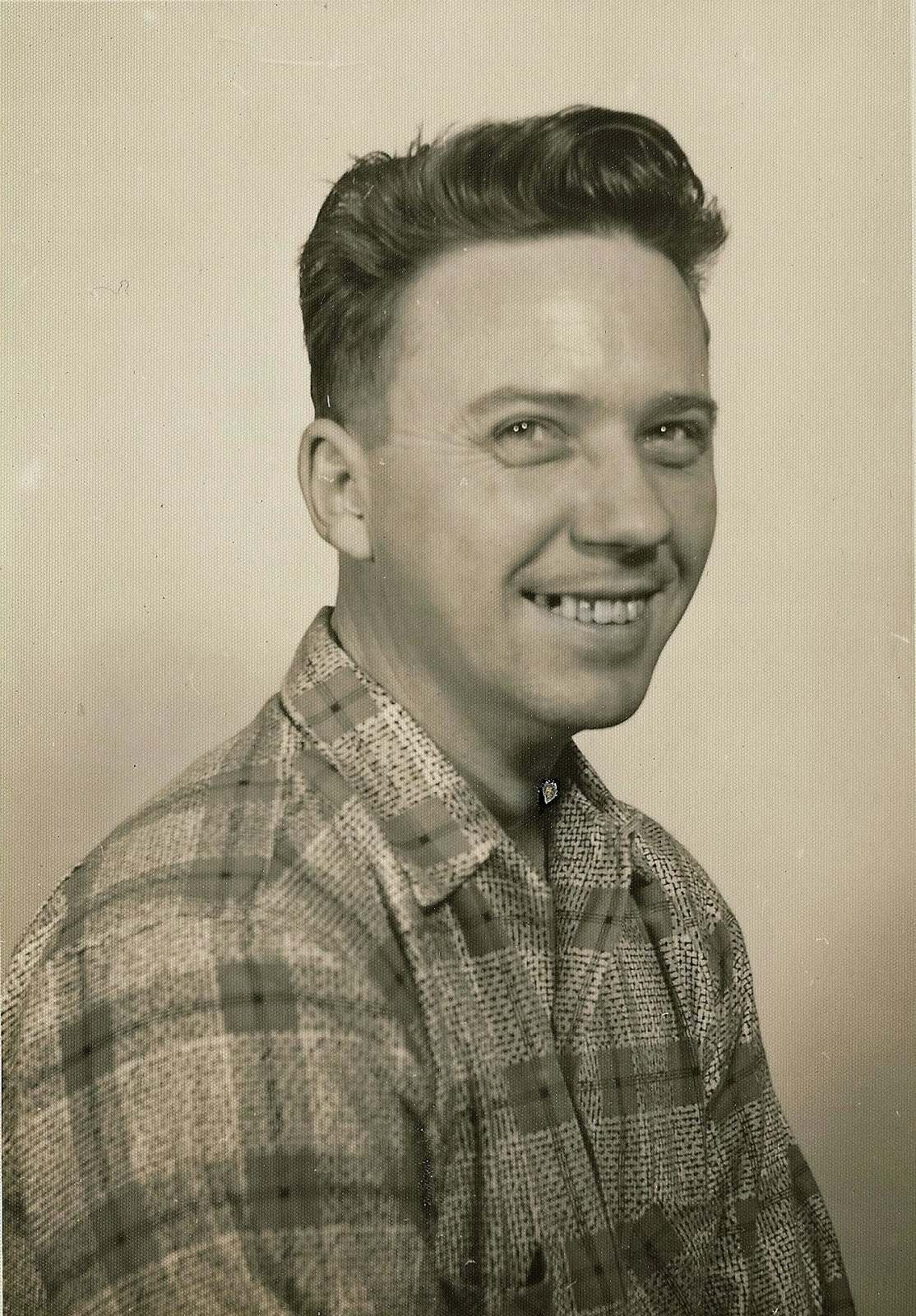
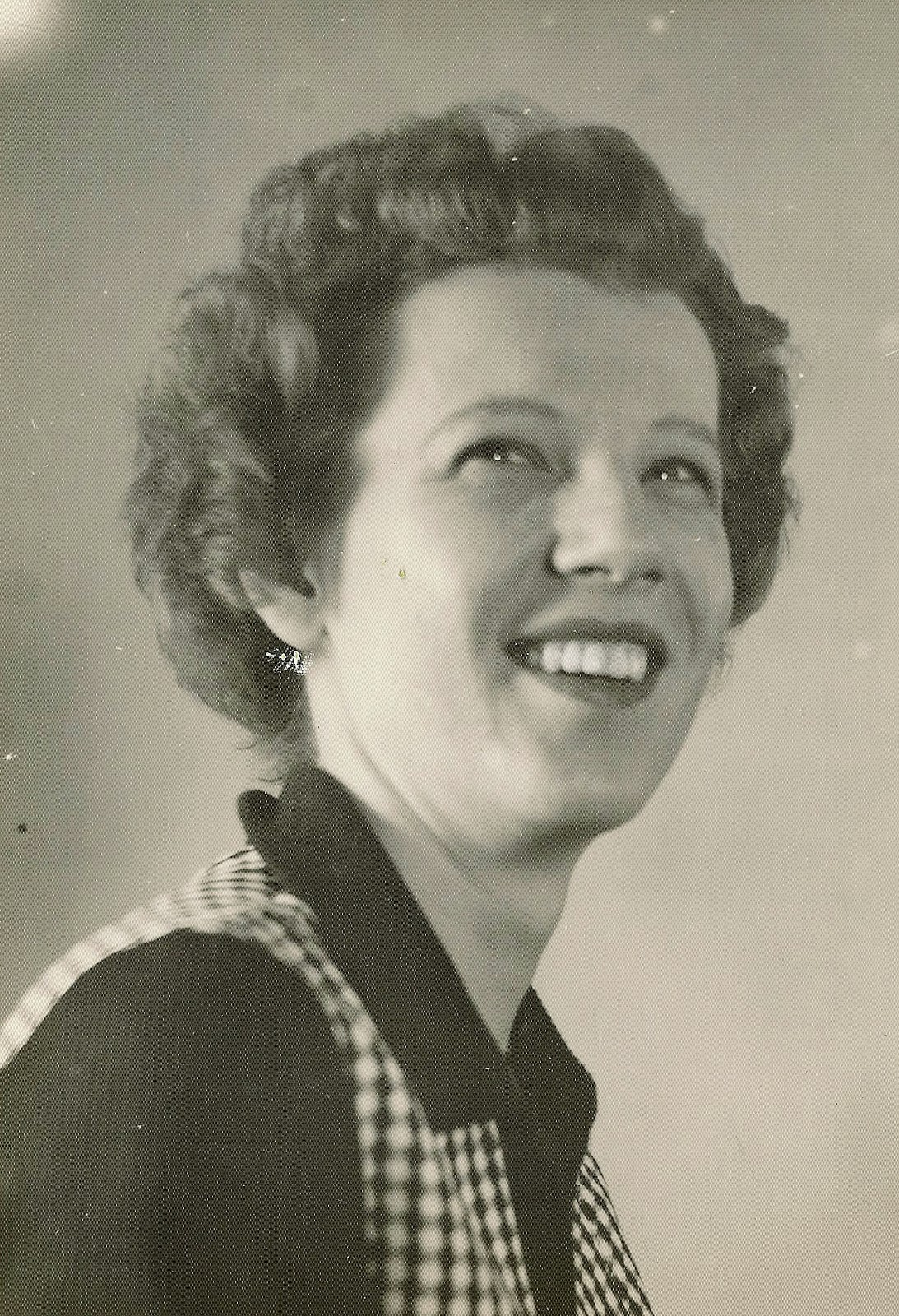 Mom told me about a couple of his early business schemes, one involving Dad’s creative mind. He “invented” an emergency flare that motorists could keep in the car trunk. There were flares sold already, but his flare was somehow different. After his usual pattern of buying business cards, he invested in the materials of manufacturing the flares, including packaging. I assume some kind of gunpowder was required.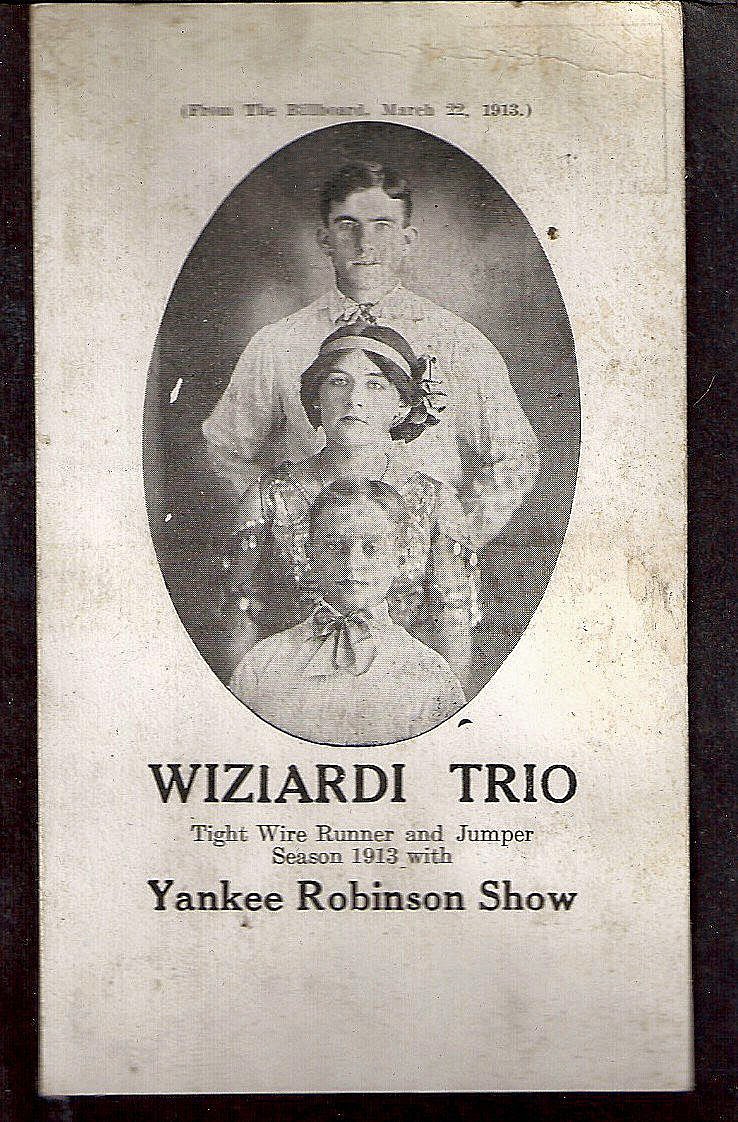
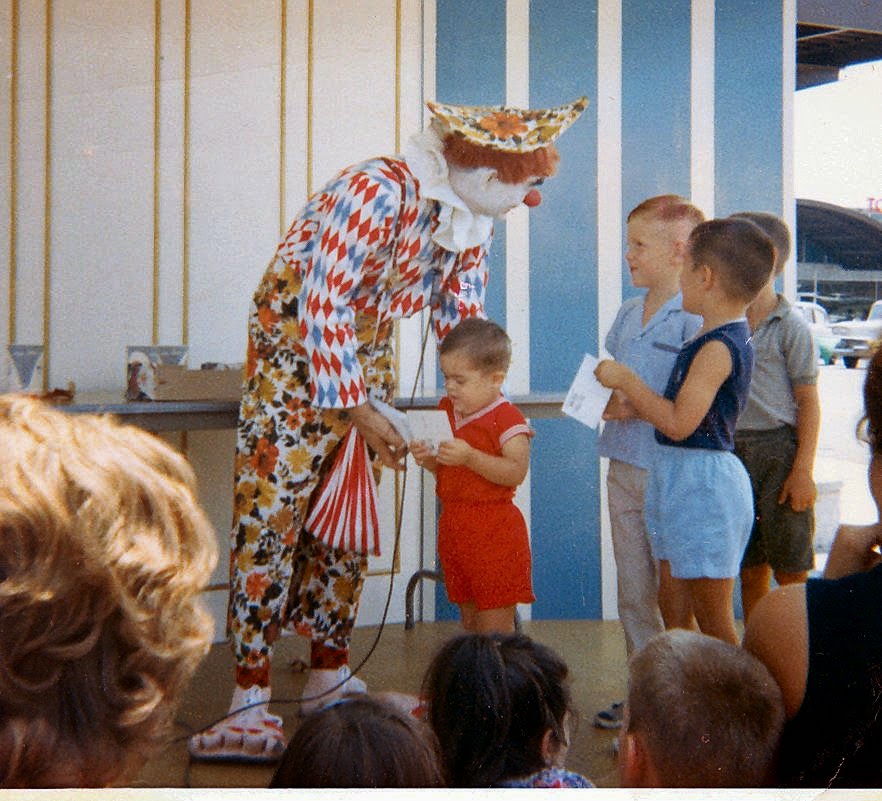
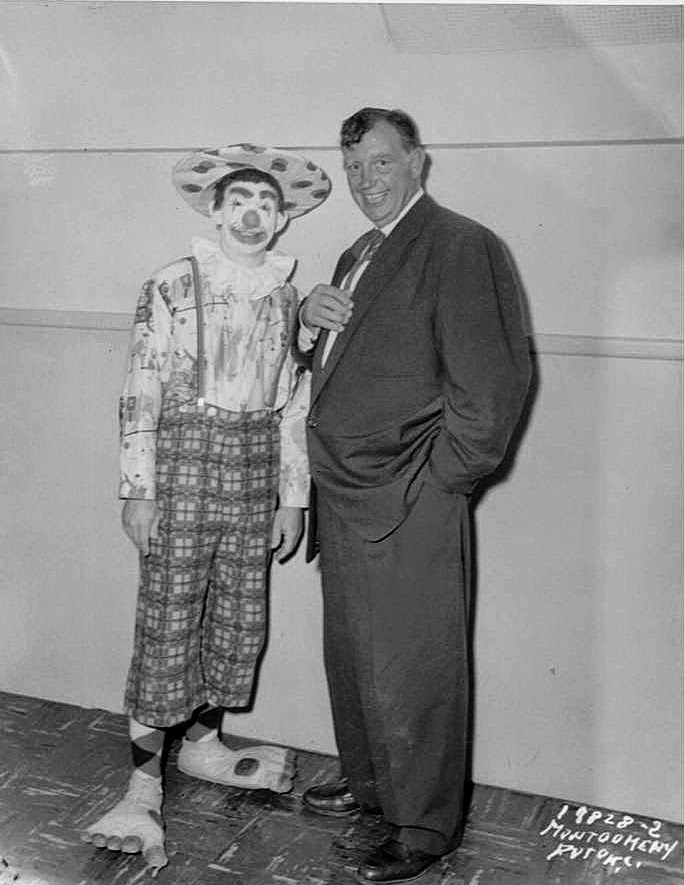
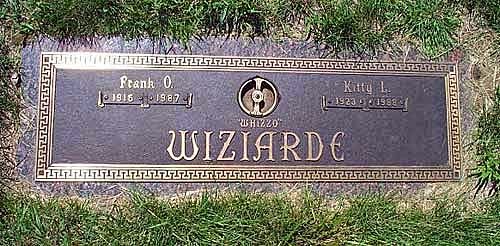
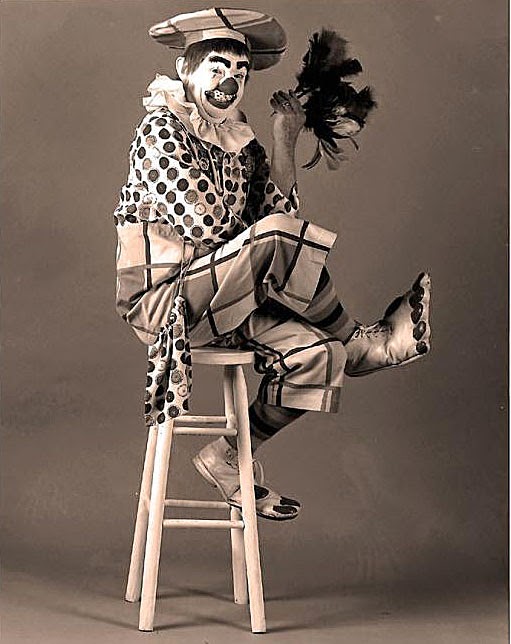 His show was enjoyed by adults as well as children. If there was a parade anywhere in Greater Kansas City, Whizzo was a featured attraction. For over 30 years, Whizzo was seen regularly on TV, first in Kansas City, and then in Topeka, Kansas. He was a trouper up until his death in 1987.
 During the summer of 1949, when I was a kiddo of 2, the pre-Whizzo Wiziarde hosted a local Kansas City half hour radio show broadcast live daily on WHB at 11 a.m. from a restaurant in the prestigious Country Club Plaza. The appropriately named Luncheon on the Plaza included women guests, and was geared to the predominately female radio audience. In those days, women guests were aka “housewives.” The show’s gimmick was that interviewed women were supposed to wear hats, and Wiziarde and company would choose the best. The woman with the chosen hat would win a prize.
  Does that premise crack you up as much as it does me? A visual gimmick…on radio? It’s reminiscent of Stan Freberg’s hilarious bit featuring acrobats on radio.
  Using the sparse money we had, perhaps borrowing it, Dad then invested in cutting edge technology, a reel-to-reel tape recorder. In 1949, this was state of the art. He also purchased many blank tapes. Oh yes, he also purchased a device to cut his own 78 rpm records, which he attached to his tape recorder. Dozens of blank discs were needed. A business was born.
  First, he got a call from the telephone company warning him to stop using a public phone for business purposes. Someone had complained, and contacted the phone company. (At that time we had a party line, which made things worse.)
  They also include women divulging their names and addresses. ID theft, anyone?
Massive Merv Griffin DVD set is must-have for show biz fans
 By Steve Crum
 This is not to say all was song, dance, and comedy in the Griffin Show world. Like Jack Paar before him, Merv’s guest list often included extended and incisive conversations with the likes of Dr. Martin Luther King Jr., Rosa Parks, then former Vice President Richard Nixon, authors Alex Haley and Gore Vidal, and drug culture guru Dr. Timothy Leary. They are all part of this terrifically fun and fascinating DVD set which also serves as a social document of the mid to late 20th Century.
  As described in the set’s informative 52-page booklet, many of the Griffin shows included were found in private collections, including one gem from Merv’s own video stash. That particular program, helmed by Isaac Hayes, is an hour long, star packed musical salute to vintage Stax recording artists.
 Incidentally, the shows vary in length from under an hour to 80 minutes, with commercials omitted. Merv’s shows over the years were from 60-90 minutes. Locales also vary, from Hollywood to New York to Las Vegas. Shorter celebrity spots are also added, usually in the “Extras” portion of each disc.
  From a young Stevie Wonder singing and playing the harmonica to Jayne Mansfield accompanied by her three children (including a toddler named Mariska Hargitay) and their dogs, eye candy and name dropping abound. I am still both pleased and disturbed about seeing the 1985 show featuring Orson Welles. For the first time publicly, Welles talked about his marriage to Rita Hayworth and films, including Citizen Kane. Hours after the taping, Welles died at his home.
 I feel like splashing the pluses of this boxed set like a Golden Age of Hollywood publicist: SEE Miss Lillian Carter dance with Andy Williams after he sings “Moon River”…Bette Davis and Olivia de Havilland in a salute to William Wyler…the cast of Star Trek II: The Wrath of Khan…the cast of The Golden Girls…the cast of Rocky III…Whitney Houston’s debut…Jerry Lewis doing extreme spit takes with Merv and Richard Pryor…Burt Ward and Adam West of Batman…Lucille Ball and Family…Danny Kaye literally taking over Merv’s show…and Moms Mabley, The Muppets, Mel Brooks, Steve Martin, and onward.
  Equally fascinating is Merv Griffin himself, a talented, educated, humorous, and extremely good host and interviewer. He leans into his guests’ comments, and listens. It is also obvious he did his homework in preparation. Thanks to Merv, venerable Hollywood movie actor Arthur Treacher enjoyed a happy, late career as Merv’s sidekick and announcer. Treacher is featured on the early shows from NYC, but declined to move when the show relocated to the West Coast in 1970.
  The accompanying booklet includes an impressively detailed, lengthy overview of the Griffin show by Steve Randisi and an introduction by Dick Cavett, who is also featured on a couple of the shows.