
WORTH 1,000 WORDS: Flo, The Ziegfeld Girls & Billie
 By Steve Crum
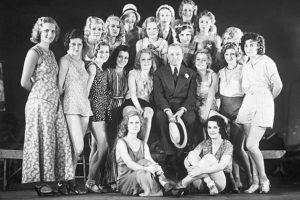
The great Broadway impresario Florenz Ziegfeld (1867-1932) poses with a bevy of his gorgeous and talented showgirls aka “Ziegfeld Girls” in 1931. His Ziegfeld extravaganzas packed in New York City theatre goers from 1907-31.
Rumors persist that “Ziggy” personally “interviewed” each and every young lady who auditioned for his chorus lines. Call it the “Ziegfeld Scandals.” Call it the “Ziegfeld Casting Couch.” That includes the 1914-32 years Ziggy was married to Billie Burke. If her name does not ring the proverbial bell, her most famous role undoubtedly will. Billie portrayed Glinda the Good Witch of the South in The Wizard of Oz (1939).
For love of guns via the mass media
 By Steve Crum
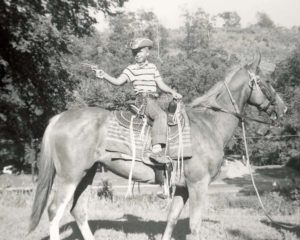
There is a silent, 8mm home movie of me as a toddler in 1952, wearing a specially made double holster with silver studs and fancy cap guns, patterned after Hopalong Cassidy’s six-shooters. My Grandpa Axtell was a western fan, and paid to have the holster constructed. That holster lasted for several years, until I ran out of belt holes as my body grew up and out. 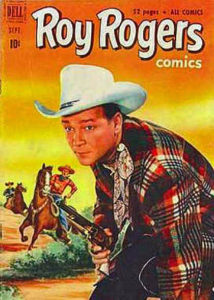
I was still wearing it when the photo here was taken of me on Grandpa’s horse.
From the moment I could barely walk, I was exposed to black and white TV westerns—like virtually every other kid in the country. Cowboy heroes dominated the tube from the late 1940s (the dawn of TV) through the ‘60s. Reruns of William Boyd’s 66 Hoppy movies produced in the 1930s and ‘40s made Boyd and his Hopalong character THE biggest stars of early TV. He was the man who dressed in black, rode a white horse (Topper), and sported a silver-studded, double holster. Boyd then starred in half hour episodes made for the new medium. Gene Autry and Roy Rogers joined Boyd with their own made-for-TV series. Their old movies were also rerun. “The western march had just begun,” as television’s Davy Crockett theme said in 1955. Autry’s production company also gave us new western heroes like Annie Oakley, The Range Rider, and even Champion (Gene’s horse).
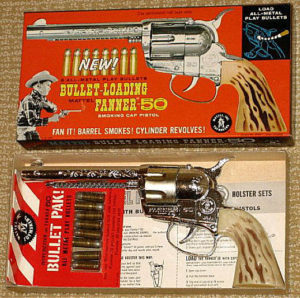 Movie theaters downtown and at drive-ins were western crazy too, with the likes of John Wayne, Randolph Scott, and James Stewart. All my neighborhood’s boys emulated their cowboy heroes as we spent summers playing cowboys vs Indians, and good cowboys vs bad cowboys. Toy cap guns, sold in every dime store, were essential. And nearly every hit TV western hero was merchandized, taking the cue from William Boyd. Carrying a cast iron and plastic toy gun loaded with a roll of caps was the norm. There were The Rifleman’s rifle, Wanted Dead or Alive’s “mare’s leg” sawed-off rifle, The Lone Ranger’s pistol, Wyatt Earp’s long-barreled Buntline Special, and dozens more. At the western genre’s peak in popularity during 1959, there were no less than 30 western series broadcast each week. Twelve years later, the cowboy craze had nearly disappeared into the sunset.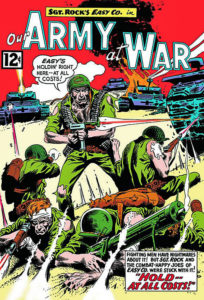
MILITARY FANTASIES
Heroics were not exclusive to cowboys. John Wayne portrayed both a cowboy and a military hero (particularly Army and Marines) in his most popular movies. While I never dressed up like a soldier to play military battles, I did fantasize about the heroism of soldiers during WWII. Among my collected comic books were Sgt. Rock’s Our Army at War. The machine guns and tanks were particularly thrilling.
The back page of most comic books was nearly always an advertisement for magic tricks, selling greeting cards, or buying one’s own set of fighting soldiers. I bit on one of the latter ads, after saving my allowance for over a month to buy a “foot locker” packed with soldiers holding their 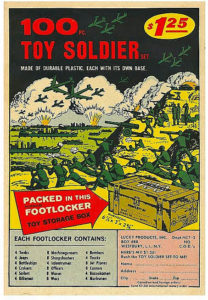 rifles and pistols. When I finally received the package, I discovered the foot locker was about the size of a Cracker Jack box, and the soldiers were tiny, flat-sided, brittle plastic things that kind of resembled soldiers. Standing them upright was a challenge. G. I. Joe dolls were prevalent around this time, as well as Aurora plastic model kits of military tanks, cannons, armed soldiers, etc. Some of my pals had them, but I did not. There were even plastic toy hand grenades that required a “stick ‘em” cap to be inserted, and would sound with a bang upon landing.
Adding to my military exposure were a couple of popular newspaper comic strips, Terry and the Pirates and Steve Canyon, both created and inked by Milton Caniff.
THE VIETNAM WAR AND THE MASS MEDIA
Hollywood’s connection to The Vietnam War was unlike its role during WWII, when the studios were dedicated to winning the war via producing anti-Nazi and anti-Japanese films. The propagandizing was effective, and no doubt helped us win the war. Even Bugs Bunny and Popeye cartoons had such propaganda themes.
By the time I was drafted to serve in the Army in 1970, The Vietnam War was somewhat winding down. The only Hollywood film clearly supporting our involvement in the war was The Green Berets (produced two years earlier), named after the hit song, “The Ballad of the Green Berets,” sung by Barry Sadler. However, some took 1970’s Patton as pro-war, even though it was WWII based. In many ways, the film was also anti-war. I supported the latter position—before, during, and after my two year tenure.
A note in passing: I loved Patton, but abhorred and laughed out loud at The Green Berets. I saw them both while an Army Specialist. 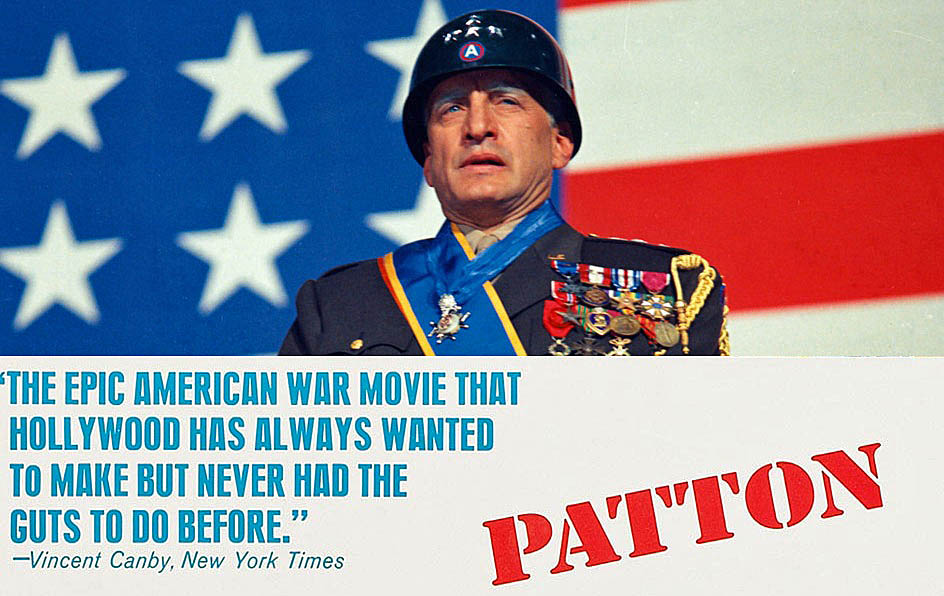
=====
During my Basic Training at Ft. Leonard Wood, I heard many references by drill sergeants to John Wayne: “John Wayne would 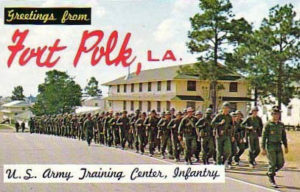 throw a grenade like this,” and “John Wayne would never do that.” During my next duty stop, at Ft. Polk, I discovered John Wayne war movies were shown daily, and free of charge, at the fort’s Tiger Land movie theater. WWII propaganda had segued into the Vietnam era.
REAL GUNS/TOY GUNS
Outside of my time in the Army, the only rifle I had ever fired was during the late 1950s when my father loaned me a 4-10 and took me hunting for quail. Both times, I never shot anything. I really had no desire to do so. But being with Dad was special. It happened so rarely.
=====
 For decades, the only gun I have in the house is a Red Ryder BB Rifle of “you’ll shoot your eye out” fame. It remains unfired and BB-less since a friend gave it to me 20 years ago.
The spent-powder smell of a cap gun still lingers in my sensory memories, but that was then and this is now. The romanticism of being a cowboy remains a happy escape, and I still love the old flicks on DVD.
=====
Did I forget to mention my United States Army medal for M16 rifle qualifying? I am a Sharpshooter. Go figure.
=====
You should find this piece about toy guns interesting:
Recalling Frank Bresee, ‘The Golden Days of Radio’ & hours of audio entertainment
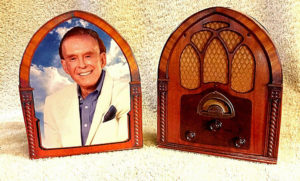 By Steve Crum
It was in 1971 when I met Frank Bresee. Then I met him again in 2003, 32 years later. The truth is, it was sort of a one-way meet in ’71. He didn’t know me then, but each and every week that year—and part of 1972, I visited him.
=====
Frank Bresee (1929-2018) was a show business historian who made his name via his The Golden Days of Radio, a weekly radio broadcast that was launched in 1949 and continued through syndication for over 40 years. It became radio’s longest running old-time radio show in entertainment history.
The half-hour program began with an announcer’s “Next…The Golden Days of Radio,” followed by the rousing, instrumental theme to “Manhattan Merry-Go-Round.” The show itself was fast paced, very light hearted, entertaining nostalgia hosted by Frank Bresee. Bresee would play either complete radio broadcasts or excerpts from any of the thousands of original radio transcription disks in his humongous collection. On any given episode, one 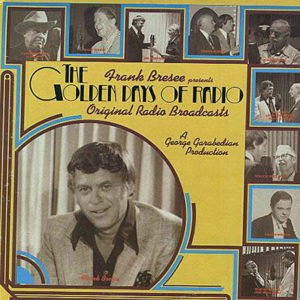 would hear the likes of Amos ’n’ Andy, The Lone Ranger, The War of the Worlds with Orson Welles, Bob Hope, Jack Benny, The Shadow, and on and on. Now and then, there would be a show dedicated to radio bloopers…or radio commercials…or famous radio announcers. There were special Christmas shows featuring holiday broadcasts from the 1930s-‘40s. Often, he would interview still living stars of radio (and sometimes movies) like Mae West, Edgar Bergen, Jim Jordan (aka Fibber McGee), and Fred Foy, who voiced The Lone Ranger’s opening spiel for decades.
Throughout the program, Bresee’s distinctive voice perfectly blended with his obvious love and respect for whichever program was being spotlighted. And he made it fun and interesting in the process.
Incidentally, Bresee was not just a radio show collector and host. He had performed on radio in 1942 as the voice of Little Beaver on Red Ryder. He acted in other shows too, and became a technical adviser for various radio and TV shows. He even invented several board games, the most famous being Pass-Out, an adult drinking game that sold in the millions. It alone made Bresee a very wealthy man.
Frank Bresee’s passion for preserving and promoting vintage radio shows triggered my passion in enjoying and collecting similar material. That began when I first listened to The Golden Days of Radio when I was stationed at a U. S. Army post near Kaiserslautern, Germany from 1971-72.
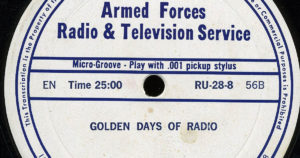 Homesick and alone while in my barracks most of the time, I listened to the Armed Forces Radio Service, a military-sponsored network broadcast outside the USA to our servicemen and women worldwide. Beginning in 1967, Bresee’s show was a must-hear weekly program on AFRS, continuing for the next 29 years. I not only loved the show, but increasingly thrived upon it. It offered terrific escape through ”Theatre of the Mind” entertainment.
I copied the shows on cassette tapes, and I am glad I did. Within a few years, after I was discharged from the Army, I taught a unit on the history of radio in high school mass media classes for 20 years. Bresee’s passion had passed to me, and then on to hundreds of appreciative and informed students. The recordings were vital to my curriculum. Let me clarify that I did not play all of them for my classes. But what supplemental material!
Fast forward to 2003. I am home alone—and quite lonely, this time following a divorce. On a Friday night, I am in my basement, exploring the web on my iMac. Grabbing my attention is The Friday Night Show site on the USA Network that played old time radio shows, and hosted by…Frank Bresee! It is broadcast live, and Bresee keeps encouraging listeners to call in. In those days, long distance calls were expensive, but this was done via the computer, so we could chat through the embedded microphone and speakers, free of charge. (Bresee was broadcasting from Los Angeles.)
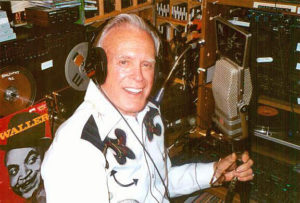 At that moment, karma meshed with deja vu. My memory shot back to my Army years—listening to radio—Golden Days of Radio—Bresee. I made the call, and Frank Bresee immediately picked up. Unreal. After introducing myself and telling him from where I was calling (Kansas City, Kansas), he told me he was impressed by my (to him) distant location. I spoke about listening to him in Germany, about taping his great shows and using them in high school teaching, and about how I could not believe this surreal moment of actually talking to him. While he kept trying to nail down what specific radio shows I used in my media classes, I kept yammering about what a positive impact he had on me. When he kept going back to talking about my curriculum, I kept repeating my “wow” comments. I was gushing effusively. It was shameful, but I could not control myself.
Bresee was very kind, and very patient. But he was forced to end my interview with the half-humorous comment, “I feel like you are delivering the eulogy at my funeral.” Then he thanked me, and the connection was over. I could not wait to hang up and pull myself together.
At least it is a certainty that Frank Bresee knew I greatly appreciated him. He impacted my teaching career as well as my passion for show business.
=====
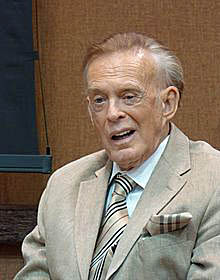 After his death last year, Bresee’s collection of radio scripts, props, related photos, and recordings of over 10,000 radio programs was donated to the Thousand Oaks Library Special Collection in Thousand Oaks, California.
Thanks to Frank Bresee’s inspiration, I had accumulated a hefty collection of radio shows myself—about 1,400 hours on reel-to-reel tapes. Several years ago, after retiring from teaching, I donated all of them to The University of Kansas. Paying it forward time.
=====
For a terrific biographical film about Frank Bresee, check out this site:
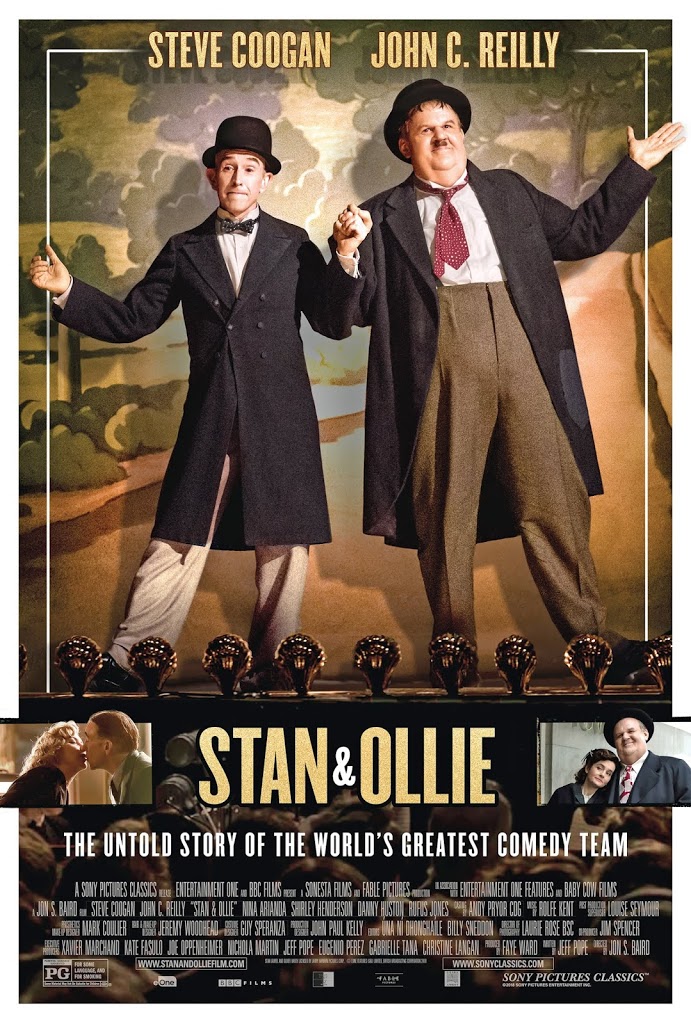
Laurel & Hardy are given deserved homage in poignant, often hilarious ‘Stan & Ollie’
By Steve Crum
There is a brief but poignant scene in the wonderful Stan & Ollie wherein Stan Laurel (Steve Coogan) is walking along a London street in 1953. He passes a large movie poster pasted to a brick wall, and then backs up to give it closer attention. The film being advertised is Abbott and Costello Go to Mars, starring the then #1 comedy team in movies, Bud Abbott and Lou Costello. Stan sighs in deadpan, and walks away without comment. From 1921-51—and 106 comedy films, Stan Laurel and Oliver Hardy were undoubtedly THE funniest duo in motion pictures. It is a telling sequence, laced with sad irony of fleeting fame. The proverbial parade passes by.
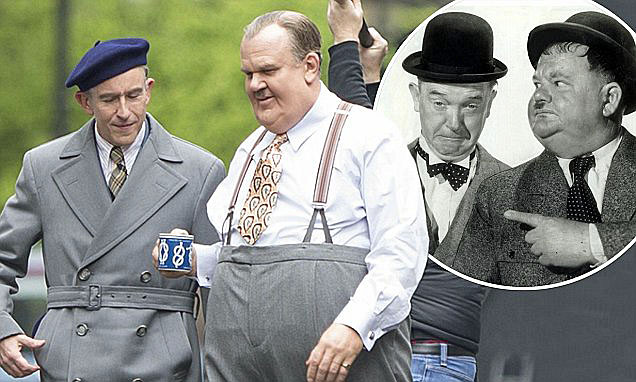 Stan & Ollie, which finally opens throughout the country today after premiering Dec. 28, is a warm and often hilarious biographical drama about Laurel and Hardy’s twilight years in show business. It involves “The Boys” and their exhaustive music hall tour of the United Kingdom and Ireland during 1953. This took place two years after making what amounted to be the worst film of their career, Utopia. It was the team’s final movie.
Their movie career virtually ended, The Boys had great plans for a movie comeback with a burlesque of Robin Hood. Stan had been working on a script for months when he and Ollie undertook their British tour. As such, there are flashbacks to some of their funniest movie moments in the feature, Way Out West, and the short, County Hospital. Each sequence is recreated spot-on, from duplicated sets to brilliant characterizations by John C. Reilly (as Oliver Hardy) and Steve Coogan (Stan Laurel).
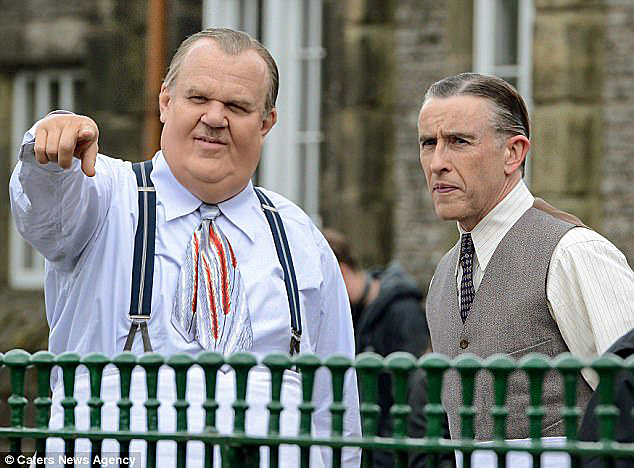
It could not have been accomplished without stunning movie magic provided by a team of 20+ makeup gurus handling the prosthetics, as well as hair and teeth designs. Reilly’s transformation to Hardy is incredible.
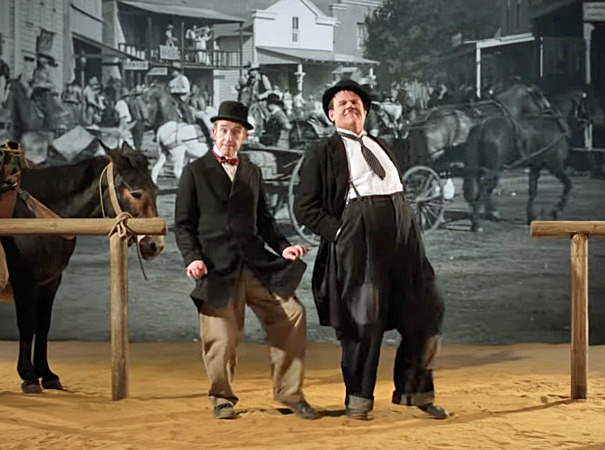 Directed by Jon S. Baird (his first theatrical feature of note) and written by Jeff Pope (Philhomena), Stan & Ollie begins in 1937, when Laurel and Hardy were at the peak of their careers at Hal Roach Studios. The duo dances to “At the Ball, That’s All” from Way Out West. During a break, the two grouse about Producer Roach’s hedging on a raise in their pay.
Cut to 16 years later in Newcastle, England. The duo are fresh off the ship, ready for a what turns out to be an overall successful, but physically taxing series of live stage appearances wherein they recreate some of their greatest movie comedy bits. Unfortunately, their manager/producer, Bernard Delfont (Rufus Jones), has been derelict in both their bookings and hotel accommodations.
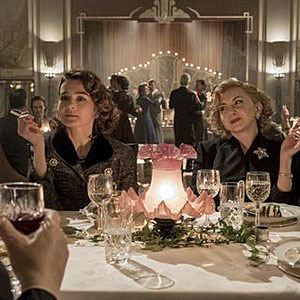 When Stan and Ollie’s wives join them on the tour, things get interesting. Both are wildly eccentric, and played with aplomb by Shirley Henderson as Lucille Hardy…whose voice sounds like a Munchkin; and Nina Arianda as Ida Kitaeva Laurel…possessing a heavy East European accent and sounding like Maria Ousepenskaya. Both are very protective of their husbands. All four together create an unique dynamic.
And then Ollie has a physical setback. So the movie proceeds in its mixture of hilarity and heartfelt love. It is a joy to experience.
As a 40 year member of The Sons of the Desert (the international Laurel and Hardy fan club), I feel that any movie based upon Stan and Ollie has to pass a credibility and likability test. This flick succeeds with Flying Deuces*…er, colors. (The Flying Deuces*, 1939, stars Laurel and Hardy.)
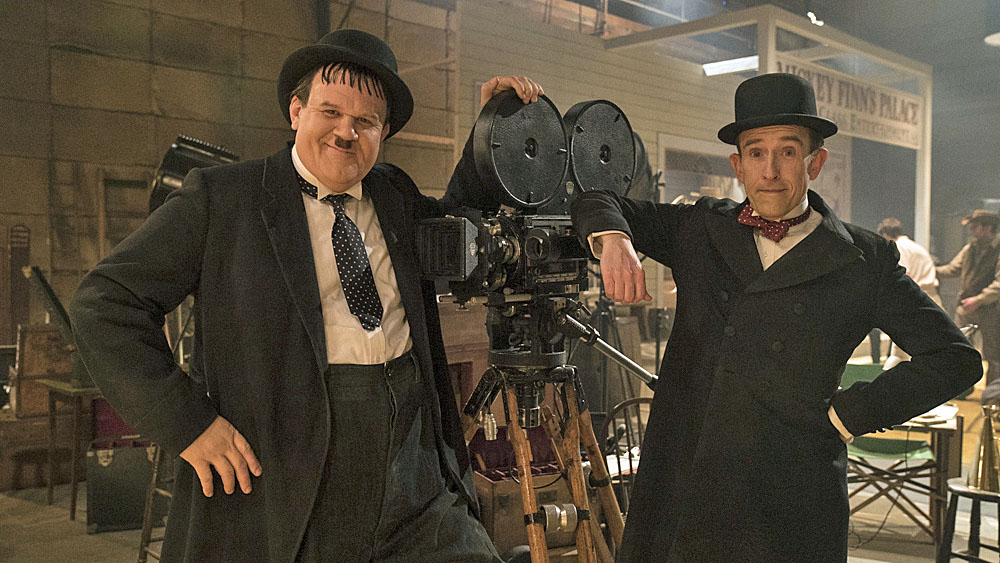
To play upon Mr. Hardy’s catchphrase, Stan & Ollie is quite the opposite of a mess The Boys have gotten us into.
=====
GRADE on an A-F Scale: A
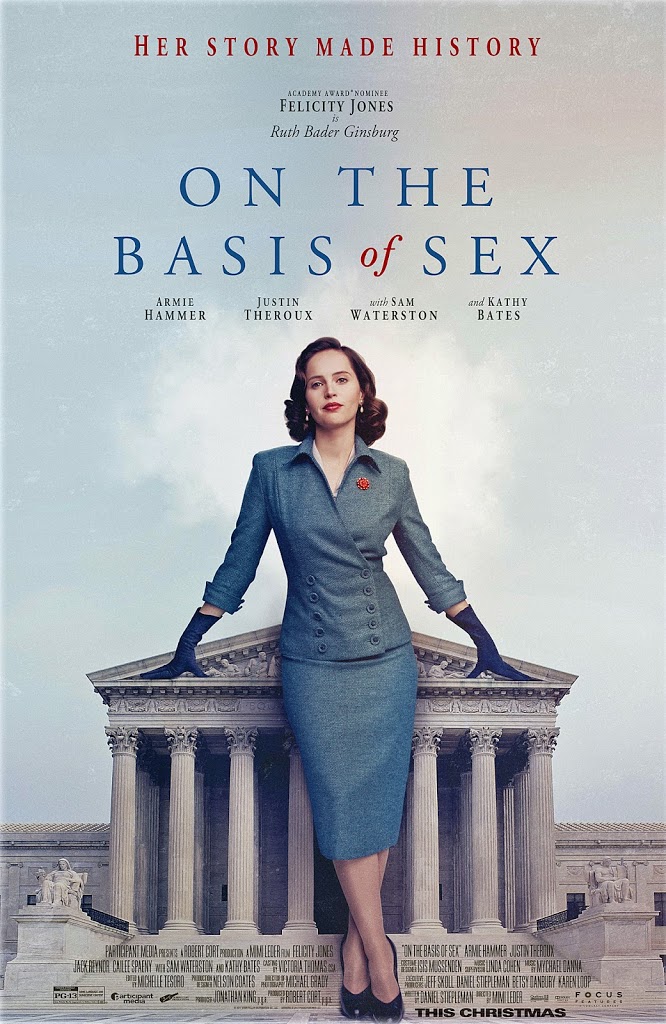
Ruth Bader Ginsburg’s fight for gender equality heroically portrayed in ‘On the Basis of Sex’
By Steve Crum
On the Basis of Sex adds to the cadre of biographical films based upon U. S. Supreme Court Justices. That relatively short list includes 1950’s The Magnificent Yankee, starring Louis Calhern as Oliver Wendell Holmes. Among those that followed, two focused on Thurgood Marshall: Separate But Equal (1991—Sidney Poitier) and Marshall (2017—Chadwick Boseman).
That said, On the Basis of Sex is a fascinating, well crafted, accurate bio-drama about the early life—personal and professional—of Ruth Bader Ginsburg. Ginsburg has also been the focus of a fine documentary, RBG, which premiered last year on CNN. At this writing, 85 year-old Justice Ginsburg is recuperating from ill health while maintaining her senior status on the Supreme Court.
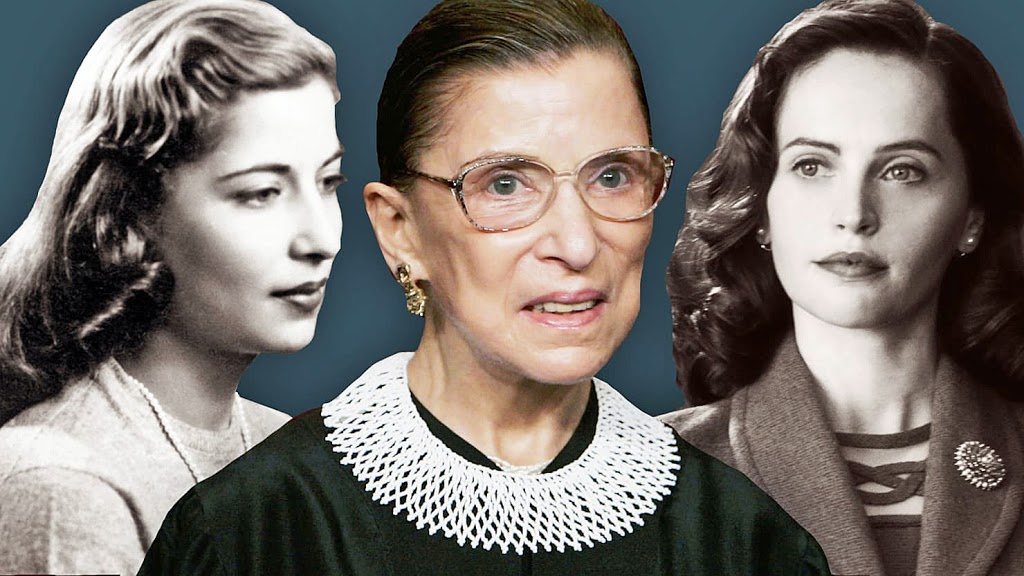
Directed by Mimi Leder (Pay it Forward), and written by Daniel Stiepleman, Basis follows Ginsburg’s early years (as Ruth Bader) with her parents, and then her eventual marriage to fellow law student Martin Ginsburg (Armie Hammer). Felicity Jones portrays RBG as a highly driven and aggressive law student. That verve would soon transition into a clever and relentless attorney.
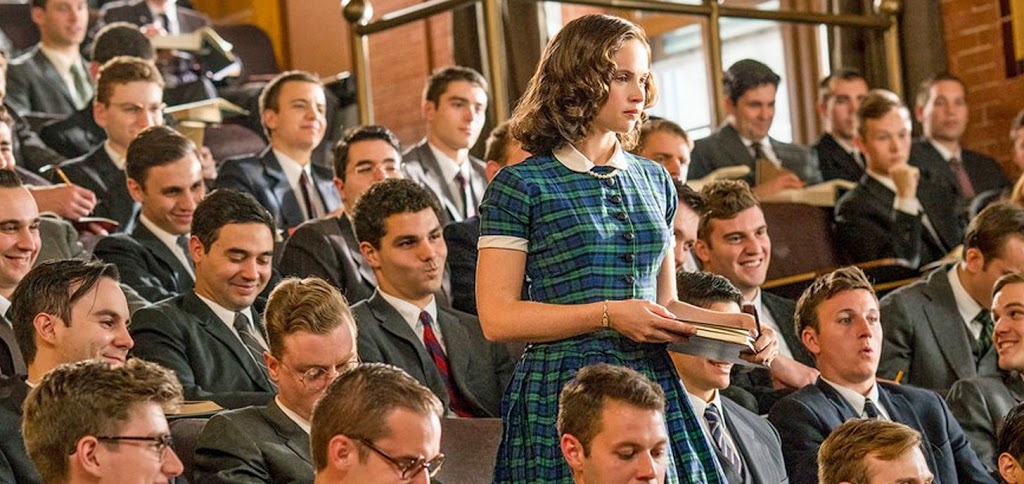 Basis paints RBG as a highly intelligent idealist possessing great stamina. Case in point: Soon after her marriage, husband Martin gets cancer, and is unable to attend classes. So in addition to taking her own full schedule, Ruth substitutes for Martin in his classes, taking copious notes used to prep him for exams. Describing such as an incredible feat is understatement.
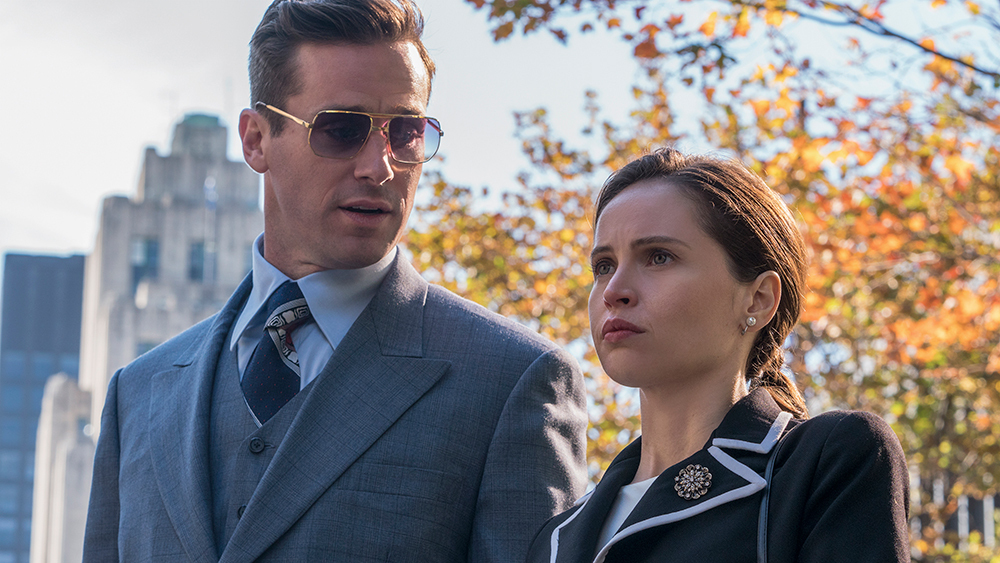 After transferring from Harvard to Columbia University, the Ginsburgs—now with a baby—complete their law degrees. Martin immediately finds an attorney position, but Ruth does not. Really, she is not permitted to do so. Law firms were male dominated. Period. This was in the late 1960s.
Ruth is relegated to teaching “The Law and Sex Discrimination” at Rutgers Law School. And she is lucky to get even that.
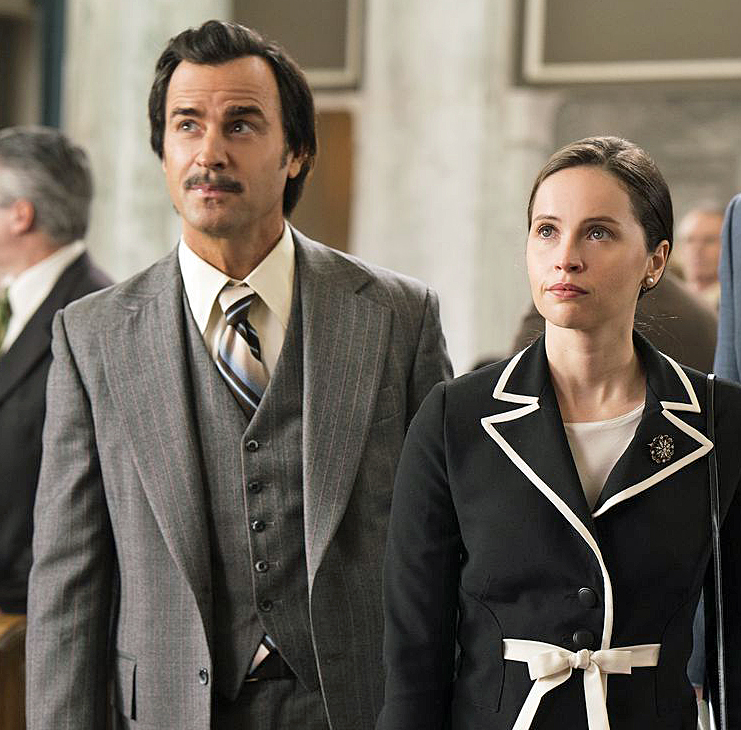
While On the Basis of Sex is by no means a rags to riches story, it does fit the mold of failure to success—or, to be accurate, obscurity to success and fame. It does not take long for the disappointed RBG to be offered a lawsuit that will propel her upward and onward into law book history. Since she represents no firm, Ginsburg enlists help from friend Mel Wulf (Justin Theroux), an ACLU attorney. The case involves a Denver man who hired a nurse to help care for his aging mom. Since he had to continue working, he could not take care of her himself. So he declared the payment to his mother’s nurse on his income tax. Then he butted head to head with the IRS, whose code limited any such tax deduction…for a man. It was justifiable for a woman to declare such, but not a man.
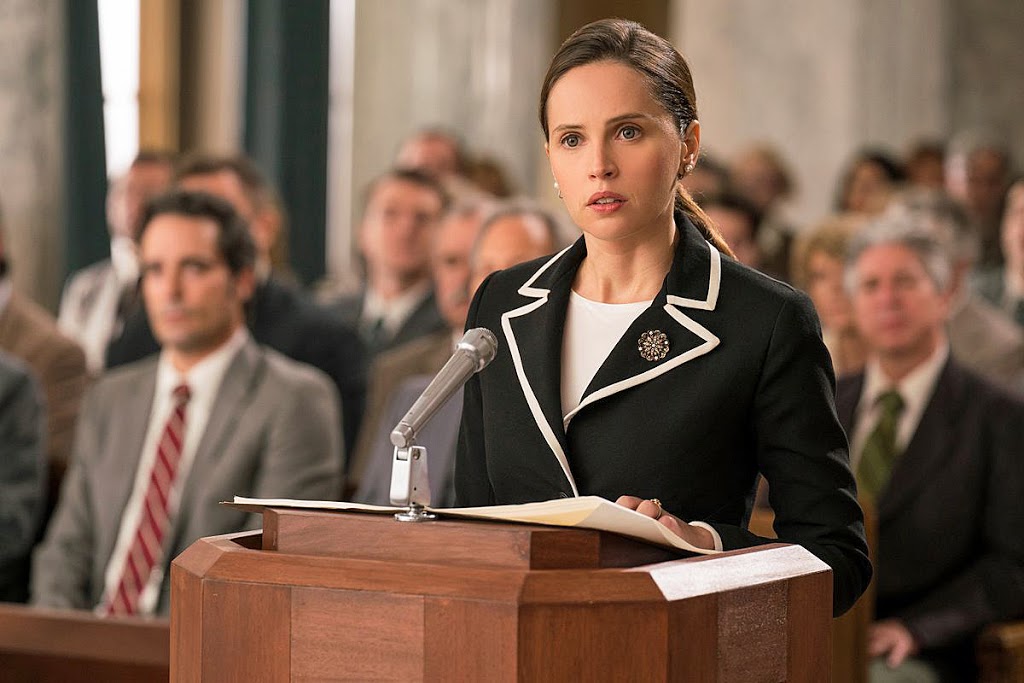 What occurs for the remainder of the film is reflected in the movie’s title. The beauty of On the Basis of Sex is its portrayal of Ginsburg’s almost single-handed pursuit of justice for men AND women. Gender discrimination becomes the mainstay of Ginsburg’s case, which she argues pro bono.
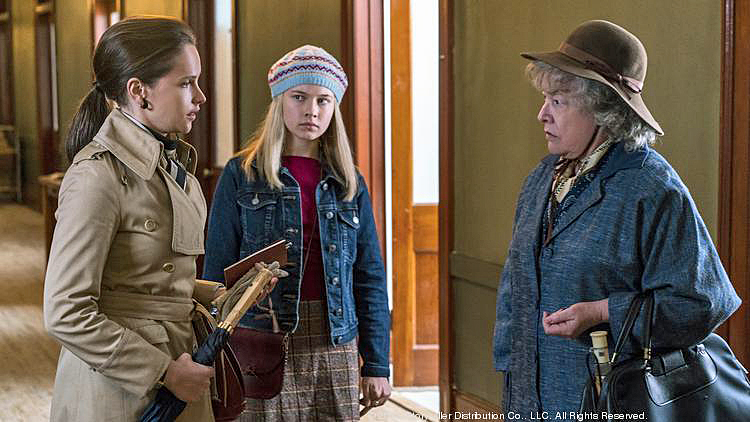 Aside from the courtroom scenes, there are welcome castings of Kathy Bates (as women’s rights attorney Dorothy Kenyon) and Sam Waterston as Erwin Griswold, a Harvard Law School administrator who eventually represents the IRS in court vs Ginsburg.
Look for a surprise cameo near the film’s end. Then again, it will probably not be so surprising.
=====
GRADE on an A-F Scale: B+