
Count me among Mitch Miller’s Gang…and send me royalties
 I actually sang along with Mitch when he appeared at Emporia State (Kansas) in 1967. [In those days, it was known as Kansas State Teachers College.] Miller led us from the stage in the familiar, robotic arm waving, cupped hand style we got to know on his Sing Along With Mitch TV show, which ran on NBC, 1961-64. I was part of the packed audience in Albert Taylor Hall that read mimeographed copies of his song sheet and sang along.
 Such was his entire show. This we did for over an hour. If I recall, pre-recorded instrumental music accompanied us.
I am still kind to my web-footed friends.
——————–
Let’s ALL Sing Along With Mitch: https://www.youtube.com/watch?v=9dY9gtYeHhk
——————–
Let’s ALL Sing Along With Mitch: https://www.youtube.com/watch?v=9dY9gtYeHhk
Robert Altman, Harry Belafonte share ‘Kansas City’ enthusiasm
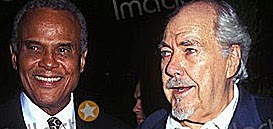
My separate 30-minute interviews with Robert Altman and Harry Belafonte were combined in a feature story published August 16, 1996 in The Kansas City Kansan. They were in KC for the premiere of Kansas City, directed by Altman and starring, among others, Belafonte.

By Steve Crum
“People who really don’t like jazz music should not see this movie,” director, co-screenwriter, and native Kansas Citian Robert Altman speaks softly and bluntly. It was just a few hours before last week’s North American premiere of Kansas City, and Altman is laid back. Now and then he pinches the downturned brim of his signature straw hat and lifts it to stroke his follicle-challenged pate.
Harry Belafonte, of Kansas City’s stars along for the premiere ride, enjoys the film’s attention. He is relaxed, cool, and looks a decade or two this side of his real age of 69. Even though his husky, low-key delivery underplays Altman’s demeanor, Belafonte is obviously hot on Kansas City, and not just for its artistic merits.
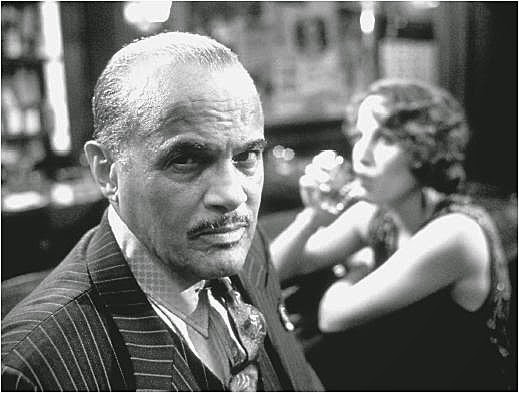 He is enthused because of the film’s historically realistic depiction of black culture, about which he feels Holllywood has been negligent. Only a handful of films have really depicted “realistic culturalism,” he says, The Color Purple being one.
“Black life has been perceived almost exclusively as innercity turmoil,” Belafonte says, “which is why I took this role (as hoodlum Seldom Seen).” Except for last year’s White Man’s Burdon, which he links in time frame with Kansas City, this is his first film in 20 years.
“Seldom Seen was written for Belafonte,” explains Altman, recalling that after repeatedly pressuring him to take the part, he finally got Belafonte to agree to at least read the script. Belafonte okayed, read his part, and phoned Altman.
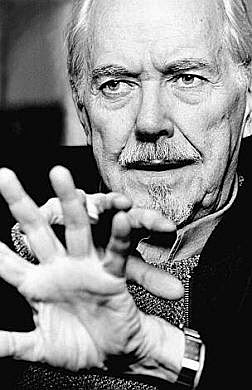 An exasperated Harry Belafonte then shouted at Altman, “There are no lines here, for Christ’s sake! I don’t have any lines!” “Write ‘em,” Altman calmly replied.
“And he did,” Altman grins.
“Let’s just say that improvisation (throughout the film) was extensive,” Belafonte adds. “Altman is one of the very few directors who trusts actors.”
The film itself, which will be reviewed as it opens next Friday, has a loose, reality feel that is typical of Altman’s work. In 1975’s Nashville, for example, Altman encouraged actors to write their own songs as well as ad lib dialogue. Belafonte explains Altman’s style as “surrendering the set to all his artisans.”
“Kansas City’s music was also done in one-take sets and live, beams the director, with “no post production editing or sweetening.” Not that it was easy to incorporate a jazz score. Altman says that “since it is difficult to use jazz as background music, commanding too much attention, I had to make the film fit the music.” Hence the riff-like acting and plot avenues.
 The story centers on Blondie (Jennifer Jason Leigh) kidnapping the laudanum-addicted wife (Miranda Richardson) of an adviser to President Franklin Roosevelt. Blondie’s husband (Dermot Mulroney) is held by Belafonte’s kingpin Seldom Seen for robbing one of his gambling customers.
Blondie’s skewed plan is to ransom an exchange for her husband. Even real life KC crime boss Tom Pendergast gets involved.
“There’s a cynicism to this movie that’s absolutely wonderful,” Belafonte says as he leans forward, his hands apart, palms out. Punctuating.
“This is not only the best jazz film that’s ever been made,” Altman himself riffs, “it’s the only one.”
——————–
Check out the Kansas City trailer: https://www.youtube.com/watch?v=66rtqQ2Q-Wk
——————–
Check out the Kansas City trailer: https://www.youtube.com/watch?v=66rtqQ2Q-Wk
Showbiz Crumography: Bette & Joan, Together Again…Briefly

A very rare shot of Joseph Cotten, Bette Davis, director Robert Aldrich, and Joan Crawford during a script reading of 1964’s Hush…Hush, Sweet Charlotte. Not long after this photo was snapped, Crawford snapped, quit the picture, and was replaced by Olivia de Havilland.
——————–
Here is the backstory of the controversial making of Hush…Hush, Sweet Charlotte: https://www.youtube.com/watch?v=yV9252EVJgM
——————–
Here is the backstory of the controversial making of Hush…Hush, Sweet Charlotte: https://www.youtube.com/watch?v=yV9252EVJgM
Showbiz Crumography: George O’Brien Is Home On The Range
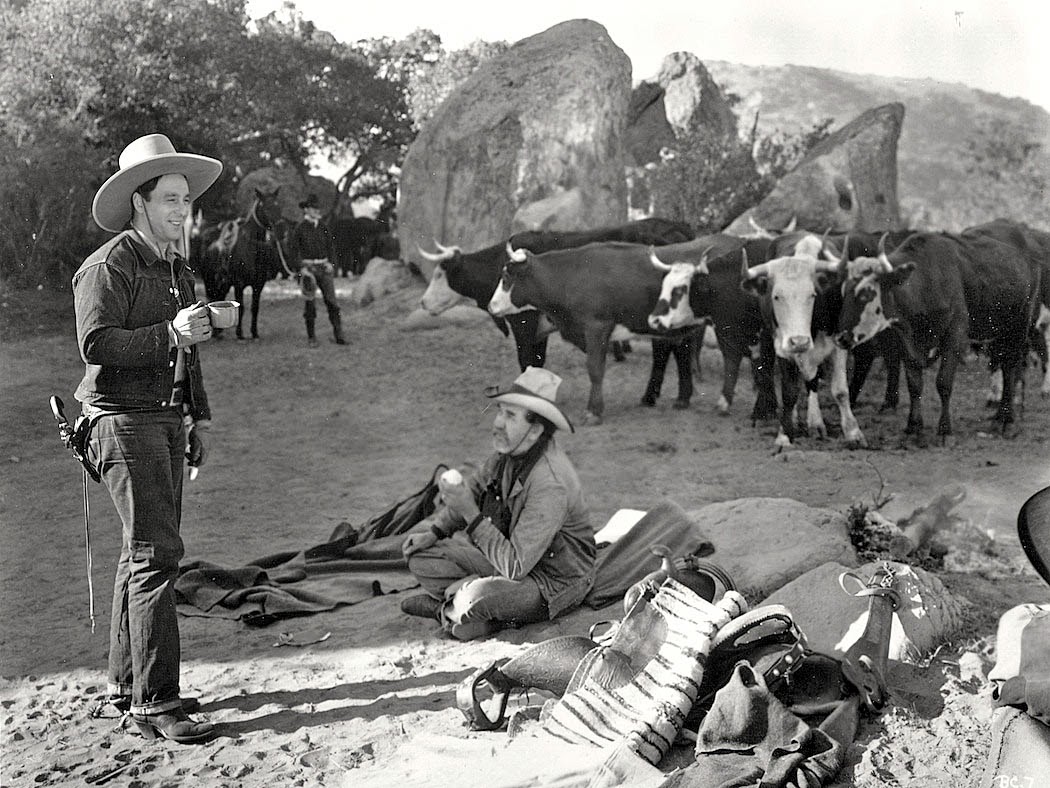 Cowboy star George O’Brien acts in a scene from one of his many RKO B-westerns. Like hundreds of low budget westerns of that time, shooting on location (not far outside Los Angeles) provided authenticity and eye candy via its built-in, gorgeous scenery.
——————–
Showbiz Crumography: Garland & ‘Annie Get Your Gun’
 In costume as Annie Oakley, Judy Garland is entertained off camera by fellow cast member Keenan Wynn. After recording her songs for the movie and shooting a handful of musical sequences, Garland was fired (due to illness, absences, tardies), and replaced by Betty Hutton. Despite all its rocky production challenges, including the death of Frank Morgan as Buffalo Bill, “Annie Get Your Gun” was a 1950 box office hit. [Louis Calhern replaced Morgan.]
——————–
Enjoy this rare footage of Judy Garland singing “Doin’ What Comes Naturally” from Annie Get Your Gun: https://www.youtube.com/watch?v=5GuOt5SN4q8