
‘The Judge’ features Oscar caliber work by Duvall, Downey Jr.
 By Steve Crum

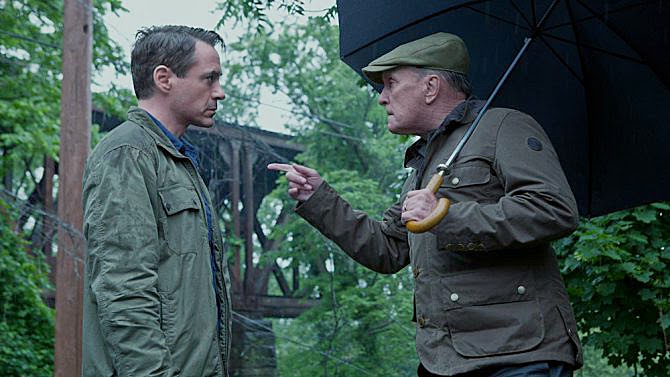
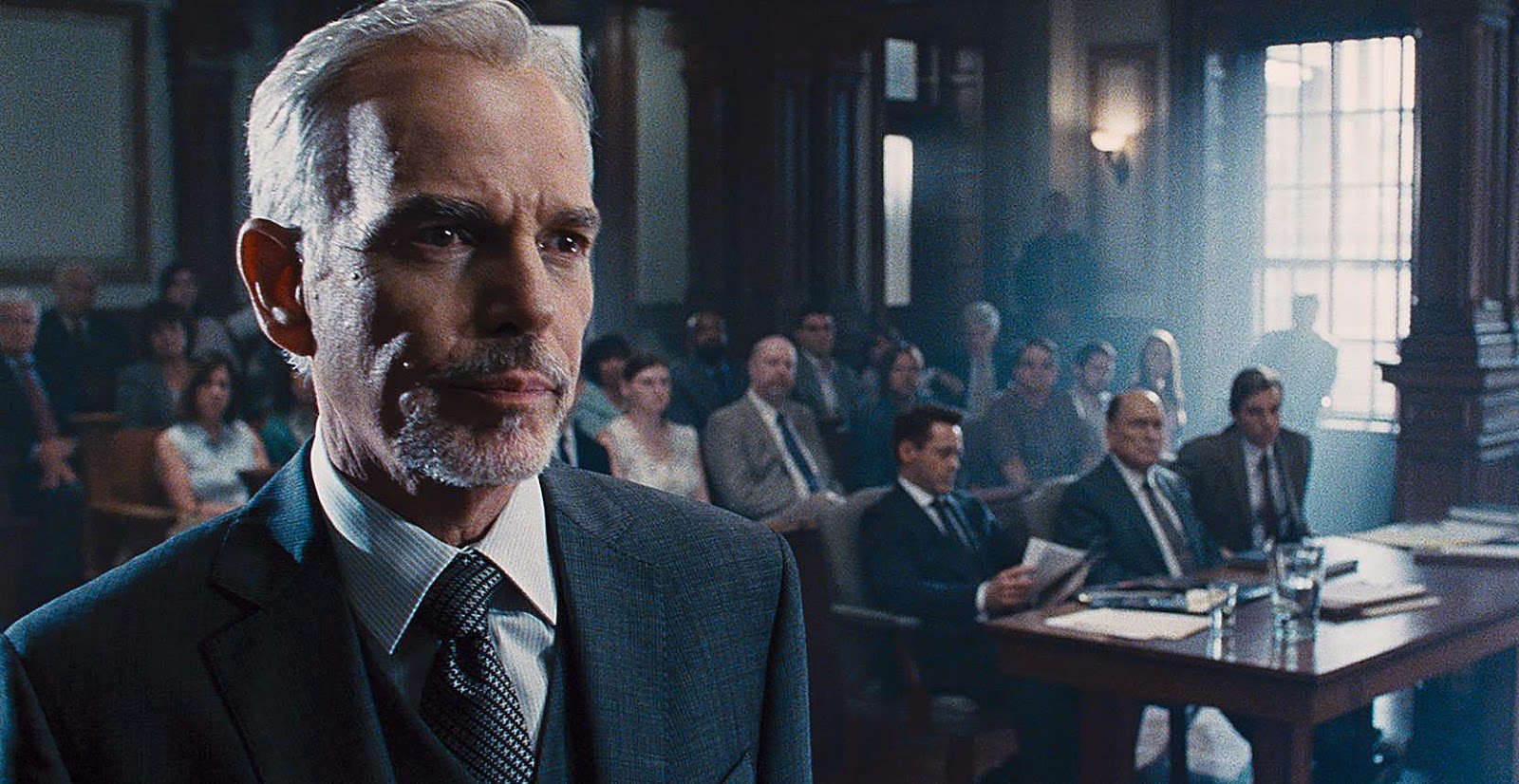 A tragic circumstance occurs following the funeral, directly involving Judge Palmer. A local lawyer (portrayed by Dax Shepard) is not qualified to handle the judge’s defense, so Henry steps in. Then there is the high pressure, appropriately named prosector, Dwight Dickham (Billy Bob Thornton). Then there are Henry’s times spent outside of court with former girlfriend Samantha (Vera Farmiga).
——————–
The trailer to The Judge: https://www.youtube.com/watch?v=ZBvK6ni97W8
Ants are irritating, but being terrorized by Mant was no picnic
 By Steve Crum

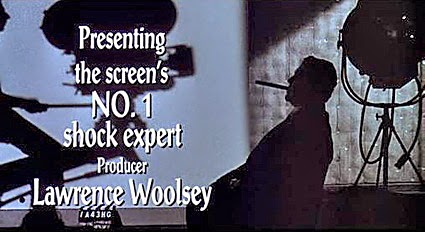
 The premiere occurs during the Cuban Missile Crisis in October of 1962, which serves as dramatic backdrop for what is otherwise a hilarious comedy packed with sight gags and inside jokes. Among the inside jokes are bit roles by Robert Cornthwaite, Kevin McCarthy, and William Schallert, actors associated with horror films of that era.
 During the latter part of the movie-within-a-movie when the ant-headed man monster picks up the screaming on-screen nurse in his arms, Woolsey has his “live” nurse, who is seated on the theater’s front row, grabbed and picked up by an actor dressed in the Mant costume. She screams and is carried out of the room at the same time. Is that clear enough to envision? (See the movie.)

I never saw the video shot at the screening, and do not know if it was shown locally. If it was, I never heard anything about it from anyone, including my boss. Maybe only Universal executives viewed it. Regardless, I am pretty sure I blocked my face with a notebook. I cannot remember. Seeing Mant in person clouds one’s mind.
——————–
Enjoy both the 1993 trailer to Matinee + the mock-up trailer to Mant!:
THE KANSAS CITY JOLSON STORY…Part I: Jolson, Palmer & Jolson
 By Steve Crum
The Jolson Story (Columbia Pictures, 1946) includes dialogue which speaks of Al Jolson’s desire to perform to a live, nationwide audience. A particularly telling scene in the musical biography occurs when Jolie’s Winter Garden Theater extravaganza, Robinson Crusoe Jr., is completing a two year run, and “still sockaroo.” Jolson alone (implied in the movie–with no evident input from the brothers Shubert) decides to take his Broadway hit on tour across America. Producer Tom Baron (Bill Goodwin) is exasperated at Jolson’s plan, as he speaks to Jolson’s manager, Steve Martin (William Demarest):
Baron: “Take a big Broadway show like this on tour? Drag it all over the country–into tank towns? Al’s out of his mind! It’s never been done!”
 Martin soon explains Jolson’s motive: “It’s a brand new audience, he says…millions of ‘em, people who never saw a Broadway show and never heard him sing….”
Moments later, cut to a locomotive barreling down the track, and then to Mama Yoelson (Tamara Shayne) turning pages of her theatrical scrapbook of newspaper stories from around the country heralding her son Asa’s national tour. (The Kansas City Times is included.) Throughout this sequence, Jolson’s robust voice gives out with his traveling music: Toot Toot Tootsie (Goo’ Bye).
———-
Sure The Jolson Story, like most movie biographies, mixes fact with fiction, so it is doubtful whether Jolson alone made the decision to tour. Nonetheless, Al Jolson did perform his Broadway shows in virtually every major city in the United States. He was certainly used to touring, something he had done since 1898, in the days of his brief stint with the Walter L. Main Circus. He continued touring when he performed with the Victoria Burlesquers, on through vaudeville, Dockstader’s Minstrels, and finally with his legendary Broadway musicals.
———-
Much has been said, rightfully so, about Al Jolson’s home theater, The Winter Garden in New York City. Kansas City (Missouri) was but one of dozens of cities Jolson played to during tours that stretched over 25 years. It was a true labor of Jolie love to spend hours that turned into weeks at the Kansas City, Missouri Main Library, pouring over yellowed Kansas City Star and Kansas City Times newspapers stored on microfilm. (Incidentally, at that time there were two newspapers published by the same firm; The Times was the morning edition, and The Star, the evening edition.) Thanks to Herb Goldman’s magnificent biography, Jolson: The Legend Comes to Life, I was able to pinpoint exact dates of Jolson’s shows in KC. It made my search much easier.

What surprises I found! There were, of course, the straight news stories of whatever Jolson show was either coming or currently playing. Then there were the reviews, the revealing and opinionated reviews. In some cases, it was like witnessing an actual Jolson performance. Jolson is often quoted while on stage, and bits of physical business are described. Jolson is also quoted off stage in personal interviews. I found cartoon caricatures of Jolson, photos of Jolson, ads of Jolson. Local record stores promoted Jolson 78’s in ads specifically capitalizing on his being in town. Jolie overload took place, so I had to stop and take some deep breath breaks throughout my exploration. Truly Socko!
Please throw a pity party for me since my eyes suffered as I retyped each and every story to make it easier to read. I had to use a magnifying glass to pour over each word. The microfilm copies had been erratically photocopied with some paragraphs missing sentence portions in creases, as well as blurred or smeared lettering. I had to second guess some of the words since they were virtually missing. In a few cases, I was forced to leave out a section due to incoherent lettering.
 The eye strain was worth it since the end result is a historical document of Al Jolson’s performances in Middle America during the early part of the Twentieth Century. I hope you are as thrilled and excited about this find as I was and still am.
Even though Jolson never built his house in Kansas City, as Mama Yoelson suggested in The Jolson Story, he definitely built and upheld his reputation in KC as “The World’s Greatest Entertainer.” He loved Kansas City audiences, and KC loved Al Jolson.
~~~~~~~~~~~~~~~~~~~~~~~~~~~~~~
KC JOLSON SHOWS + A HEADLINE
 1905–JOLSON, PALMER, AND JOLSON
1908–LEW DOCKSTADER MINSTRELS
1910–SINGLE VAUDEVILLE ACT
1912–THE WHIRL OF SOCIETY
1914–THE HONEYMOON EXPRESS
1915–DANCING AROUND
1917–ROBINSON CRUSOE JR.
1920 & 1921–SINBAD
1923 & 1924–BOMBO
1927–BIG BOY
1932–THE WONDER BAR
1950–”THE MAMMY SINGER” DIES
~~~~~~~~~~~~~~~~~~~~~~~~~~~~~
JOLSON, PALMER & JOLSON Published Oct. 29, 1905, this small display ad is the earliest reference to Al Jolson performing in Kansas City I could find. Jolson, Palmer and Jolson toured the vaudeville circuit from Oct. 31, 1904- Nov. 11, 1905. Their last five dates of the tour, Nov. 20-30, were without Al’s brother Harry, who had quit the act. That left Al alone, supporting Joe Palmer. The ad ran the day before Jolson, Palmer, and Jolson played KC (Oct. 30-Nov. 4) at the Orpheum Theater. After their next stop in New Orleans, the act would be renamed Palmer and Jolson.
Fifth on the vaudeville bill, sandwiched between Susie Fisher, The Phenomenal Baritone (?) and a horizontal bar act, Jolson, Palmer & Jolson are billed as “A Little of Everything.” Unfortunately, no other information about their act was published locally.
[Next, Part II: Jolson and Dockstader’s Minstrels hit KC]
Denzel morphs into killing machine in unintentionally funny ‘The Equalizer’
 By Steve Crum
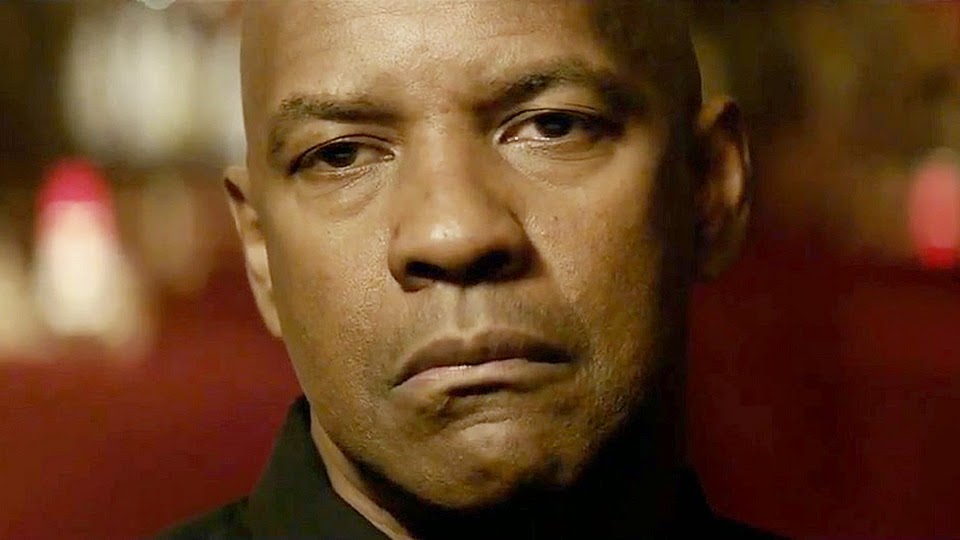
 “You gotta be who you are,” McCall advises Teri (Chloe Grace Moretz), a young, beleaguered hooker he befriends. Practicing his preaching, McCall is indeed a man who takes on insurmountable odds (The Old Man and the Sea) while “invisibly” lurking from the shadows. This sophomoric symbolism comes to us via the film’s screenwriter, Richard Wenk.
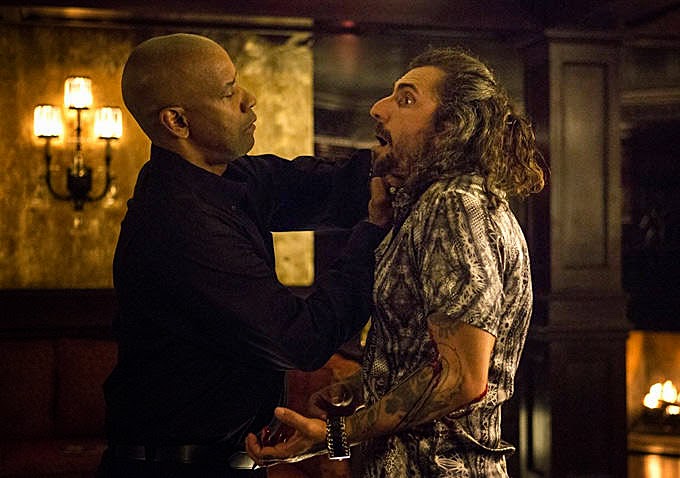 Cut to a closeup of his eye twitching and mouth pursing, as he surveys the surroundings from his viewpoint like a still camera clicking away at warp speed. Immediately he morphs into “The Equalizer,” even though he is never called such. He wears no costume, just street clothes. His weapons include his Ninja-like maneuvers, and whatever objects are on the shelf or coffee table nearby. He even turns adversaries’ guns and knives back on them. The guy is a marvel. Call him Captain Marvel, in fact. But no, that name has been taken.
Funny, bittersweet ‘This Is Where I Leave You’ features talented cast
 By Steve Crum
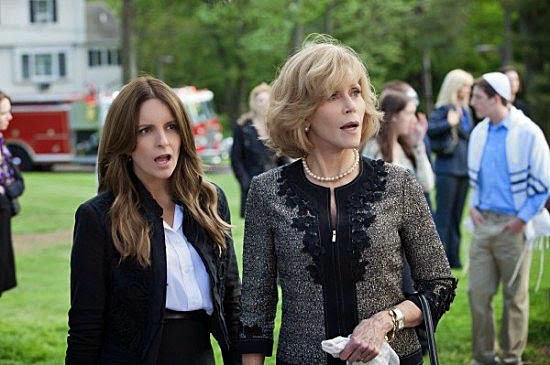 Then what is This? What we have is a talent graced adult comedy with the premise of a funeral reuniting everyone back to the family home. Previous comedies have used a funeral as the plot crux. Both the 2007 and 2010 versions of Death at a Funeral come to mind. In This case, the Altman Family happens to be Jewish, so widow Hillary Altman, played by a buxom-enhanced Jane Fonda, demands that her far less than orthodox Jewish children honor their father’s final request by observing Shiva. Mama Hillary insists, “I want all my kids under one roof again!”
 Director Shawn Levy (Night at the Museum) takes Jonathan Tropper’s crisp screenplay (based on his book) and finely paces the principals through a maze of funny sequences while balancing the dramatics surrounding new and old relationships. Judd Altman (Jason Bateman) has just broken up with his wife over her infidelity; Tina Fey’s Wendy is a long married mom whose husband is increasingly distant; and Adam Driver’s Phillip, the youngest of the bunch, has brought his latest girlfriend along. They have their problems too. Then there is Paul (Corey Stoll), married to the depressed Alice (Kathryn Hahn). Both are obsessed with getting pregnant since so far—for years—that has not happened.
 This Is Where I Leave You is a funny, bittersweet dramedy that connects, in large part due to a superb cast. This is Tina Fey’s best work to date, particularly because it taps into her dramatic talents. Jason Bateman is really the center of the story, and anchors it well. Driver is a gifted young actor who continues to impress. Stoll and Hahn are fine too.
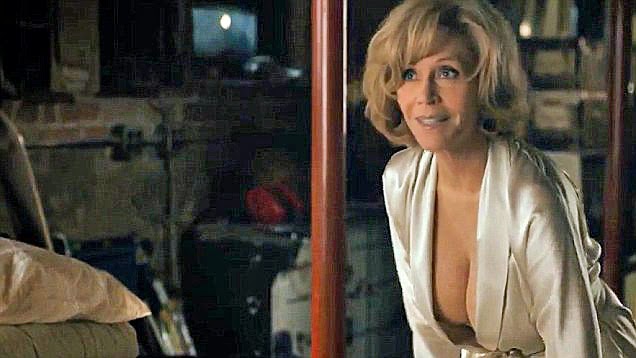 Incidentally, several laughs are attained through Fonda’s boobs, which were artfully enlarged for the movie. Those crazy special effects guys.