
Author: Steve Crum
It makes for a bad day to see ‘A Good Day to Die Hard’
 By Steve Crum

Soon after McClane arrives outside the Russian court building, all hell breaks loose as explosions ensue, making a literal shambles of everything and everyone inside. As luck would have it (and there is a myriad amount of luck and coincidences in this movie), Jack and political prisoner Komarov (Sebastion Koch) escape. All this leads to a seemingly two hour, frantic chase (actually it takes about eight minutes) through downtown Moscow’s jammed streets.
A Good Day to Die Hard is not the first, nor will it be the last, action movie to feature rock’em, sock’em car chases through downtown streets. By now, the bar has been raised so high in stunt and CGI driving and crashing that one wonders where do we go from here? In Good Day, that means including three humongous transports in the chase, a destructo truck rally gone mad.
 Skip Woods’ cliched screenplay involves the CIA, corrupt Russian politicos, good guys who are bad, bad guys who are good, and spies who will do anything for the sake of loyalties. That is, some operate that way. It’s way too convoluted for my critical brain.
Incidentally, there is neither an appearance nor mention of Mrs. McClane, significantly portrayed in the first couple of Die Hard flicks by Bonnie Bedelia. I had hoped for a happy reunion featuring the entire McClane clan at the conclusion. Maybe she couldn’t make it due to her incarceration in India or somewhere. Look for her rescue in A Good Delhi to Die Hard.
——————–
Hopefully it’s a good day to see this flick’s trailer: https://www.youtube.com/watch?v=oW9uT2wQFC0
Hoffman’s ‘Quartet’ charms with last hurrahs of elderly opera singers
 By Steve Crum
 However, Jean’s snootiness does not deter old friends Wilfred and Cecily from trying to reignite their friendship with her. The reserved Reggie, no surprise, mulls about and takes long walks to avoid any confrontation with his ex. Wilfred maintains his reputation as an outspoken wit and womanizer, not that he has any attraction other than friendship with Jean. His daily rowdiness consists of flirting and sexual innuendo with the waitress and Beecham manager. Billy Connolly is perfect for the role, and really the needed comic relief for this otherwise bittersweet love story. On the other hand, Cecily is rather dowdy and suffering from bouts of dementia.
 Based on Ronald Harwood’s play of the same name, Quartet explores relationships, the world of music, and the challenges of growing old. It makes for fascinating plot elements that mesh well. Harwood also penned the screenplay.
 Masterful ‘The Master’ headlines Kansas City Film Critics awards
By Steve Crum
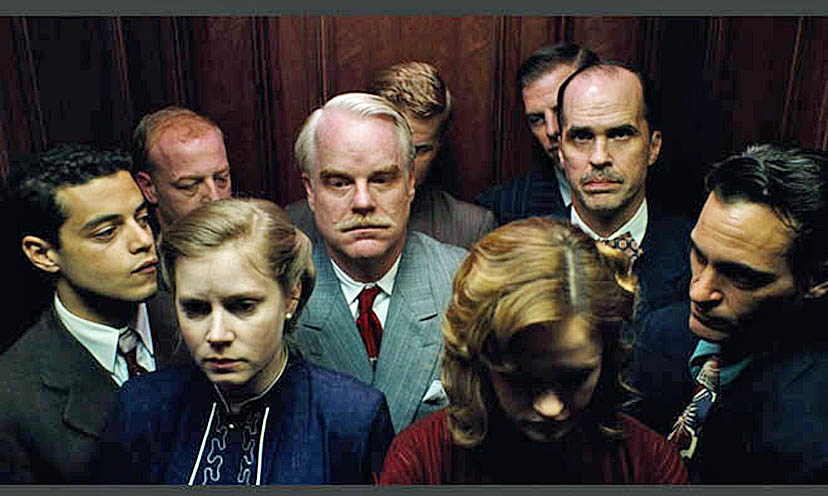
While not masterly, ‘Hitchcock’ is fun, fascinating ‘Psycho’ telling
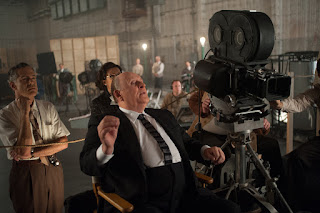
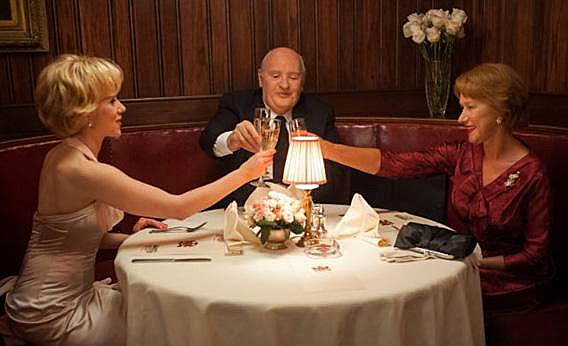 Director Sacha Gervasi does an impressive, if not campy, job with numerous profile shots of Hitchcock (Anthony Hopkins) in stereotypical pose. The Ed Gein dream sequences that show some of the atrocities he committed, particularly toward his mother, echo Psycho scenes featuring Norman and his mama. While it is documented that Hitch did base his Norman Bates on grim Gein stories he had read, there is no proof he obsessed about Gein to any extent. The film strongly implies Hitchcock was himself psychotic about the Gein saga, dreaming about it at night, and imagining Gein himself is advising for authenticity during the actual direction of Psycho. By the way, Gein’s murderous ways formed the basis for The Texas Chainsaw Massacre, a heinous 1974 movie directed by Tobe Hooper that spawned several sequels and copycat horror flicks.
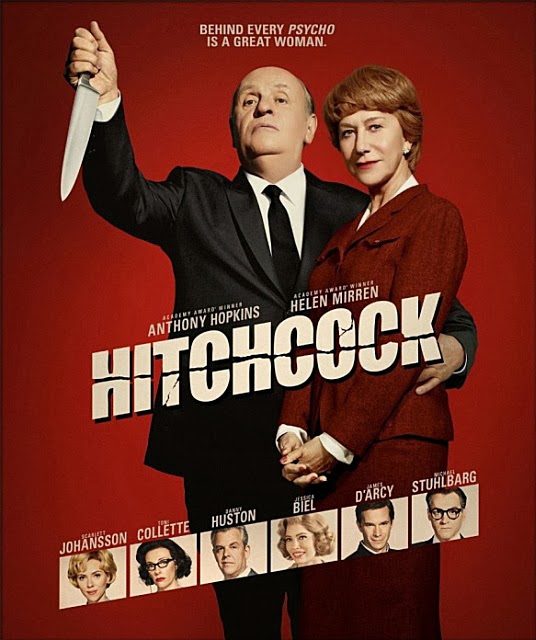 Of course, Hitch continues his womanizing on and off the Psycho set, flirting with and leering at Janet Leigh (Scarlett Johansson) and Vera Miles (Jessica Biel). Such Hitchcock escapades are facts that have taken legendary proportions. See the recent HBO movie, The Girl, which shows Hitchcock literally pouncing upon Tippi Hedren in the backseat of his limo. While that incident may be exaggerated, Hitchcock’s lust for his blonde actresses is a given. It is assumed he never channeled Ed Gein during those moments.
Presenting the trailer to Hitchcock: https://www.youtube.com/watch?v=3rQuRLERl6A
Mathew Brady tintypes seemingly come to life in fascinating ‘Lincoln’
 By Steve Crum
Another component vital to the success and atmosphere of Lincoln is the cinematography of Spielberg’s longtime collaborator, Janusz Kaminski. For Shindler’s List (1993), Kaminski photographed in newsreel-like black and white, adhering to our perception of WWII. For Lincoln, the look is bleached or amber-hued color, resembling 19th Century tintypes. Kaminski and Spielberg also chose to shoot indoor scenes with available light, via candle or kerosene lamp. The use of color seems more a lack thereof, and extremely effective for realism. K/S used a similar look for 1997’s Amistad.
 Lincoln is not a biography of Abe Lincoln’s entire life, but it vividly portrays the man during a critical period in our country’s history, nearing the end of the Civil War, and on the brink of abolishing slavery. In fact, during the course of the movie, we witness (per se) Lee’s surrender to Grant and, after belabored efforts–to say the least, the passage of the Thirteenth Amendment. This encompasses the final four months of Lincoln’s presidency and life, in 1865. During all the bickering and figurative backstabbing of Congressional members over both ending the war and passage of the amendment to end slavery, Lincoln himself stays focused on achieving both goals. The story is enhanced by the inclusion of his badgering wife Mary, finely portrayed by Sally Field, shown to be both a thorn and driving force in her husband’s political efforts.
 In addition to Day-Lewis and Field, there are at least a dozen noteworthy actors. Among them, Joseph Gordon-Levitt plays Lincoln’s eldest son, Robert, who tries to persuade his parents to let him enlist as a soldier. Tommy Lee Jones, as Pennsylvania Representative Thaddeus Stevens, delivers one of the two best performances of his career, the other being Coal Miner’s Daughter. Others deserving mention include David Strathairn, James Spader, Hal Holbrook, and Jackie Earle Haley.