
Author: Steve Crum
Once upon a time there were two Jean Harlow movies

 By Steve Crum
Fifty years ago this summer, Harlow beat Harlow. But in the end, Harlow beat Harlow.
Let me explain.
Paramount Studios had planned a biographical movie based on the life of MGM star Jean Harlow for a long time. John Michael Hayes’ script would particularly focus on her rise from a feminine foil in silent Laurel and Hardy comedies through her heyday as a featured player and ultimately star at Metro-Goldwyn-Mayer in such films as Red Dust and Grand Hotel. The story would include her private life love affairs, marriages, and untimely death. It would also cover the rocky relationship with her mother and stepfather. The film would be released as Harlow.

While Paramount filmed its Technicolor, widescreen Harlow glitz, an independent movie studio across town, Magna Pictures, was shooting its own version on Jean Harlow’s life—to be called Harlow. Karl Turbey’s script would be directed by Alex Segal. Gordon Douglas was helming Paramount’s Harlow.
The race was on to see which same-named movie would open first.
 Carroll Baker was the Technicolor Jean Harlow, while Carol Lynley was Harlow in black and white. Paramount’s movie was shot using celluloid film stock; Magna’s release was thriftily shot on videotape and then transferred to film. The process was touted as Electronovision. The latter was supposed to look like a live television production from the early 1950’s. It definitely looks low budget, except for its stellar cast. In fact, both movies have impressive casts.
The Lynley Harlow is supported by Efrem Zimbalist, Jr., Ginger Rogers (her last film), Barry Sullivan, Lloyd Bochner, Hermione Baddeley, Audrey Totter, John Williams, Jack Kruschen, Robert Strauss, Sonny Liston (!), and Cliff Norton. The great Nelson Riddle contributed to the score.
A bizarre scene occurs in the MGM studio commissary at lunch, wherein Harlow (Lynley) approaches a table occupied by Stan Laurel and Oliver Hardy (Jim Plunkett and John J. Fox) and Al Jolson (Buddy Lewis, hammily played in blackface). Jolson’s one line includes him ogling Harlow and shouting, “Oh, Mammy!” It is logical to see Stan, Ollie and Jean lunching together at MGM, but what the hell is Jolson doing there…and in makeup? He was a Warner Brothers star at that time.
 Released May 14, 1965, the Lynley Harlow never lived up to its ad catchphrase: The Picture The World Has Been Waiting To See! Even though it was rushed to release over a month before the Baker Harlow, no one rushed to the movie theatre. To this day, few have seen it.
 This is by no means implying the Paramount Harlow was or is a classic. But it has had staying power…in part due to Carroll Baker’s highly publicized (especially in Playboy magazine) sex persona that began in 1964’s The Carpetbaggers. Her erotic image helped Paramount’s Harlow become a financial success.

Audiences seeing Baker’s Harlow, after it opened June 23, 1965, were dazzled by the full color images of Angela Lansbury, Red Buttons, Raf Vallone, Peter Lawford, Mike Connors, Martin Balsam, and Leslie Nielsen. Neil Hefti supplied the music, and Bobby Vinton sang the movie’s theme song. Period costumes were by Edith Head. Producer Joseph E. Levine made sure his Harlow was promoted to the max.

Levine’s Harlow was months in the making, while the videotaped Harlow at Magna took eight days.
Neither movie is above average.
Only one of the two versions is remembered at all. Modern audiences would draw a blank at either film’s existence.
____________________
The Best & Worst of Upcoming Movie Releases, According to My Favorite Film Critic
By Steve Crum
These are my lists. Everyone has his or her own tastes, his or her own quirks and nuances regarding what is humor, what is horror, what is music, what is acting, what is entertaining. My tastes certainly influence films I review, but they are not all encompassing. A film review is a matter of balance as well as personal preference. I try to perceive what a movie’s audience would think of the film being reviewed. And I want my reader to know what I thought. Objectivity and subjectivity level out if a review succeeds.
However, back to this piece, these are my lists. I have not yet seen any of the movies opening from September to December, 2015, so no objectivity is required. They reflect my personal tastes based on 68 years of living, including the viewing of thousands of films, many of which I have written reviews. I don’t have to justify my choices, but then again, I might. From 75 films being released over the next four months, these are the ones I can’t wait to view…and ones I could care less to see. [They are listed in no particular order. Opening dates are noted.]
——————————
Crum’s Top 15 Most Anticipated Fall Movies [out of 75 releases]

1. STAR WARS: THE FORCE AWAKENS…Dec. 18: The franchise relaunches, and I am an entrenched fan. The definition of a true movie event.
 2. OUR BRAND IS CRISIS…Oct. 30: The premise engages me. Sandra Bullock plays a political strategist hired to get a Bolivian president re-elected. Add Billy Bob Thornton to the mix.
3. SUFFRAGETTE…Oct. 23: The struggle to get women’s voting rights in England, circa 1912, hooks me. Baiting the hook are Meryl Streep and Carey Mulligan.

4. TRUTH…Oct. 16: Depicting the 2004 “60 Minutes” scandal that prompted the firing of a CBS producer and degradation upon Dan Rather, the movie stars Robert Redford and Cate Blanchett.
 5. STEVE JOBS…Oct. 9: Most enticing is that Aaron Sorkin wrote the screenplay. It’s also about the creative process, Mac computers, and Jobs himself. Michael Fassbender (as Jobs), Jeff Daniels, and Kate Winslet star.
6. ROCK THE KASBAH…Oct. 23: American rock music manager Bill Murray backs an unknown singer on Afghanistan TV. Barry Levinson directs.
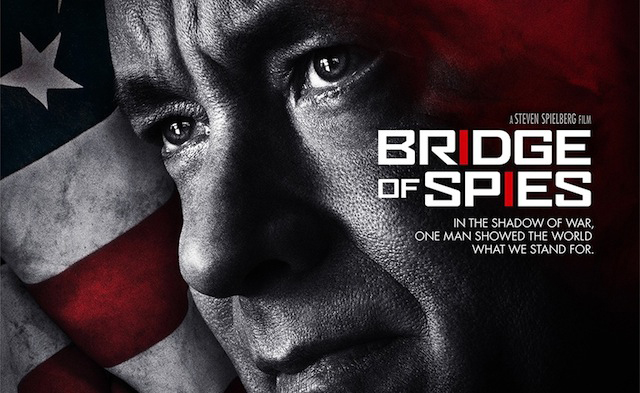 7. BRIDGE OF SPIES…Oct. 16: Three reasons this is highly anticipated. First is its director, Steven Spielberg (his 29th feature film). Secondly, it stars Tom Hanks. Hanks portrays the lawyer who tries to free an American U-2 spy plane pilot from the Soviets during the Cold War. That plot description is reason 3.
8. SPOTLIGHT…Nov. 6: Based upon the Boston Globe’s reporting of child sex-abuse allegations involving the Catholic Church in 2002, this could be a a powerhouse film. Co-writer Tom McCarthy directs Michael Keaton, Rachel McAdams, and Mark Ruffalo.

9. TRUMBO…Nov. 6: Bryan Cranston stars as Dalton Trumbo, an award winning screenwriter branded a Communist and blacklisted during the paranoid 1950’s. Helen Mirren and Elle Fanning are featured.
 10. SPECTRE…Nov. 6: James Bond movies are more than a guilty pleasure for me, and here comes Daniel Craig (again) as 007…but in a Bond backstory. Proven elements reinforce the franchise, including director Sam Mendes and actor Christoph Waltz.
 11. JOY…Dec. 25: David O. Russell. There, that is enough motivation for viewing. He directs his favorite actors Jennifer Lawrence and Robert De Niro in a story of…who cares? I’ll be there.

12. THE REVENANT…Dec. 25: I became an Alejandro G. Iñárritu groupie after seeing his brilliant “Birdman” last year. This time it is a true adventure set in the 19th Century about a trapper left for dead in the wilderness, but manages to survive. Leonardo DiCaprio stars.

13. IN THE HEART OF THE SEA…Dec. 11: Ron Howard directs Chris Hemsworth in this 19th Century sea tale based on a story that inspired “Moby Dick.”
 14. BONE TOMAHAWK…Oct. 23: OK, I am a sucker for westerns. This is one of two released this season—and both star Kurt Russell. His hero reportedly battles cannibals. Savvy, Kemo?
15. THE HATEFUL EIGHT…Dec. 25: Even the title of Quentin Tarantino’s western take is a layered joke. A follow-up to “The Magnificent Seven” it is not, however. It stars Kurt Russell, Samuel L. Jackson, and Jennifer Jason Leigh, among others.
Crum’s Bottom 10 Least Anticipated Fall Movies [out of 75 movies]
1. THE INTERN…Sept. 25: The cast is great (Robert De Niro and Anne Hathaway), but this comedy looks trite and predicable.
2. MAZE RUNNER: THE SCORCH TRIALS…Sept. 18: The second in what appears to be a franchise is not up my blind alley. Dylan O’Brien is back as the young man desperate to manipulate a labyrinth. Its cousin “Hunger Games” doesn’t appeal to me either.
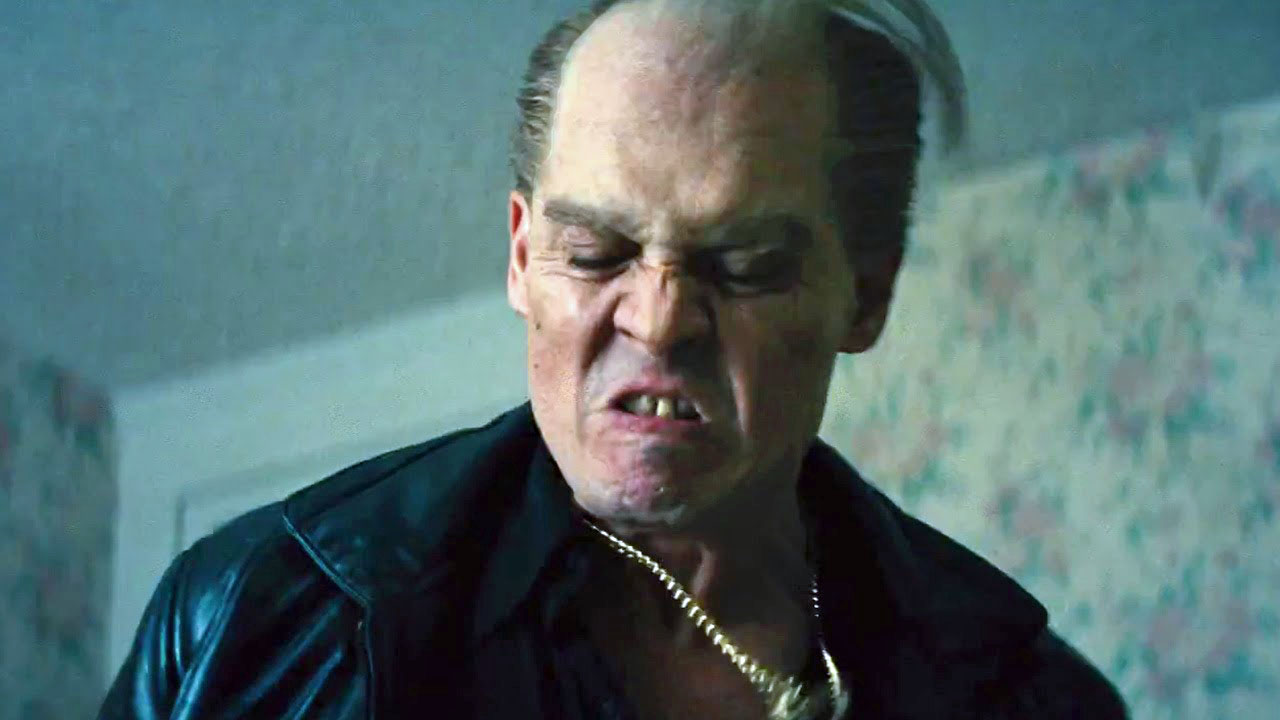 3. BLACK MASS…Sept. 18: Here is Johnny Depp looking and acting psychotic mean, which is a major career move. (Yes, he once played John Dillinger.) I gave up hope on Depp 10 movies ago.
 4. THE LAST WITCH HUNTER…Oct. 23: Protect me from watching movies about dungeons, dragons, witches, and games of thrones. Add this Vin Diesel fantasy-adventure wherein he battles evil forces in present day New York City after killing off the Queen Witch.

5. CREED…Nov. 25: Is another Rocky Balboa movie worth it? Probably not, but that did not stop Sylvester Stallone reprising his Italian Stallion persona (now elderly) to train Apollo Creed’s son, Adonis, to box. I throw in the towel ahead of time on this one.
6. THE NIGHT BEFORE…Nov. 25: Just in time for the holiday season comes another “comedy” about arrested development young men. This time some buddies are going on one last bender in the Big Apple before having to settle down and behave like adults. Seth Rogen is the poster boy for a movie like this, and he stars.
7. ALVIN AND THE CHIPMUNKS: THE ROAD CHIP…Dec. 23: I’ll pass, even though this newest Chipmunk installment is probably OK for my grandkids.
 8. DADDY’S HOME…Dec. 25: Will Ferrell and Mark Wahlberg play dad and stepdad, respectively, who compete for the attention of two children. Once again, two adults suffer arrested development.
 9. PARANORMAL ACTIVITY: THE GHOST DIMENSION…Oct. 23: This sixth movie of the never ending series is supposedly the finale. If it makes money, which it probably will since it promises even more brutality, the franchise will continue to bump in both the night and box office.
 10. JEM AND THE HOLOGRAMS…Oct. 23: “Based on the neon-pop ‘80s animated TV series….” Stop there.
 Avoid ‘The Man from U.N.C.L.E.’, especially if you liked the TV series
 By Steve Crum
Remember the 1964-68 TV series, The Man From U.N.C.L.E.? If you do not, this lackluster redo bearing the same moniker might be passable entertainment. Those who liked the TV series should avoid this new take. It’s new, yes, but in no way improved. In fact, it is barely recognizable as a Man from U.N.C.L.E. template.
 In fairness, producers of the 2015 U.N.C.L.E. stress that it is “based on” the old TV series. Translated, that means the three main characters, Napoleon Solo, Illya Kuryakin and Alexander Waverly, are back for the spy ride this time around. Oh…and both versions have a matching title. Outside of Solo and Waverly being respectively American and British, and the Soviet Kuryakin, that is pretty much the similarity. Then again, both the TV series and this movie are set in the Cold War 1960’s.
 So this take is 50 years retro, going a bit further back than the TV series time frame. Solo and Kuryakin are at the outset enemies operating on respective sides of the Berlin Wall. That makes The Man from U.N.C.L.E. motion picture a prequel.
 Ian Fleming, James Bond’s creator, suggested both the Solo character as well as the overall spy concept for the TV show. Five decades later, Guy Ritchie (who also directs) and Lionel Wigram adapted the original concept into an action film that mixes action, intrigue and humor—a combo that the TV series worked well. Unfortunately, those elements don’t quite jell in this 2015 wannabe. Dialogue tries to be James Bondish tongue-in-cheek, but more often becomes awkward innuendo. Particularly notice an implied sex scene with Solo (Henry Cavill).
  Speaking of Cavill, who has recently played a stoic Superman as well as bumbling Clark Kent, his Napoleon Solo is dapperly dressed (as was Robert Vaughn in the original) and mannequin-stiff. (Vaughn was never so proper.) That is doubly bothersome because of Cavill’s hunky physique. I could not help thinking of him as Clark Kent without glasses, in this case unhesitatingly hopping into bed at the drop of a negligee. Casting another towering stud, Armie Hammer as Illya Kuryakin, is somewhat problematic as well. David McCallum (TV’s Illya) he is not. Then again, who would want an exact duplicate of actors? Not me. I just expected more brain than brawn here.
  The first third of the movie moves along with the enemy secret agents literally at each other’s throats over the rescue of garage mechanic Gaby Teller (Alicia Vikander). The plot involves both sides trying to get to her German scientist father first. Solo and Kuryakin’s reluctant teaming up occupies the second act, while by Act III, the two spies have become friends and compatriots. That is when Hugh Grant’s Mr. Waverly enters. He eventually becomes the head of the spy agency. Again, this is before the U.N.C.L.E. agency of the title has been conceived. (That stood for United Network Command for Law and Enforcement…for those taking notes.) Calling this movie The Man from U.N.C.L.E. is misleading. Naming it The Future Men from U.N.C.L.E. is probably too cumbersome, but truthful.
It is an odd coincidence that Armie Hammer starred as the masked man in 2013’s bomb, The Lone Ranger. Not faulting Hammer, but that rehash of the radio and TV classic was skewed as well. It should have been renamed Johnny Depp’s Tonto Movie.
Like the TV original, The Man from U.N.C.L.E. movie is not a spy spoof like Get Smart! or In Like Flint. That is a given. But a few more laughs placed in a more clever script would have helped. In addition, inserting Jerry Goldsmith’s classic TV theme, even burying it in the crawl, would have been a fitting homage for this TV codger.
——————————
GRADE on an A-F Scale: C-
So-so ‘Ant-Man’ should especially appeal to pre-high school kids
 By Steve Crum
Ant-Man will appeal mostly to ant-people. Translated: children. Factor in fans of Paul Rudd and Marvel superheroes, and you could have a box office community picnic. (Sorry, I’ll try to contain any more ant references.) That also translates to family viewers, since kids are involved. Those who either do not have kids or are high school age and above should be leery of Ant-Man. Besides its slow pacing, the movie’s predictable plot could be excruciating for adults. Considering the target audience, the 117-minute running time should have been pared way down.

 However, and this is a huge however, star Paul Rudd also contributed dozens of funny lines to help spice up the story and turn Ant-Man into something more like a comedy-superhero flick. That would make the movie either a comero or a supedy. The laughs are appreciated and much needed, particularly during the non-action sequences where too often there are lengthy explanatory speeches delivered by Michael Douglas’ Hank Pym character.
 Digital effects, such as numerous shrinkings and miniaturized action among an army of ants, are impressive. Truthfully, I was just as impressed, maybe even more, with the non-digital miniatures in Honey, I Shrunk the Kids—26 years ago.

Director Peyton Reed (The Break-Up) and his screen scribes (Edgar Wright, Joe Cornish, Adam McKay, and Paul Rudd) have taken a relatively minor Marvel comic book superhero, Ant-Man, and launched him toward either his own franchised movie series or as another teammate of The Avengers in that franchise’s future films. (Not to go ballistic spoiler, but stick around during and after the end credits.) IF this Ant-Man kills at the box office, then both choices are possible. I understand that Ant-Man comic book fans (I am not one of them) already know what the Marvel future holds in this regard.
 Regarding Ant-Man’s predictable plot, we get a deranged scientist who has his eyes on monetary profit and earth’s dominance (Corey Stoll as Darren Cross/Yellowjacket). Factor in Dr. Hank Pym (Michael Douglas), whose miniaturizing technique has been stolen by the evil Cross. Enter Paul Rudd’s Scott Lang, an ex-con (for burglary) recruited by Pym to wear his Ant-Man suit to organize actual ants to help defeat Cross. Later in the film, Cross dons his own suit, that of the imposing Yellowjacket.
As a turn on most superhero movies, Lang has an ex-wife, Maggie (Judy Greer) and young daughter. Maggie has married a policeman (Bobby Cannavale), which adds a unique layer to the storyline. To balance the love subplot, there is Pym’s scientist daughter, the unmarried Hope (Evangeline Lilly). Well, Lang is single now, so….
 A definite plus of Ant-Man, outside of some clever action sequences, is Michael Peña’s funny Luis. A former cellmate of Scott Lang, Luis joins the Lang-Pym team as comrade-at-arms and sidekick-comedy relief.
 Ant-Man is highlighted by bursts of fun special effects (thousands of ants and miniaturizing sequences) and tame violence.
Addendum: I confess that throughout Ant-Man I was looking for Marvel comics guru Stan Lee (who always appears in cameo during a Marvel movie) to pop up as a cricket.
____________________
GRADE: On an A to F scale: C+
‘Jurassic World’ terrifies with squirm in your seat fun
 By Steve Crum
Being a huge Jurassic Park film fan, I was very excited about Jurassic World, the impatiently awaited fourth installment to the dinosaur franchise. Fellow enthusiasts, prepare for a towering T-rex, calculating raptors, and much more. Jurassic World is just what the pterodactyl ordered.
The film succeeds, despite the gamble this is the second time a Jurassic Park work has not been directed by its mentor, Steven Spielberg. (Joe Johnston helmed the third one.) That is no slight to World director Colin Trevorrow, whose major stylistic difference is the near absence of take-a-breath time between numerous heart-pounding action sequences. The only flaw is pretty much unavoidable in that everything is highly predictable.

We know, we expect, we savor man-eating creatures breaking loose from their caged confines and preying upon any nearby human. We also know the humans will fight back and eventually win. The fact the CGI dinosaurs appear absolutely real is also a given expectation. The basic plot structure was set in 1993 with the first film, Jurassic Park, and copycatted through its sequels, The Lost World (1997) and III (2001).
Michael Crichton’s 1990 best selling novel, Jurassic Park, formed the template, so why mess with huge profits? It worked in the book, the first three versions, and it works with World. It has also worked via comic books and video games. Expectation is everything, folks, which is why there are so many movie sequels down the pike.
 As we learned in the previous three films, business profiteers are the root of all murderous problems. If they don’t directly cause mayhem, they trigger its occurrence.Wherein the genetically engineered dinosaurs were created by visionary John Hammond for the sake of scientific as well as public observation, there is always some corporation out there scheming to exploit the creatures to turn big bucks. With Jurassic World, logically set 22 years after the first movie, big business has finally taken over the remote dinosaur island, and packaged it as a Disneyland-like zoo for big budgeted families. Jurassic World is the theme park’s name. Simon Masrani (Irrfan Khan) runs a hands-on show as CEO of the Masrani Corporation owners.
  Enter Owen Grady, a Velociprator trainer, who lives pretty much independently on the island, outside the zoo area. Chris Pratt portrays Grady, and this is the first time we have seen Pratt in a role virtually absent of any humor. Nonetheless, Pratt realistically personifies the hero.
  Bryce Dallas Howard is Claire Dearing, the prim, all about business park operations manager who has to deal with the obstinate Grady, two visiting nephews, and an internal struggle for power. Add an uncontrollable, hybrid dinosaur known as Indominus rex, sporting multiple breeds of dinosaur genes, and a humongous sea creature that does dolphin theatrics to thrill the JW crowds.
 Oh yes, there are also birds…dirty, lousy, stinkin’ birds—big ones that like tourists for snacks. And all is displayed in very effective 3D.
 It is obvious by the end of Jurassic World that in no way will another sequel occur.
 Pause. Reword. Due to the huge profits Jurassic World will undoubtedly rake in, in every way another sequel will occur. I’ll be first in line.
——————————
GRADE on an A-F Scale: B+