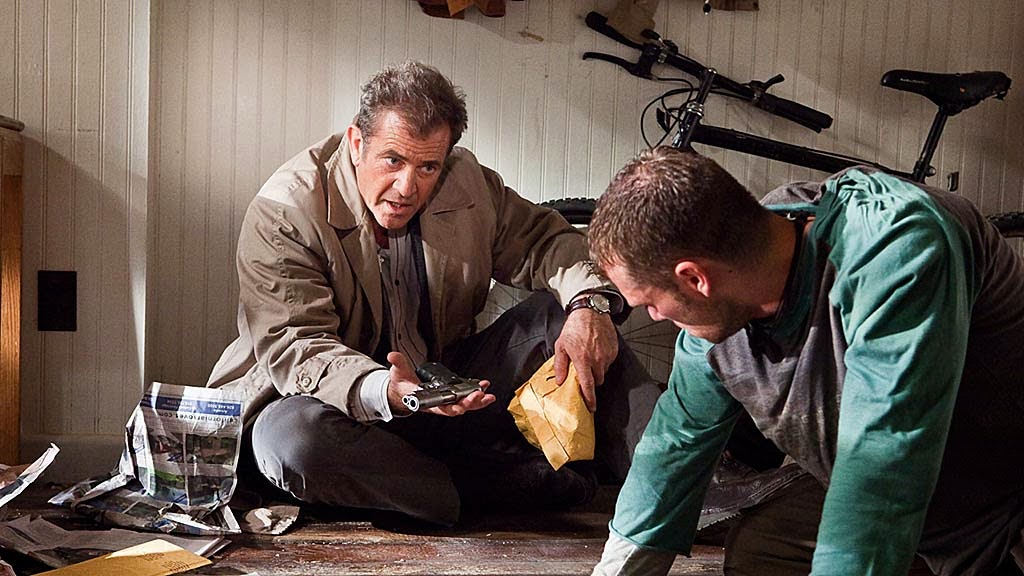
Gibson returns in violent, vengeful ‘Edge of Darkness’

By Steve Crum
 
Much has been said and written about Mel Gibson’s return to film stardom after eight years. Since 2002’s Signs, Gibson forsook acting for writing and directing the controversial and critically praised Apocalypto (2006) and The Passion of the Christ (2004). Apart from his professional successes, there were his highly publicized antisemitic slur, drinking binges, and divorce. They are mentioned here only because of their potential box office drag.
 
Now, looking his age but still showing road warrior grit, Gibson headlines Edge of Darkness, playing a Boston cop revenging his murdered daughter. Although written and directed by others, Edge has its share of Gibson movie earmarks: violence, heroism to the point of martyrdom, and spirituality. The Thomas Craven character Gibson portrays flashes his crucifix necklace several times, and one of his lines (from the screenplay by William Monahan and Andrew Bovell) curiously channels The Passion of the Christ: “You had better decide whether you’re hangin’ on the cross…or bangin’ in the nails.”
 
Edge of Darkness is a solid action movie with a strong, believable performance by Gibson. Just as effective is Ray Winstone’s turn as philosophical hit man Jedburgh.
 
Labeling Edge as violent is an understatement. There are more bullets to the head and torso in this flick than an entire season of CSI shows. Director Martin Campbell (Casino Royale) has supplemented the homicides with a plot line of government corruption and conspiracy–and the aforementioned revenge.
 
Based on the 1980’s British mini-series of the same name, Edge of Darkness is aptly named. After his 24 year-old daughter Emma (Bojana Novakovic) is shot-gunned to death as they both walk out the front door, the veteran Detective Craven fixates on finding the murderer. In the process, Craven dodges and lobs bullets while encountering a cover-up. Among the guns, fisticuffs and kicks, Gibson plays Craven as both vulnerable and lethal. Mel Gibson + lethal. That is an original concept.
 
As the heartbroken and hateful Craven seeks his kid’s killer, he links with government operative Jedburgh, who is essentially a crisis clean-up guy. If eliminating someone is necessary, so be it. Jedburgh becomes conflicted when he sympathizes with Craven, and therein lies a plot element.
 
With a relentlessly driven take by Mel Gibson, including his credible Boston accent, Edge of Darkness car crashes and body slams to a surprisingly spiritual conclusion. The finale is also corny and touching enough to elicit tears.
——————–
On an A to F grade scale: C+
——————–
Share:

‘Crazy Heart’ is among Bridges’ finest work

By Steve Crum

Jeff Bridges does justice to a beautifully written lead role in Crazy Heart. As down and nearly out country western singer Bad Blake, echoing Hank Williams, who performs both between and during booze binges, Bridges’ performance is the stuff of which Oscars are won.

Director Scott Cooper adapted Thomas Cobb’s novel about a more than middle aged country singer (Blake) who was a near great in the good old days. At his peak, Blake likely toured with his band and manager; and probably played stadiums, fairs, and even headlined showrooms in Vegas. We don’t know much about his past. But we know his lifestyle now is picking up gigs wherever.

The film opens as he drives his old car to a dive of a bowling alley in Santa Fe, New Mexico, and checks in as the lounge act therein. The local musicians know him well, and he recognizes them more when he is sober. He checks into a nearby motel, retires to his room, and the whiskey slams begin. By show time, he barely makes it to the bowling alley stage. Performing without retching during a song is the challenge. So goes Bad Blake’s daily regimen.

A local newspaper reporter, Jean Craddock (Maggie Gyllenhaal), wrangles an interview or two from Blake, and the story predictably goes from there. Jean’s fascination with the legendary singer turns to sympathetic adoration. At first, Bad treats her as a groupie, which in several ways she is. A mutual admiration and love develops, particularly after Blake meets her young son. There is a particularly moving scene late in the film involving Blake and her son at a shopping mall.

Thanks to Jean, Blake tries to sober up and regain a life lost. He tries to reestablish relationships with a surrogate son of sorts who was once one of his sidemen, and is now the major country singing star Tommy Sweet (Colin Farrell). There are good scenes with his former partner, played by Robert Duvall. There are effective, original songs written by T-Bone Burnett.

The story is simple, really, but Cooper’s direction is praiseworthy, conveying both the claustrophobic privacy of Blake’s drinking contrasted with the vast desert landscape (gorgeously photographed by Barry Markowitz) of the nearby, real world just outside his sleazy motel room. However, it is Bad Blake’s tortured complexity that sells Crazy Heart, and Jeff Bridges captures Blake body and soul.

Thinking of memorable portrayals of alcoholics in films, several are recalled: Jack Lemmon and Lee Remick in The Days of Wine and Roses, Ray Milland (The Lost Weekend), Nicholas Cage (Leaving Las Vegas), Susan Hayward (I’ll Cry Tomorrow), and even Dudley Moore as a comedic lush in Arthur. Jeff Bridges is included in this group, not necessarily at the top of the group, but at the top of his acting game. On second and third thought, Bridges deserves to be placed at the top of the group as well.

Crazy Heart definitely ranks among Jeff Bridges’ finest work, including: The Big Lebowski, Wild Bill, The Fisher King, Starman, The Fabulous Baker Boys, Tucker: The Man and His Dream, Tron (yes, Tron!), and The Last Picture Show. After four Oscar nominations, he will surely–and deservedly–grab the proverbial ring with Crazy Heart.
——————–
On an A to F grade scale: A-
——————–
Link here to the Crazy Heart trailer: http://www.youtube.com/watch?v=Y0349E7kFEM


Share:

77 years ago, Jean Harlow came home to KCK

——————–

LEGENDARY SCREEN SIREN JEAN HARLOW posed on her grandmother’s front steps with Kansas City, Kansas neighborhood children while visiting her grandmother in 1933. Behind Harlow are (from left) Bernadine Frances Martin, Betty June Lobb and Merle Kelly Arnold. Beside Harlow are Dorothy Rose Martin and (standing) Dorestine Martin. ~Photo courtesy of Merle Arnold.

——————–

NOTE: This article was originally published in The Kansas City Kansan newspaper on Aug. 21, 1998.

∞∞∞∞∞∞∞∞∞∞

By Steve Crum
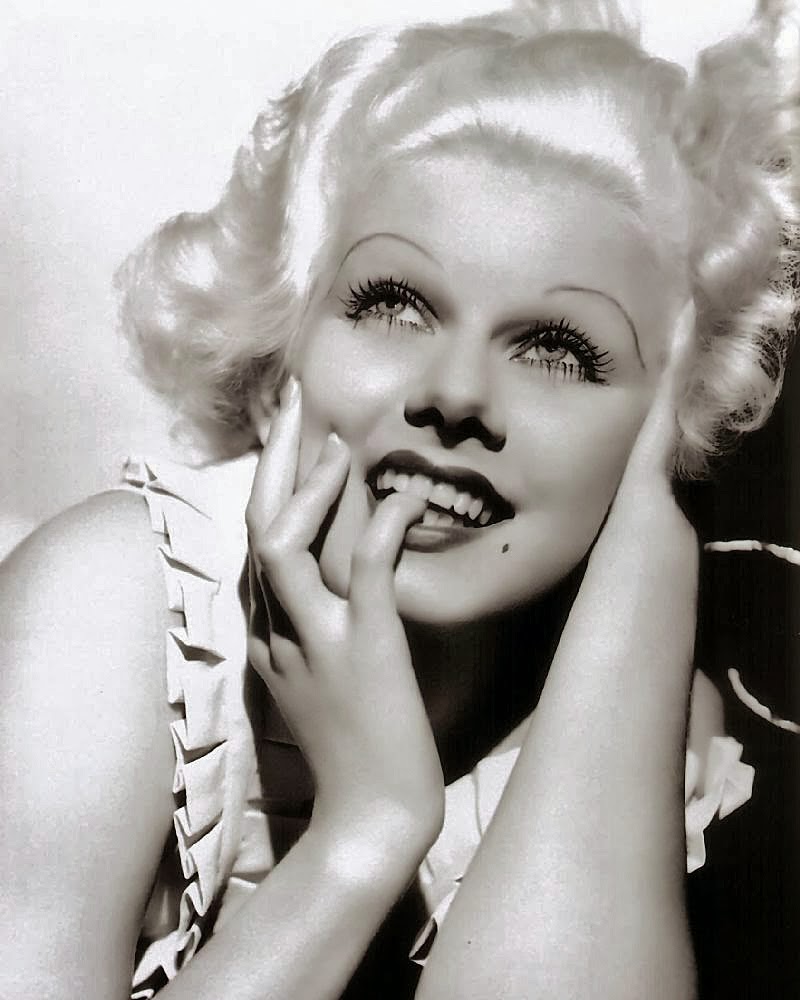
 
Jean Harlow, MGM’s superstar Blonde Bombshell of the 1930’s, never forgot her Kansas City, Kansas roots. Born in 1911 at 3344 Olive on the Missouri side of Kansas City, Harlow did most of her growing up in KCK. Several Kansas City, Kansas residents remember her well.
 
Bernadine (Martin) Pretz lived across the street from Harlow’s grandmother, whose house was as 2304 N. 12th St., in KCK. On June 21, 1933, Jean Harlow had just toured the World’s Fair in Chicago, and returned to visit her grandmother. Pretz was a 9 year-old fourth grader who grabbed her two sisters and ran home to get autograph books when “Mom” Harlow, Jean’s grandmother, told them that Jean would sign them after she rested a bit.
 
“All the kids would string up and down sidewalks to get a glimpse,” said another neighborhood child witness to Harlow’s visit that day, Merle K. Arnold. Merle’s wife, Marguerite, then also a neighbor, describes the house as a “big Victorian house.” She said Jean’s grandfather, S.D. Harlow, made a lucrative living selling real estate. It was a hot June day that Bernadine and Merle would never forget. In fact, they have pictures to refresh their memories. (See one of them at right.) Bernadine’s uncle was Kansas City Star reporter John Martin, and he made sure a cameraman was present when Harlow emerged. It was a pretty grand entrance, captured on film.
 
“She came out wearing a white chiffon negligee with silver T-strapped high heels, no hose, and red nails,” Pretz said.
 
Arnold will never forget the silver aura either. “Sit behind me on the step,” Harlow told the boy, as Pretz and her sisters flanked them. Copies of the picture, forever 8×10 glossies, are still displayed in both the Pretz and Arnold homes. The original photo ran in The Kansas City Star. Arnold still remembers getting to ride in Harlow’s car.
 
While Marguerite Arnold did not get to pose with Harlow, she talks fondly of going into the grandmother’s house every Halloween wherein Mom Harlow would give cookies and things to the kids. Ever present, she said, was the full-sized color portrait propped up in the dining room.
 
Bernadine, wife of KCK physician Dr. Jim Pretz, points out that “Jean’s first name was originally Harlow, but her parents, the Carpenters, thought it too masculine, so it was changed to Harlean.” Later, she said, her last name was changed to Harlow, a reference to both her original first name and her grandparents’ last name. As for the grandmother, “Mrs. Harlow lived in Bonner Springs, Ks.,” said Pretz, “but when her husband died, she moved to KCK.’
 
Mabel Van Hooser never met the Harlows, but recalls seeing the houses on both Olive and 12th Street. She also has collected Jean Harlow press clippings from 60+ years ago.
 
A written remembrance escaped from Bernadine Pretz after she left her lifelong autograph book out for friends to peruse at a gathering years ago. “After everyone left, I noticed that several pages of autographs had been torn out.” Among them was the 1933 Harlow signature. A Jean Harlow autograph fetches over two thousand dollars these days.
 
Although the Missouri-based Kansas City Star covered Harlow’s 1933 visit to KCK, The local Kansas City Kansan newspaper decided not to do so. According to Pretz’s Uncle John, the Star reporter, “The Kansan newspaper did not want anything to do with Jean Harlow because they didn’t like the image she projected.”
 
That bad girl image–sexy, sharp tongued and tough–has sustained Jean Harlow’s star status since her 1937 death at 26 of uremic poisoning.
——————–
Enjoy this clip of Hollywood’s original platinum blonde Jean Harlow, with Clark Gable in 1932’s RED DUST: http://www.youtube.com/watch?v=HAO2NVqz8a4
Share:

Worth 1,000 Words: BOB STEELE, KEN MAYNARD & HOOT GIBSON


AS COWBOY HERO BOB STEELE (right) clobbers a bad hombre (GEORGE CHESEBRO), Steele’s pals HOOT GIBSON (left) and KEN MAYNARD observe with mixed feelings. This lobby card from ARIZONA WHIRLWIND (1944, Monogram) portrays the typical cowboy action one could find Saturdays at the local movie theater prior to the advent of TV. By then, Steele (Jan. 23 1907-Dec. 21, 1988), Maynard (July 21, 1895-March 23, 1973) and Gibson (Aug. 6, 1892-Aug. 23, 1962) were at the end of their respective sagebrush movie trails, having starred in dozens of B-Westerns since the days of silent films.

——————–
HOOT GIBSON, born Edmund Richard Gibson and nicknamed after a Hoot Owl, was a top western movie star (and director-producer) from the 1920’s-’40s. KEN MAYNARD’s movie career lasted from 1923-44. BOB STEELE, born Robert Adrian Bradbury, rode the range from 1920’s The Adventures of Bob & Bill series (with his twin brother Bill) through 1967, in cowboy oaters as both star and character actor. He is remembered for his dramatic roles in Of Mice and Men and The Big Sleep. From 1965-67, Steele played it for laughs as Trooper Duffy in TV’s F-Troop.
——————–
ARIZONA WHIRLWIND was #6 of 8 in The Trail Blazers trio western series that ran from 1943-44. It was Maynard’s last movie, being replaced by Chief Thunder Cloud in the final two installments. [from Steve Crum’s show biz memorabilia collection]
——————-
Some young cowboys influenced by the likes of Hoot, Ken & Bob: http://www.youtube.com/watch?v=Mj-QTe2igK0
Share:

Worth 1,000 Words: PHIL HARRIS & ALICE FAYE


TITLED ALICE FAYE’S BABY CHRISTENED, this unique press photo shows the original crop marks and notations for newspaper publication. Dated May 5, 1943, the suggested caption (pasted on the backside) says: HOLLYWOOD CALIF: ALICE FAYE HARRIS JR. is only one-year-but stole the show from her parents on the occasion of her christening at St. Nicholas Episcopal Church in Encino, Calif. Baby Alice is seen with her famous parents Alice Faye and Phil Harris, assuming one of the more dramatic stances she chose to display to the camermen. She was christened by the Rev. Harley Wright Smith. [from Steve Crum’s showbiz memorabilia collection]

——————–
ALICE FAYE (May 5, 1915-May 9, 1998) was, throughout the 1930’s-’40s, 20th Century Fox’s diva, introducing the Oscar winning You’ll Never Know in Hello, Frisco, Hello, among many other movie songs. Her film career spanned from 1934-62. PHIL HARRIS (June 24, 1904-Aug. 11, 1995) made his name first as orchestra leader and comedian on radio’s The Jack Benny Show during the 1930’s and ’40s. In 1933, his RKO short, So This Is Harris!, won the Oscar for Best Live Action Short Subject. Harris is also known as the voice of Baloo the Bear in Disney’s animated The Jungle Book, wherein he sang The Bare Necessities. Alice and Phil starred from 1948-54 on their own comedy radio program, The Phil Harris-Alice Faye Show.

Married for 54 years, the Harrises had two daughters, Alice (born in 1942) and Phyllis, 1944.
——————–
Enjoy a photo montage of Alice and Phil: http://www.youtube.com/watch?v=vZE6NyIYSOA
Share: