
THE KANSAS CITY JOLSON STORY…Part I: Jolson, Palmer & Jolson
 By Steve Crum
The Jolson Story (Columbia Pictures, 1946) includes dialogue which speaks of Al Jolson’s desire to perform to a live, nationwide audience. A particularly telling scene in the musical biography occurs when Jolie’s Winter Garden Theater extravaganza, Robinson Crusoe Jr., is completing a two year run, and “still sockaroo.” Jolson alone (implied in the movie–with no evident input from the brothers Shubert) decides to take his Broadway hit on tour across America. Producer Tom Baron (Bill Goodwin) is exasperated at Jolson’s plan, as he speaks to Jolson’s manager, Steve Martin (William Demarest):
Baron: “Take a big Broadway show like this on tour? Drag it all over the country–into tank towns? Al’s out of his mind! It’s never been done!”
 Martin soon explains Jolson’s motive: “It’s a brand new audience, he says…millions of ‘em, people who never saw a Broadway show and never heard him sing….”
Moments later, cut to a locomotive barreling down the track, and then to Mama Yoelson (Tamara Shayne) turning pages of her theatrical scrapbook of newspaper stories from around the country heralding her son Asa’s national tour. (The Kansas City Times is included.) Throughout this sequence, Jolson’s robust voice gives out with his traveling music: Toot Toot Tootsie (Goo’ Bye).
———-
Sure The Jolson Story, like most movie biographies, mixes fact with fiction, so it is doubtful whether Jolson alone made the decision to tour. Nonetheless, Al Jolson did perform his Broadway shows in virtually every major city in the United States. He was certainly used to touring, something he had done since 1898, in the days of his brief stint with the Walter L. Main Circus. He continued touring when he performed with the Victoria Burlesquers, on through vaudeville, Dockstader’s Minstrels, and finally with his legendary Broadway musicals.
———-
Much has been said, rightfully so, about Al Jolson’s home theater, The Winter Garden in New York City. Kansas City (Missouri) was but one of dozens of cities Jolson played to during tours that stretched over 25 years. It was a true labor of Jolie love to spend hours that turned into weeks at the Kansas City, Missouri Main Library, pouring over yellowed Kansas City Star and Kansas City Times newspapers stored on microfilm. (Incidentally, at that time there were two newspapers published by the same firm; The Times was the morning edition, and The Star, the evening edition.) Thanks to Herb Goldman’s magnificent biography, Jolson: The Legend Comes to Life, I was able to pinpoint exact dates of Jolson’s shows in KC. It made my search much easier.

What surprises I found! There were, of course, the straight news stories of whatever Jolson show was either coming or currently playing. Then there were the reviews, the revealing and opinionated reviews. In some cases, it was like witnessing an actual Jolson performance. Jolson is often quoted while on stage, and bits of physical business are described. Jolson is also quoted off stage in personal interviews. I found cartoon caricatures of Jolson, photos of Jolson, ads of Jolson. Local record stores promoted Jolson 78’s in ads specifically capitalizing on his being in town. Jolie overload took place, so I had to stop and take some deep breath breaks throughout my exploration. Truly Socko!
Please throw a pity party for me since my eyes suffered as I retyped each and every story to make it easier to read. I had to use a magnifying glass to pour over each word. The microfilm copies had been erratically photocopied with some paragraphs missing sentence portions in creases, as well as blurred or smeared lettering. I had to second guess some of the words since they were virtually missing. In a few cases, I was forced to leave out a section due to incoherent lettering.
 The eye strain was worth it since the end result is a historical document of Al Jolson’s performances in Middle America during the early part of the Twentieth Century. I hope you are as thrilled and excited about this find as I was and still am.
Even though Jolson never built his house in Kansas City, as Mama Yoelson suggested in The Jolson Story, he definitely built and upheld his reputation in KC as “The World’s Greatest Entertainer.” He loved Kansas City audiences, and KC loved Al Jolson.
~~~~~~~~~~~~~~~~~~~~~~~~~~~~~~
KC JOLSON SHOWS + A HEADLINE
 1905–JOLSON, PALMER, AND JOLSON
1908–LEW DOCKSTADER MINSTRELS
1910–SINGLE VAUDEVILLE ACT
1912–THE WHIRL OF SOCIETY
1914–THE HONEYMOON EXPRESS
1915–DANCING AROUND
1917–ROBINSON CRUSOE JR.
1920 & 1921–SINBAD
1923 & 1924–BOMBO
1927–BIG BOY
1932–THE WONDER BAR
1950–”THE MAMMY SINGER” DIES
~~~~~~~~~~~~~~~~~~~~~~~~~~~~~
JOLSON, PALMER & JOLSON Published Oct. 29, 1905, this small display ad is the earliest reference to Al Jolson performing in Kansas City I could find. Jolson, Palmer and Jolson toured the vaudeville circuit from Oct. 31, 1904- Nov. 11, 1905. Their last five dates of the tour, Nov. 20-30, were without Al’s brother Harry, who had quit the act. That left Al alone, supporting Joe Palmer. The ad ran the day before Jolson, Palmer, and Jolson played KC (Oct. 30-Nov. 4) at the Orpheum Theater. After their next stop in New Orleans, the act would be renamed Palmer and Jolson.
Fifth on the vaudeville bill, sandwiched between Susie Fisher, The Phenomenal Baritone (?) and a horizontal bar act, Jolson, Palmer & Jolson are billed as “A Little of Everything.” Unfortunately, no other information about their act was published locally.
[Next, Part II: Jolson and Dockstader’s Minstrels hit KC]
Denzel morphs into killing machine in unintentionally funny ‘The Equalizer’
 By Steve Crum
 “You gotta be who you are,” McCall advises Teri (Chloe Grace Moretz), a young, beleaguered hooker he befriends. Practicing his preaching, McCall is indeed a man who takes on insurmountable odds (The Old Man and the Sea) while “invisibly” lurking from the shadows. This sophomoric symbolism comes to us via the film’s screenwriter, Richard Wenk.
 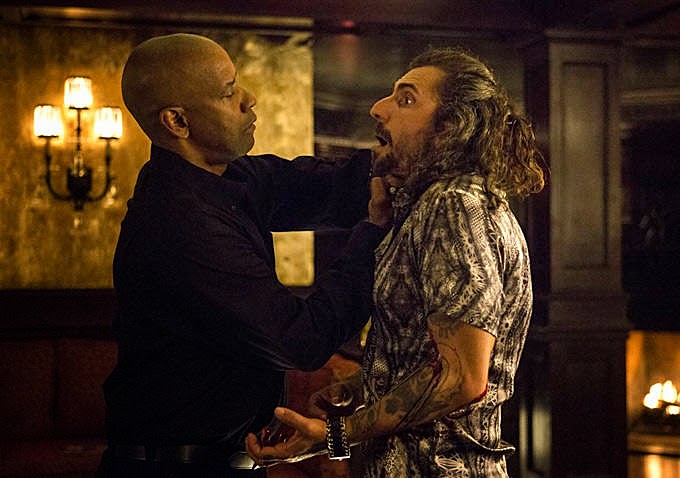 Cut to a closeup of his eye twitching and mouth pursing, as he surveys the surroundings from his viewpoint like a still camera clicking away at warp speed. Immediately he morphs into “The Equalizer,” even though he is never called such. He wears no costume, just street clothes. His weapons include his Ninja-like maneuvers, and whatever objects are on the shelf or coffee table nearby. He even turns adversaries’ guns and knives back on them. The guy is a marvel. Call him Captain Marvel, in fact. But no, that name has been taken.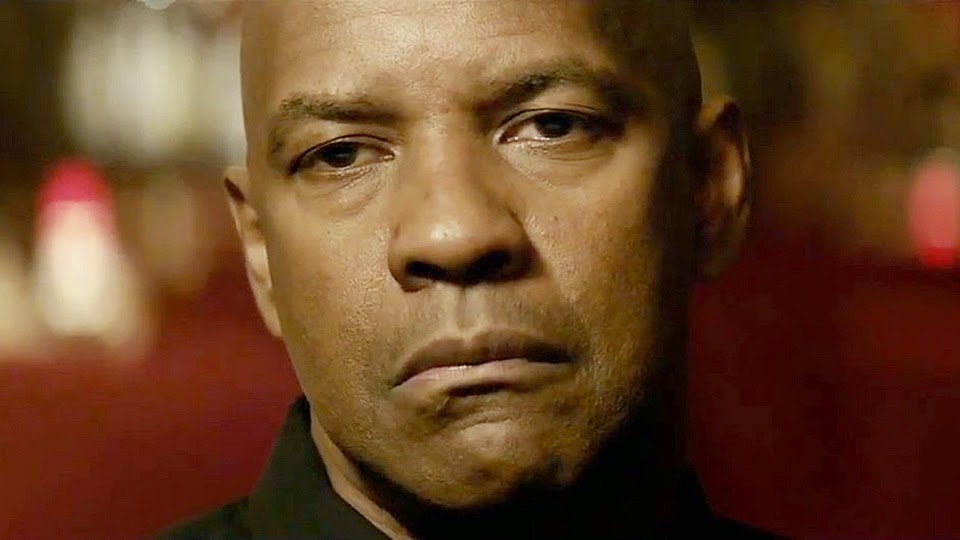
Funny, bittersweet ‘This Is Where I Leave You’ features talented cast
 By Steve Crum
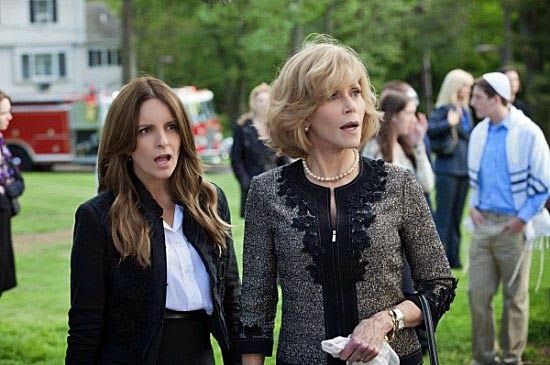 Then what is This? What we have is a talent graced adult comedy with the premise of a funeral reuniting everyone back to the family home. Previous comedies have used a funeral as the plot crux. Both the 2007 and 2010 versions of Death at a Funeral come to mind. In This case, the Altman Family happens to be Jewish, so widow Hillary Altman, played by a buxom-enhanced Jane Fonda, demands that her far less than orthodox Jewish children honor their father’s final request by observing Shiva. Mama Hillary insists, “I want all my kids under one roof again!”
 Director Shawn Levy (Night at the Museum) takes Jonathan Tropper’s crisp screenplay (based on his book) and finely paces the principals through a maze of funny sequences while balancing the dramatics surrounding new and old relationships. Judd Altman (Jason Bateman) has just broken up with his wife over her infidelity; Tina Fey’s Wendy is a long married mom whose husband is increasingly distant; and Adam Driver’s Phillip, the youngest of the bunch, has brought his latest girlfriend along. They have their problems too. Then there is Paul (Corey Stoll), married to the depressed Alice (Kathryn Hahn). Both are obsessed with getting pregnant since so far—for years—that has not happened.
 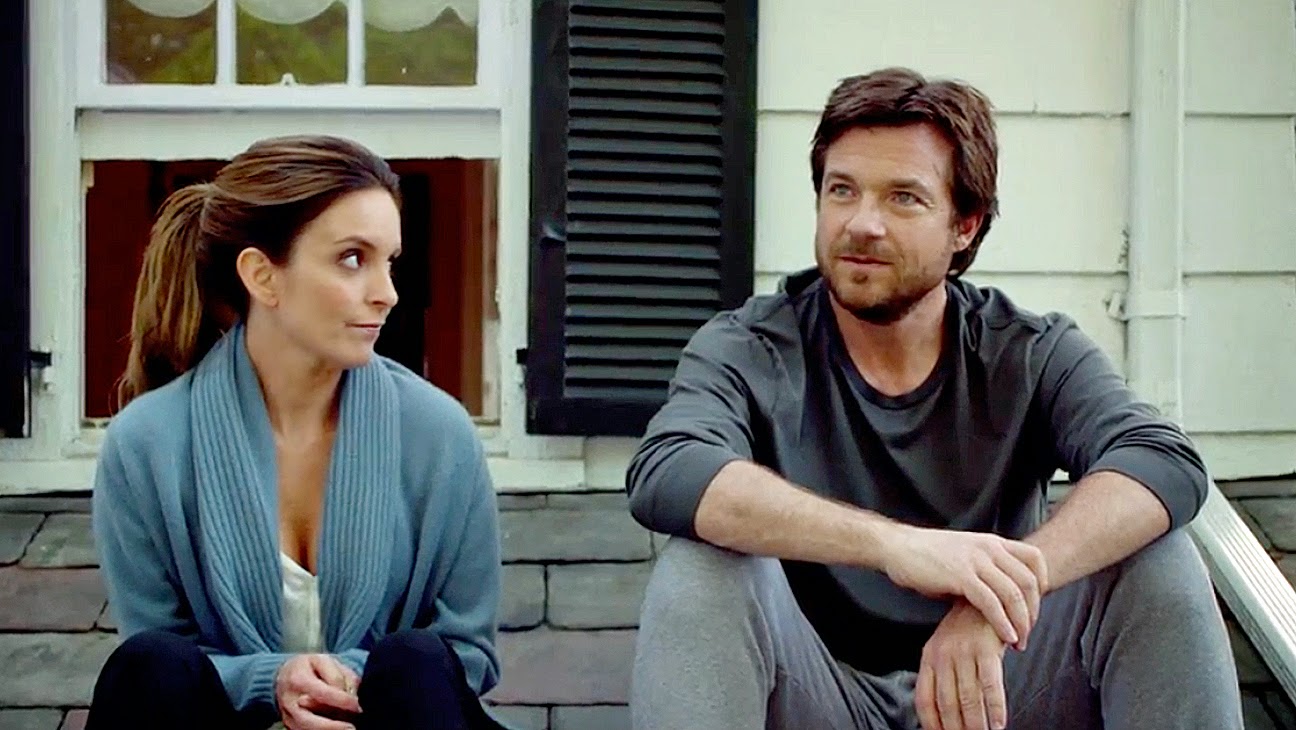 This Is Where I Leave You is a funny, bittersweet dramedy that connects, in large part due to a superb cast. This is Tina Fey’s best work to date, particularly because it taps into her dramatic talents. Jason Bateman is really the center of the story, and anchors it well. Driver is a gifted young actor who continues to impress. Stoll and Hahn are fine too.
 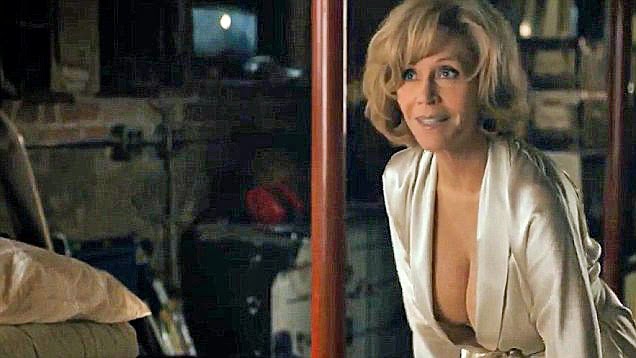 Incidentally, several laughs are attained through Fonda’s boobs, which were artfully enlarged for the movie. Those crazy special effects guys.
William Wyler’s ‘The Big Country’: Why it endures
 By Steve Crum
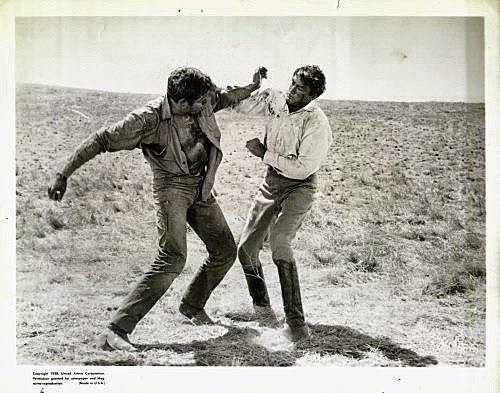
A dominant, driving force that both enhances and propels the action is Jerome Moross’ terrific, Oscar-nominated score that could stand alone as a memorable concert piece. In fact, its main theme been a staple of concert hall orchestras for decades.
Crum’s Handy Guide to celebrity interview no-no’s
 During my interview with Jerry Lewis on Nov. 8, 1995, I asked a question that should have been nixed before-hand, but I was unaware. (More on the Lewis faux pax later.)
  •ED ASNER Advice: DO NOT BRING UP POLITICS, unless you want some caustic, opinionated, liberal remarks. As it turned out, I should have tapped into Asner’s political side since the hour I spent with him was unplanned, and we both were grasping for conversation. [See my Ed Asner story elsewhere on this site.]
 •ROBERT CORNTHWAITE Advice: DO NOT COMPLIMENT HIS LOOKS. A star of the highly regarded 1951 sci-fi movie, The Thing (From Another World)—Cornthwaite played the lead scientist driven to madness. The aged actor was less than polite when I complimented him at the Area 51 movie event in Independence, Mo., during the summer of 2001. After shaking his hand, I told him, “You look no older than when you made The Thing.” His reply: “Bullshit.” What I really meant to say was that he portrayed a gray-haired old fart in The Thing, and he looked the same. So much for bullshit.
  •DAKOTA FANNING Advice: DO NOT JOKE DURING AN INTERVIEW. During an interview with then 11 year-old Dakota, in town to promote the horse racing movie, Dreamer, I tried to get her to laugh. She was so focused and serious for her age, and she reminded me of my own daughter. Here we sat at a table in a suite at a Plaza hotel. She said she just traveled from Chicago, and was on a multi-city tour to promote her film. I asked if she had a chance to see Kansas City yet, and she said, “No.” So I pointed to a nearby window overlooking the Country Club Plaza and said, “Well, take a look. There it is.” She did not crack a smile. Now that I think of it, I don’t blame her.
 •SKITCH HENDERSON Advice: DO NOT ASK HIM ABOUT HIS GOOD TIMES ON “THE TONIGHT SHOW STARRING JOHNNY CARSON.” After several years as band leader on Carson’s show, Skitch had left, and was obviously bitter about his exit when I interviewed him in Emporia, Kansas. Evidently it was his choice, because he cracked that “The Tonight Show has been a sinking ship for some time, and it’s about to drown.” That was in in 1967. Johnny continued for many years thereafter, maintaining high ratings.
 •BILLY GRAY Advice: DO NOT EXPECT WARM AND TENDER STORIES ABOUT HIS YEARS ON TV’S “FATHER KNOWS BEST.” I talked to Bill Gray when he guested at the Area 51 Sci-Fi event in Independence, Missouri in 2001. His most famous acting portrayal as a child was in 1951’s The Day the Earth Stood Still, which was shown at the festival. I later regretted having him sign a photo of him with his Father Knows Best co-stars, which he graciously signed.
  •ELEANOR KEATON Advice: LITERALLY COME DOWN TO HER LEVEL TO CHAT WITH HER. I consider it an honor to have talked to Buster Keaton’s widow, Eleanor, a couple of times. Once was at a private home in Iola, Kansas, around 11 p.m., in September, 1995. There were a dozen or so of us gathered, and Eleanor was sitting in an overstuffed chair. To make it comfortable for both of us to converse, I got down on both my knees, pressing the left side of her chair, which elicited a smile and raised eyebrows to her nearby lady friends who were also seated. “Are you proposing?” she asked. We then talked about Buster, eye to eye. [In this case, my advice is what to do rather than not do. It could easily have become a no-no.]
  •DE DE PIERCE Advice: FIND OUT AHEAD OF TIME THAT YOUR CELEBRITY IS SIGHT IMPAIRED. In 1967, while attending Kansas State Teachers College (now Emporia State University), I interviewed the husband and wife team of Billie and De De Pierce, two elderly New Orleans musicians touring with the Preservation Hall Jazz Band. Introducing myself backstage before their concert, I held out my hand to shake De De’s. His wife quietly said to him, “He wants to shake your hand.” De De was totally blind, and I was unaware.
  •BERNADETTE PETERS Advice: DO NOT EVEN UNINTENTIONALLY MISLEAD BERNADETTE. During the hour I spent in Bernadette Peter’s dressing room following her concert in KC in 1995, I complimented her on the wonderful performance of “When You Wish Upon a Star” she sang at the AFI Salute to Steven Spielberg broadcast a few days earlier. Her eyes lit up, and she excitedly said, “Oh, you were there?!” “Er, no,” I said, “I watched it on TV.” Bernadette’s expression changed from ecstatic to pleasant as she then said, “Oh,” turning away to talk to someone else.
  •BILLY TAYLOR Advice: DO NOT TRY TO OUTTHINK THE BAND LEADER. While in the U. S. Army (and in uniform) in late January, 1971, I was in New York City sitting in the audience of The David Frost Show. Billy Taylor, the pianist/band leader, did the warm-up with the audience, and called on me. “Where are you from?” he asked. My reply: “You mean…now?” It got a big laugh from Taylor and the audience. Since I was in transit from Fort Dix, New Jersey to Germany, I wasn’t sure whether he wanted my itinerary or my home town.
 •FRANKIE THOMAS Advice: DO YOUR HOMEWORK BEFORE MEETING FRANKIE. I ended up spending lunch in downtown Kansas City, Kansas with Mr. Thomas in 1997. He was part of an area comic book festival being held at Jack Reardon Center. I stopped by to meet my childhood hero (Tom Corbett, Space Cadet), who also co-starred in all those Warner Brothers Nancy Drew movies. Since it was around noon when I approached his table, and no one else was around, he asked if I wanted to have some coffee with him in the break room. Small talk ensued, and he talked about his admiration for John Litel, who played Nancy Drew’s father in the series. He also told of Bonita Granville’s having to tape down her breasts to look younger as Nancy Drew. I would have had much more to ask about Thomas’ career had I researched it before meeting him. (This was an impromptu interview, in other words.)
 •LARRY KERT Advice: AVOID TELLING HIM YOU ARE MEMBER OF THE INTERNATIONAL AL JOLSON SOCIETY. Outside his dressing room at KC’s Starlight Theatre in the summer of 1980, Larry Kert had just finished performing his Al Jolson Tonight! show when I complimented him. He shared a Jolson scrapbook I had brought along, chatted for about 15 minutes, and autographed a program. However, he was initially put off by my presence when I told him I was a member of the International Al Jolson Society. He said, “I’m surprised you are complimenting me. I’ve heard nothing but complaints and criticisms from other Jolson Society members while I’ve been on tour with this show.” Indeed Kert was definitely not a Jolson soundalike, but he had the drive and enthusiasm of Jolson, and connected with the audience as he sang Jolie’s songs. I told him as much, and he appreciated the positives.
  •PAT PAULSEN Advice: DO NOT EXPECT A REAL AUTOGRAPH. The late Pat Paulsen was a very funny comic with a distinctive style of delivery and humor. A running joke was his comedic presidential campaigning, which he did every four years for a decade or so. In 1990, I interviewed him in his dressing room at the Civic Auditorium in Emporia, Kansas. It was essentially a comedy concert, since he would not answer one question seriously. Then, when it was time to get his autograph (yes, interviewers are fans too), he stamped my blank paper with the inscription, “Stamped By Pat Paulsen.” I reminded him of this hilarious incident years later when I happened upon him at his winery in Napa Valley, California.
 So Falk’s time was extended. The half dozen of us were seemingly blessed with getting to pick Falk’s brain for an unexpectedly lengthy time. There were questions ranging from Columbo to John Cassavetes to It’s a Mad, Mad, Mad, Mad World to his numerous movie and TV parts. Falk would start to answer, say, one about his work with John Cassavetes. Then he would catch himself, and say, “Naw, naw…let’s stay with the reason I’m here. Let’s only talk about The Thing About My Folks.” After a couple of mundane publicity questions and answers, one of us would stroll back into Don’t Ask territory. “Mr. Falk, your years on Columbo were….” And Falk would interject, “Er…that’s all covered in my upcoming book, Just One More Thing. Now let’s get back to The Thing About My Folks, which is one terrific motion picture, maybe my best performance.”