
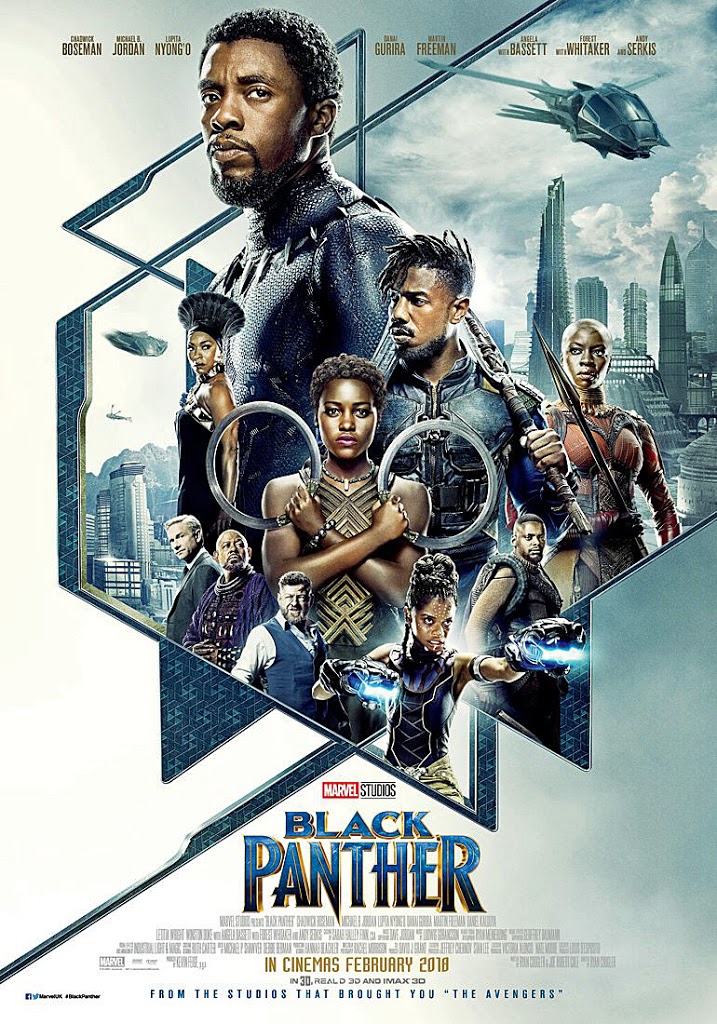
‘Black Panther’ visually stuns, but suffers style over substance shortcomings
By Steve CrumLeaving the screening of Black Panther, I felt nearly as let down as that time in 1973 when I first saw Ross Hunter’s musical version of Lost Horizon. In both cases, the hype far outweighed the film—despite big names, glitzy sets, gorgeous costumes, and production talent galore. For sure, anticipation and pre-sale tickets have escalated to epic proportions for Black Panther. Rotten Tomatoes has already (at this writing) deemed the film near perfect, based upon 100+ critics’ praises…and this was days before the film even officially opened.
Unlike Lost Horizon, which was an immense box office dud, Black Panther is already projected to be one of the biggest superhero film opening weekends in Hollywood history.
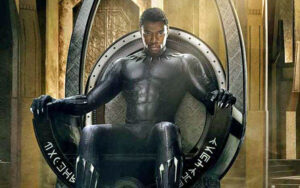 But for this Rotten Tomatoes critic, Panther turns out to be a mere puddy tat. I truly hate to say such, since I had hoped for so much more than what was delivered. The loyal fan base will no doubt think otherwise.
While the story itself is unique in its setting, the movie plays out in conventional Marvel fashion– with nothing extraordinary or rousing in the mix this time. A major weakness of Black Panther is its numerous dimly lit scenes jammed with seemingly endless speeches. Seriously, I nearly nodded off from boredom. Director /screenwriter Ryan Coogler would have improved the pacing by trimming such sequences.
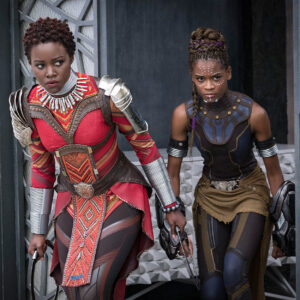 Based on the popular Marvel comic book character, which in 1966 led the way as the first superhero of African descent in comics, Black Panther is culturally important. Admittedly, I have never read the comic book, so this movie version is my introduction. The comic book’s legion of followers had the edge on me before the film even began. They knew the backstory. I did not. That meant relying solely on the movie to grasp the mystique of T’Challa, Black Panther’s not-so-secret ID.
 An opening narrative tells us that T’Challa (played by Chadwick Boseman with Ben Aflleck-like-Batman sternness) is the King of Wakanda, a technologically advanced city magically hidden in Africa. He gets his super strength by drinking a liquified herb. The elixir triggers a stylish black body suit and headpiece that identifies him as 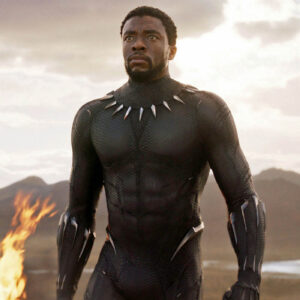 Black Panther. The drink also gives him cat-like acrobatic abilities. Those attributes are well displayed in an early-on, exciting car chase sequence. The storyline covers T’Challa’s regal lineage in Africa. He heeds his call, and assumes his royal role.
Black Panther. The drink also gives him cat-like acrobatic abilities. Those attributes are well displayed in an early-on, exciting car chase sequence. The storyline covers T’Challa’s regal lineage in Africa. He heeds his call, and assumes his royal role. But all is not resolved. Conflicts arise from neighboring African tribes as well as smarmy arms dealer Ulysses Klaue, portrayed by the ubiquitous Andy Serkis. Then there is T’Challa’s greatest foe, Erik “Killmonger” Stevens (Michael B. Jordan), who vies to be king. Expect extended battle sequences—man vs man, tribe vs tribe. (The armored rhinos is a unique plus.) Factor in Martin Freeman in a forgettable role as Everett K. Ross, a CIA agent and sidekick to T’Challa.
Kudos to Angela Bassett as T’Challas’s Queen Mother, and Nakia (Lupita Nyong’o), leader of Wakanda’s all-female special forces squad, the Dora Milaje.
Overall, Black Panther is a comic book movie that takes itself far too seriously. In that regard, the film suffers from endless posturing, particularly by T’Challa and Killmonger. We have learned to expect such in superhero movies, but not to this extreme.
There is bound to be a sequel, and I trust it will fully live up to its hype.
——————————
GRADE on an A-F Scale: C+
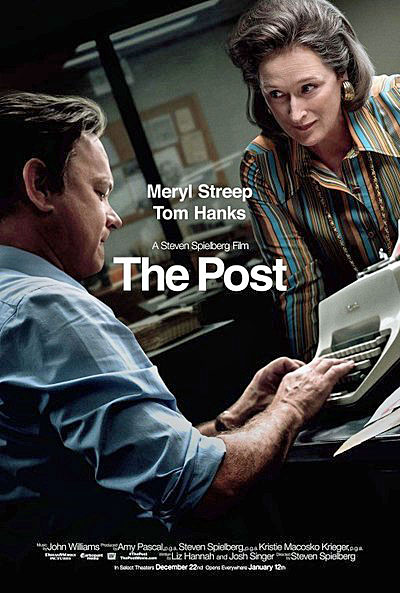
Streep, Hanks lead powerhouse cast in solid, fact-based drama, ‘The Post’
By Steve CrumWatching director Steven Spielberg’s The Post triggered my memory to 47 years ago. At that 1971 time, I had been drafted for the Vietnam War, and was half-way through serving in the Army. Back then I was unaware of The Pentagon Papers, Daniel Ellsberg, and the nefarious war related doings of President Richard Nixon. (But make no mistake, I was against the war.)
Now to refocus on The Post, a fascinating historical-political drama about journalism’s impact on Richard Nixon and the Vietnam War—more specifically, ending the Vietnam War. Liz Hannah and Josh Singer’s compelling script zeroes on the owner/publisher of The Washington Post newspaper, Katharine “Kay” Graham (Meryl Streep) and her managing editor, Ben Bradlee (Tom Hanks). When The New York Times first publishes the dynamite story of the criminal reasons behind the United States involvement in the Vietnam War, Bradlee urges his boss, Graham, to have their Post join in the cause.
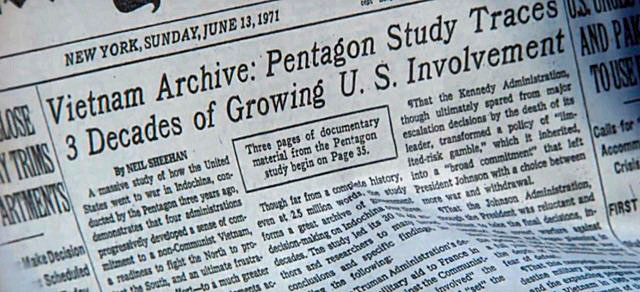 Widowed for several years, Graham had no experience in managing a newspaper by 1971. Her late husband, Philip, had tightly helmed The Post for years, leaving her as basically a wifely hostess at cocktail parties. At his passing, she was besieged by company board members and attorneys to relegate her newly inherited power to them. And Graham did so for several years, until Bradlee presses her to publish excerpts from 4,000-plus pages of stolen Defense Department documents aka United States—Vietnam Relations, 1945-67: A Study Prepared by the Department of Defense. Her lawyers warn her of lawsuits by the federal government and the resulting demise of The Post. It is no secret that eventually Graham chose to go to press—at great risk. The Post published the documents in a series of articles.
 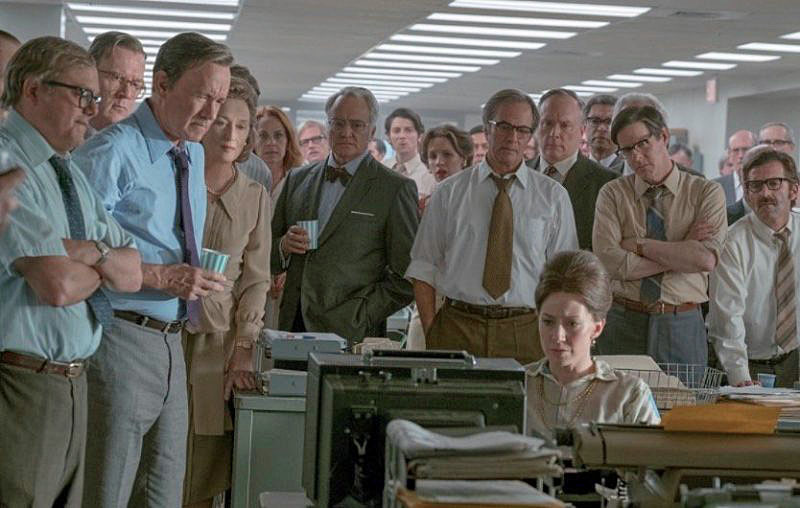 The ensuing drama is reminiscent of the 1976 movie, All the President’s Men, and there is an overlap here since Bob Woodward and Carl Bernstein worked at The Washington Post. (They are not depicted in this film, however.) We hear actual recordings of Nixon talking about The Post as he is supposedly shown in silhouette at his Oval Office window.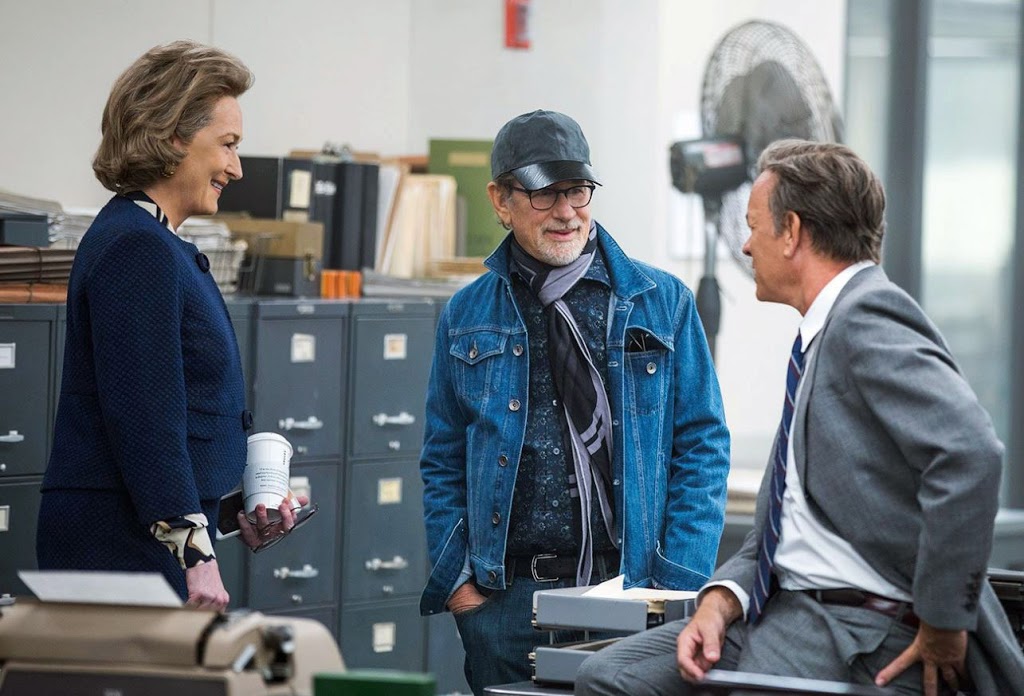
==========
A production pic of Director Steven Spielberg conferring with his lead stars, Meryl Streep and Tom Hanks.
==========
In viewing The Post, expect cerebral thrills instead of any physical stunts. The action occurs mostly in the newsroom, the corporate boardroom, private meetings between Bradlee and Graham, and in the gathering of information by reporters. Deadlines themselves can be exciting, especially when dodging the feds in meeting such. Again, this is more so the All the President’s Men school of storytelling.
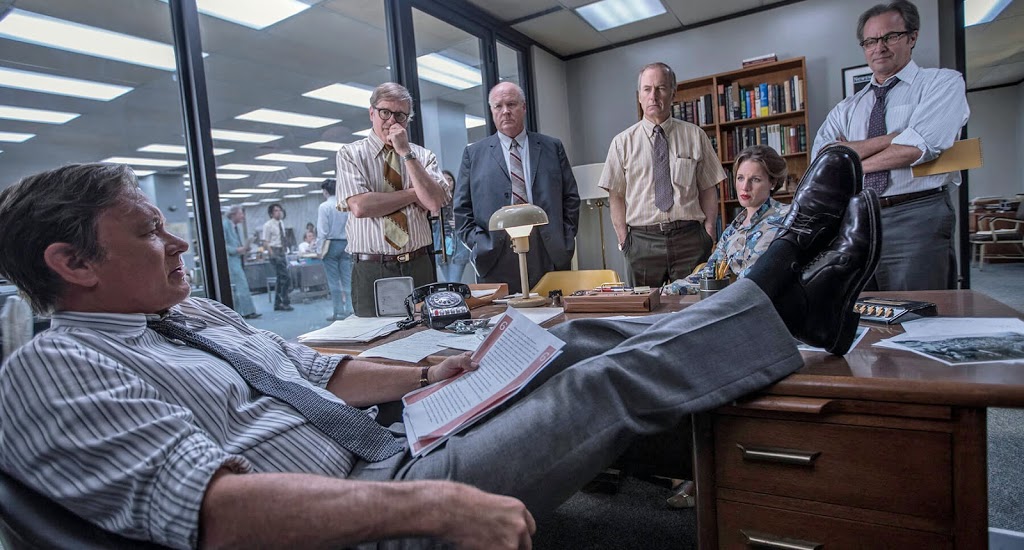
But the cinematic takeaway here is a combination of the factual story, the superb supporting cast (Sarah Paulsen, Bob Odenkirk, Carrie Coon, and Tracy Letts among them), and the film’s powerhouse leads, Streep and Hanks. Streep, particularly, gives a nuanced performance that becomes less subtle by the third act.
==========
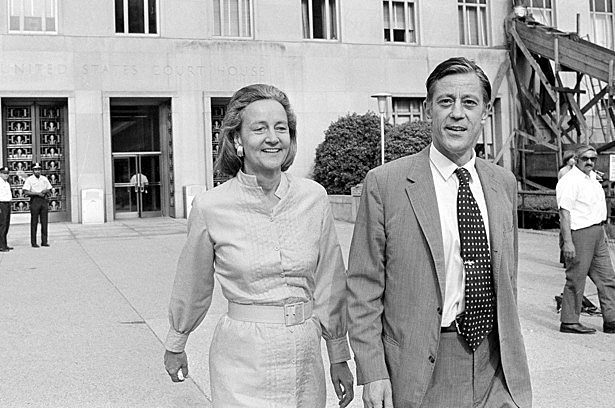
The real life duo who tested The First Amendment by publishing The Pentagon Papers: Katharine Graham and Ben Bradlee…around 1971.
==========
Her Kay Graham is a lady used to being subservient in a male dominated world. Graham helped change that reality, making The Post a film more than just a recounting of The First Amendment applied to a scandalously unpopular war. Its timeliness serves as a link to today’s Me Too and Time’s Up movements.
——————————
GRADE on an A-F Scale: A-
Throwing Back to…’DR. N. VENTOR’
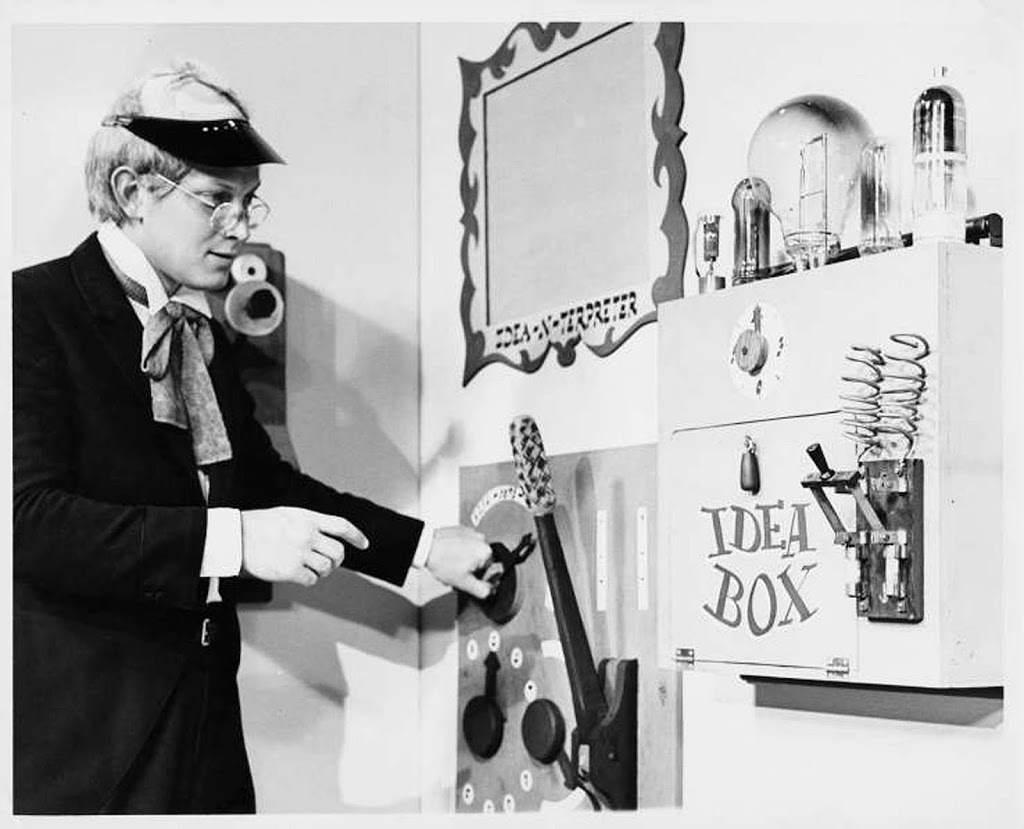
By Steve CrumKansas City TV’s Dr. N. Ventor (Murray Nolte) sets the gears on his Idea Box. His local kids show was popular during the 1950’s on WDAF-TV’s Channel 4 (when it was owned by NBC). The good doctor puttered among his inventions, gave us light humor, and showed cartoons from Paramount Studios. He also had a tall robot, Oom-a-gog.
Nolte also announced for the station, did commercials, and was eventually elected Mayor of Merriam, Kansas…in Greater Kansas City. He died in 2001.
Throwing Back to… ‘ROMPER ROOM’
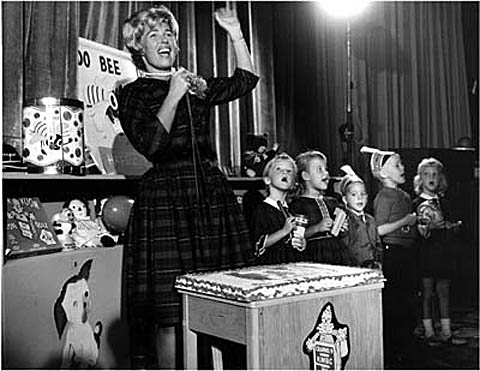
By Steve CrumThrowing back to 1954-64 TV in Kansas City…when Miss Virginia led her daily guest kids through a half hour of Mr. Do-Bee, rules of etiquette, how to say The Pledge of Allegiance, how to pray before a meal, and how to eat de-crusted sandwiches. The show was Romper Room. The franchised and syndicated show was unique in that it was broadcast live in major cities throughout the United States, but with different hosts. For example, there were Miss Nancy, Miss Jean, Miss Rosemary, Miss Barbara, and so on…depending on the city. The show began nationally in 1953.
I was never a fan (it focused on 4-5 year-olds), but my younger sister Becky definitely was. However, I am still upset that Miss Virginia never saw me and said my name via her magic mirror.
———-
An Addendum: 1940 Wyandotte High School (KCK) grad Virginia Lee Green Hassenflu starred as Miss Virginia. She died in 2016.
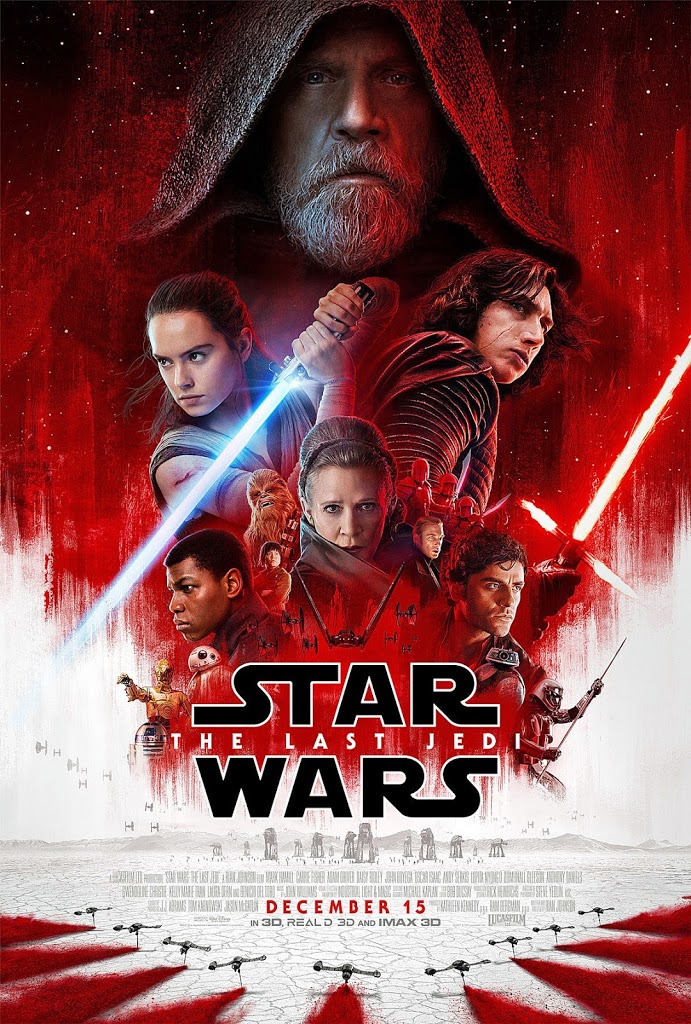
Terrific ‘Last Jedi’ thrills with new faces, old favorites + spectacular action sequences
 By Steve Crum
A new Star Wars movie, particularly another chapter in the mainstream series, is an EVENT—in caps. Such is the terrific Star Wars: The Last Jedi. The event two years ago (Star Wars: The Force Awakens) focused on Han Solo’s return and ultimate death. This time, in Chapter VIII, it’s the appearances of Leia and her brother, Luke. Whether death is involved with either will not be divulged in this piece.
Director/screenwriter Rian Johnson (2012’s Looper) has truly delivered the galaxy goods on this event—the second installment of the sequel trilogy. The timing is important, since The Last Jedi clearly serves as the transition from the Star Wars of Luke, Leia and Han to a new generation of heroes: Rey, Finn and Poe. Being the second part of a trilogy, The Last Jedi advances conflicts that rose in The Force Awakens. Most importantly, major issues are resolved in this installment.

In other words, it does not end in a cliffhanger like The Empire Strikes Back (1980). So fear not. Waiting three years to see if Han Solo would be freed from that block of carbonite was excruciating. By the way, we only have to wait two years for part three of this trilogy. Did I say “only”?
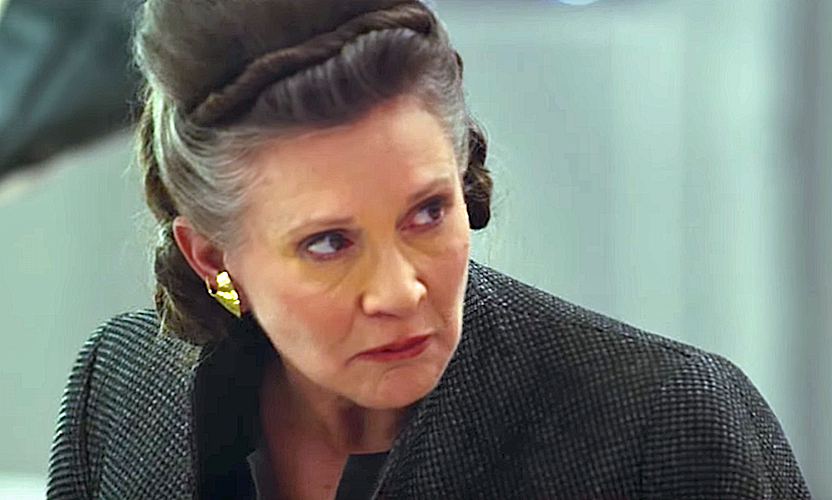 While there are relatively new faces at the X-wing and thereabout, including Oscar Isaac’s Poe Dameron, John Boyega’s Finn and Daisy Ridley’s Rey, expect a slew of long familiar ones, from Mark Hamill’s Luke Skywalker and Carrie Fisher’s Leia (now General Leia Organa) to R2D2 and Anthony Daniels’ C3PO. Chewbacca is back too. On the evil side, Adam Driver’s Kylo Ren emerges big time. If you recall, he killed his papa, Han Solo, in the last episode…much to his mother Leia’s suffering.
 Brand new to the Star Wars universe are Laura Dern’s Vice Admiral Amilyn Holdo (of the Resistance) and Benicio del Toro’s underworld con man and slicer.
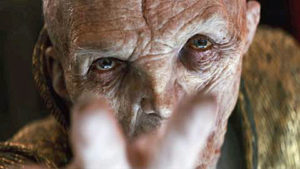 Yes, The Last Jedi has deja vu plot elements echoing the origin of Darth Vader and the dark side of The Force. Instead of the evil, controlling Emperor Palpatine, we now have Supreme Leader Snoke (realized by Andy Serkis via computer imaging).
Red is a dominant color in The Last Jedi. Snoke surrounds his throne with a barrage of lightsaber wielding guards, outfitted in vivid red. A key sequence late in the film takes place on what at first appears to be an ice planet, but in actuality is covered by white salt with a blood red undersurface. It is reminiscent of the great ice planet battle in The Empire Strikes Back since there are again giant walkers attacking the rebels. The splashing red creates a stunning effect.
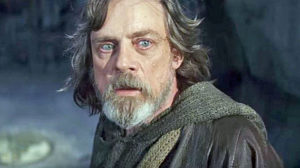 Much, maybe too much, of the story occurs on a desolate, rocky island wherein Luke has lived for decades. As the last Jedi of the title, he is summoned by Rey to return to the Rebel Alliance/Resistance to help defeat Snoke and his onslaught. He resists, and he resists. Let’s just say he reaches a Jedi compromise that would make Obi-Wan Kenobi proud. (And what a spectacular sequence that is.)
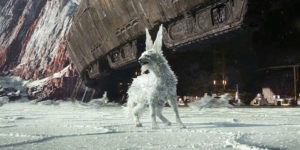
The action and subplots are involving…IF you are a Star Wars fan. Otherwise, you need to watch the previous installments. Even if you haven’t seen another Star Wars flick, you will be delighted with the introduction of the little, cute, bouncy, flying Porgs, which will soon hit toy store shelves—if not already there. I prefer the ice foxes, called “crystal critters” by Poe.
Prepare to be both dazzled and saddened by The Last Jedi’s treasures.
——————————
GRADE on an A-F Scale: A-